Recently a symbiotic relationship between particle and nuclear physics has developed, with techniques and ideas from one field fertilizing developments in the other.
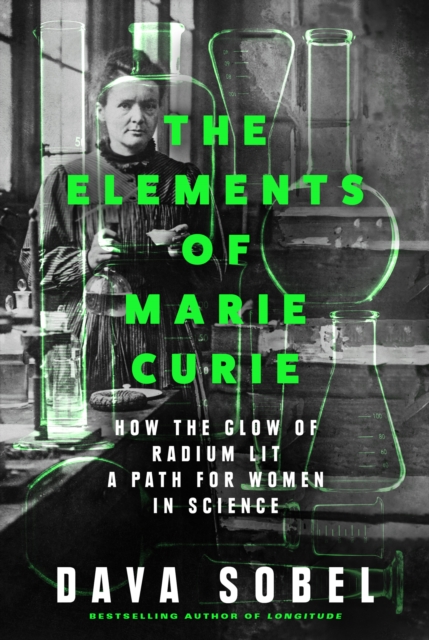
Dava Sobel, acclaimed and bestselling author of Longitude, chronicles the life and work of the most famous woman in the history of science - and the untold story of the young women who trained in her laboratory.
Some efforts have been made to prove negative mass behavior through some experiments performed in mechanics, and other disciplines as well as some theories in electrostatics, but I haven't found research about similar effects at the atomic level, where the most elementary mass given by the atomic nucleus is to be found.
Some efforts have been made to prove negative mass behavior through some experiments performed in mechanics, and other disciplines as well as some theories in electrostatics, but I haven't found research about similar effects at the atomic level, where the most elementary mass given by the atomic nucleus is to be found.
A CHILLING CHRONICLE OF MAJOR NUCLEAR INCIDENTS AROUND THE GLOBE, SPANNING MORE THAN SIXTY YEARSOur atomic history spans more than sixty years—and most of it isn't pretty:March 1958: A U.
Some efforts have been made to prove negative mass behavior through some experiments performed in mechanics, and other disciplines as well as some theories in electrostatics, but I haven't found research about similar effects at the atomic level, where the most elementary mass given by the atomic nucleus is to be found.
Some efforts have been made to prove negative mass behavior through some experiments performed in mechanics, and other disciplines as well as some theories in electrostatics, but I haven't found research about similar effects at the atomic level, where the most elementary mass given by the atomic nucleus is to be found.
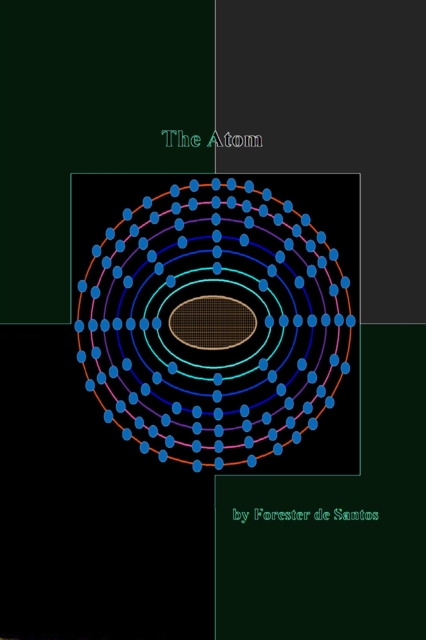
The intention of this book is to update some basic concepts of physics and redefine others, considering the New Atomic Model and the Classical Electromagnetic Theory of Elementary Particles.
Some efforts have been made to prove negative mass behavior through some experiments performed in mechanics, and other disciplines as well as some theories in electrostatics, but I haven't found research about similar effects at the atomic level, where the most elementary mass given by the atomic nucleus is to be found.
Some efforts have been made to prove negative mass behavior through some experiments performed in mechanics, and other disciplines as well as some theories in electrostatics, but I haven't found research about similar effects at the atomic level, where the most elementary mass given by the atomic nucleus is to be found.
In ›Die Erfindung der Prä-Astronautik‹ nimmt der Autor den Leser mit auf eine fesselnde Reise durch die faszinierende Geschichte und Entwicklung einer der kontroversesten Ideen des 20.
Una breve pero «dinámica» historia de la energía y del calor, una interesante manera de aprender la evolución de las ideas acerca de la temperatura, cómo entendemos el mundo que nos rodea, la interrelación entre filosofía, ciencia y política…Todo eso y mucho es Átomos, elementos, calor.
Volume 54 of the Advances in Atomic, Molecular, and Optical Physics Series contains ten contributions, covering a diversity of subject areas in atomic, molecular and optical physics.
Covering a wide range of topics related to neutron and x-ray optics, this book explores the aspects of neutron and x-ray optics and their associated background and applications in a manner accessible to both lower-level students while retaining the detail necessary to advanced students and researchers.
Work with individual atoms and molecules aims to demonstrate that miniaturized electronic, optical, magnetic, and mechanical devices can operate ultimately even at the level of a single atom or molecule.
The development of science, technology and industry in the near future requires new materials and devices, which will differ in many aspects from that of past years.
Advances in Imaging and Electron Physics merges two long-running serials-Advances in Electronics and Electron Physics and Advances in Optical and Electron Microscopy.
The Langevin and Generalised Langevin Approach To The Dynamics Of Atomic, Polymeric And Colloidal Systems is concerned with the description of aspects of the theory and use of so-called random processes to describe the properties of atomic, polymeric and colloidal systems in terms of the dynamics of the particles in the system.
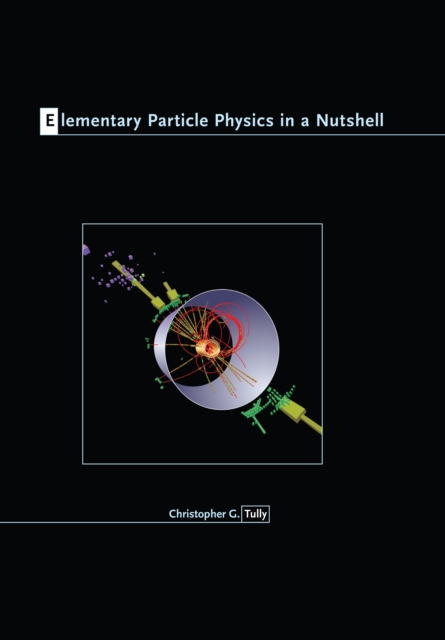
An introduction to high-energy physics that prepares students to understand the experimental frontierThe new experiments underway at the Large Hadron Collider at CERN in Switzerland may significantly change our understanding of elementary particle physics and, indeed, the universe.