In this volume the physics involved in various astrophysical processes like the synthesis of light and heavier elements, explosive burning processes, core collapse supernova etc have been critically addressed with minimum mathematical derivations so as to suit all faculties of the readers.
In this volume the physics involved in various astrophysical processes like the synthesis of light and heavier elements, explosive burning processes, core collapse supernova etc have been critically addressed with minimum mathematical derivations so as to suit all faculties of the readers.
Choice Recommended Title, January 2020Providing a vital resource in tune with the massive advancements in accelerator technologies that have taken place over the past 50 years, Accelerator Radiation Physics for Personnel and Environmental Protection is a comprehensive reference for accelerator designers, operators, managers, health and safety staff, and governmental regulators.
Choice Recommended Title, January 2020Providing a vital resource in tune with the massive advancements in accelerator technologies that have taken place over the past 50 years, Accelerator Radiation Physics for Personnel and Environmental Protection is a comprehensive reference for accelerator designers, operators, managers, health and safety staff, and governmental regulators.
This book addresses graduate students and researchers wishing to better understand the liquid and supercritical fluid states of matter, presenting a single cohesive treatment of the liquid and supercritical fluid states using the gas-like and solid-like approaches.
This book addresses graduate students and researchers wishing to better understand the liquid and supercritical fluid states of matter, presenting a single cohesive treatment of the liquid and supercritical fluid states using the gas-like and solid-like approaches.
The first experiments with relativistic magnetrons (PM), resulted in notable results, in the USA - Massachusetts Institute of Technology and the USSR - Institute of Applied Physics.
The first experiments with relativistic magnetrons (PM), resulted in notable results, in the USA - Massachusetts Institute of Technology and the USSR - Institute of Applied Physics.
Winner of a 2005 CHOICE Outstanding Academic Book AwardMolecular symmetry is an easily applied tool for understanding and predicting many of the properties of molecules.
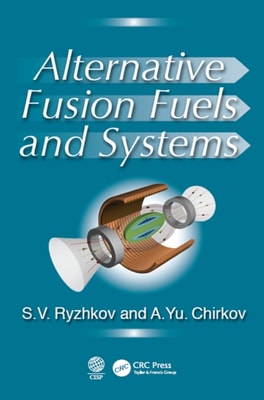
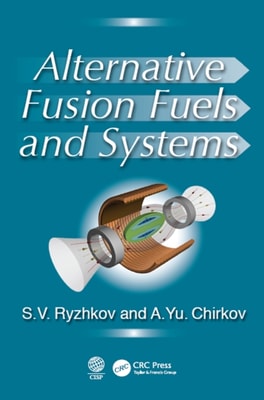
Explores the systems of magnetic confinement of high-temperature plasma with closed and open magnetic field lines which relate to alternative compact devices of controlled thermonuclear fusion.
Explores the systems of magnetic confinement of high-temperature plasma with closed and open magnetic field lines which relate to alternative compact devices of controlled thermonuclear fusion.
Fully updated with the latest developments in the eigenvalue Monte Carlo calculations and automatic variance reduction techniques and containing an entirely new chapter on fission matrix and alternative hybrid techniques.
Fully updated with the latest developments in the eigenvalue Monte Carlo calculations and automatic variance reduction techniques and containing an entirely new chapter on fission matrix and alternative hybrid techniques.
Proceeding from basic fundamentals to applications, this volume provides a comprehensive overview of the use of AFM and related scanning probe microscopies for cell surface analysis.
Intended for nonspecialists with some knowledge of physics or engineering, The Quantum Beat covers a wide range of salient topics relevant to atomic clocks, treated in a broad intuitive manner with a minimum of mathematical formalism.
Interpretive archaeology - meaning the interpretation (social science as opposed to hard science) of archaeology and archaeological artifacts - has predominantly been the realm of prehistoric archaeologists.
Spectroscopic methods are not only important as an analytical tool, they also provide information about fundamental physical and chemical properties of molecules, the molecular and electronic structure, and the dynamic behaviour of molecules.
Electron magnetic resonance in the time domain has been greatly facilitated by the introduction of novel resonance structures and better computational tools, such as the increasingly widespread use of density-matrix formalism.