Although scientists have effectively employed the concepts of probability to address the complex problem of prediction, modern science still falls short in establishing true predictions with meaningful lead times of zero-probability major disasters.
The Mathematical Theory of Tone Systems patterns a unified theory defining the tone system in functional terms based on the principles and forms of uncertainty theory.
Although the analysis of scattering for closed bodies of simple geometric shape is well developed, structures with edges, cavities, or inclusions have seemed, until now, intractable to analytical methods.
The second volume in the author's three-part series, Properties of Materials uses the principles of classical mechanics to qualitatively and quantitatively model specific features of matter.
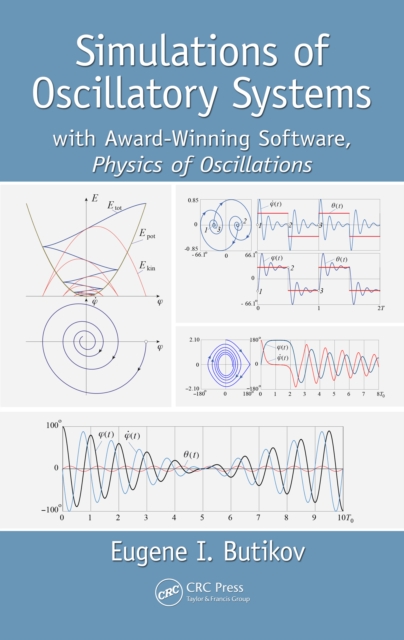
Deepen Your Students' Understanding of Oscillations through Interactive ExperimentsSimulations of Oscillatory Systems: with Award-Winning Software, Physics of Oscillations provides a hands-on way of visualizing and understanding the fundamental concepts of the physics of oscillations.
Although a wide range of mathematical techniques can apply to solving problems involving the interaction of waves with structures, few texts discuss those techniques within that context-most often they are presented without reference to any applications.
Physics: An Introduction to Physical Dynamics provides an accessible introduction to the fundamentals of physics for science and engineering undergraduates who are studying elementary physics.
Due to the increase in computational power and new discoveries in propagation phenomena for linear and nonlinear waves, the area of computational wave propagation has become more significant in recent years.
Physics: An Introduction to Physical Dynamics provides an accessible introduction to the fundamentals of physics for science and engineering undergraduates who are studying elementary physics.
Over the last twenty years, the growing availability of computing power has had an enormous impact on the classical fields of direct and inverse scattering.
Mathematical Techniques for Wave Interaction with Flexible Structures is a thoughtful compilation of the various mathematical techniques used to deal with wave structure interaction problems.
Writing as a scholar, composer, and musician, Jessie Cox foregrounds the experience of Black Swiss through sound and music in his first book, Sounds of Black Switzerland.
The first successful field theory was created by the Scottish Physicist James Clerk Maxwell in the mid -19th century – the electromagnetic field theory.
This proceedings book focuses on advances in theory, experiments and numerical simulations of fluid-structure-sound interactions related to turbulence, flow-induced vibration, noise and their control.
This proceedings book focuses on advances in theory, experiments and numerical simulations of fluid-structure-sound interactions related to turbulence, flow-induced vibration, noise and their control.
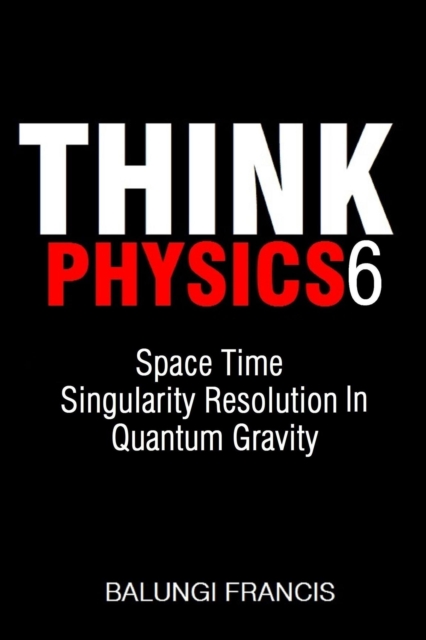
The aim of this book is to develop a theory capable of explaining the quantum behavior of the gravitational fields and thereafter explain the problems involving the combination of very high energy and very small dimensions of space, such as the behavior of Black holes and the study of the properties of the early universe.
This book explains the physical principles and theoretical basis of acoustics of nanofluids with mathematical rigor, focusing on concepts and points of view that have proven effective in applications such as heat transfer, petroleum science and technology, wastewater treatment, food processing, and hydrogen production.
A Solid Introduction to Sound and Vibration: No Formal Background NeededThis Second Edition of Fundamentals of Sound and Vibration covers the physical, mathematical and technical foundations of sound and vibration at audio frequencies.
The Standard Model is inconsistent with that of general relativity, to the point that one or both theories break down under certain conditions (for example within known space time singularities like the Big Bang and the centers of black holes beyond the event horizon).
This second edition to the bestselling Quantum Gravity in a Nutshell1 is a good introduction to quantum gravity and has a lot of interesting history about the development of the theory since 1899.