This book provides a comprehensive collection of problems together with their detailed solutions for Bose, Spin, Fermi systems and also interacting systems.
This book contains a valuable discussion of renormalization through the addition of counterterms to the Lagrangian, giving the first complete proof of the cancellation of all divergences in an arbitrary interaction.
Some of the articles in this collection give up-to-date accounts of areas in mathematical physics to which Valentine Bargmann made pioneering contributions.
This book presents an overview of recent developments in the area of localization for quasi-periodic lattice Schrodinger operators and the theory of quasi-periodicity in Hamiltonian evolution equations.
The book presents a comprehensive summary of experiments and high-fidelity simulations (using Direct Numerical Simulation [DNS] and Large Eddy Simulation [LES]) of rough wall pipe and channel flows, and turbulent boundary layers from subsonic to hypersonic speeds.
Quantum mechanics was still in its infancy in 1932 when the young John von Neumann, who would go on to become one of the greatest mathematicians of the twentieth century, published Mathematical Foundations of Quantum Mechanics--a revolutionary book that for the first time provided a rigorous mathematical framework for the new science.
A definitive proof of global nonlinear stability of Minkowski space-time as a solution of the Einstein-Klein-Gordon equationsThis book provides a definitive proof of global nonlinear stability of Minkowski space-time as a solution of the Einstein-Klein-Gordon equations of general relativity.
An advanced treatment of surgery theory for graduate students and researchersSurgery theory, a subfield of geometric topology, is the study of the classifications of manifolds.
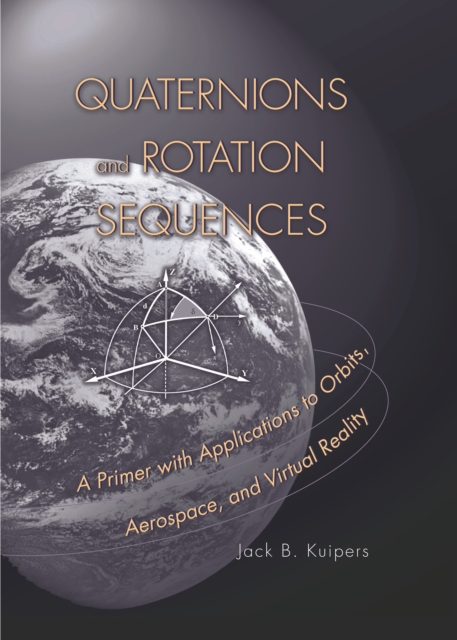
Ever since the Irish mathematician William Rowan Hamilton introduced quaternions in the nineteenth century--a feat he celebrated by carving the founding equations into a stone bridge--mathematicians and engineers have been fascinated by these mathematical objects.
Motivated by the theory of turbulence in fluids, the physicist and chemist Lars Onsager conjectured in 1949 that weak solutions to the incompressible Euler equations might fail to conserve energy if their spatial regularity was below 1/3-Holder.
This book offers a survey of recent developments in the analysis of shock reflection-diffraction, a detailed presentation of original mathematical proofs of von Neumann's conjectures for potential flow, and a collection of related results and new techniques in the analysis of partial differential equations (PDEs), as well as a set of fundamental open problems for further development.
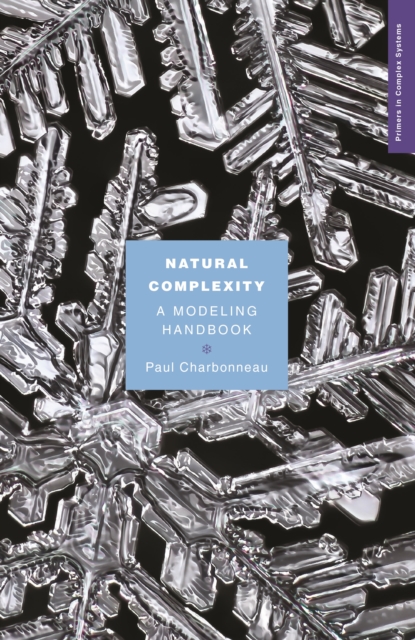
This book provides a short, hands-on introduction to the science of complexity using simple computational models of natural complex systems-with models and exercises drawn from physics, chemistry, geology, and biology.
This book presents an authoritative and in-depth treatment of potential energy landscape theory, a powerful analytical approach to describing the atomic and molecular interactions in condensed-matter phenomena.
The book presents a comprehensive summary of experiments and high-fidelity simulations (using Direct Numerical Simulation [DNS] and Large Eddy Simulation [LES]) of rough wall pipe and channel flows, and turbulent boundary layers from subsonic to hypersonic speeds.
The first complete proof of Arnold diffusion-one of the most important problems in dynamical systems and mathematical physicsArnold diffusion, which concerns the appearance of chaos in classical mechanics, is one of the most important problems in the fields of dynamical systems and mathematical physics.
This textbook provides a modern introduction to linear algebra, a mathematical discipline every first year undergraduate student in physics and engineering must learn.
Studienarbeit aus dem Jahr 2021 im Fachbereich Ingenieurwissenschaften - Robotik, Note: 1,0, Hochschule Bochum, Sprache: Deutsch, Abstract: Diese Hausarbeit beschäftigt sich mit dem möglichen Einsatz von Robotern als Bienenersatz.
Studienarbeit aus dem Jahr 2020 im Fachbereich Pflegewissenschaft - Altenpflege, Altenhilfe, Note: 2,0, Hochschule Fresenius Idstein, Sprache: Deutsch, Abstract: Die Hausarbeit soll untersuchen, inwieweit sich ärztliches Fachpersonal durch Medizinroboter ersetzen lässt.
Bachelorarbeit aus dem Jahr 2022 im Fachbereich Ingenieurwissenschaften - Robotik, Note: 1,3, , Sprache: Deutsch, Abstract: In der vorliegenden Forschungsarbeit wird das wachsende und komplexe Beziehungsverhältnis zwischen Menschen und künstlichen Lebensformen unter die Lupe genommen.
This updated, second edition features a new section how to document and measure all the mass and charge transport properties of a material and a comprehensive solution manual for end-of-chapter exercise problems, that is designed to help readers themselves grasp and apply the fundamental knowledge of kinetics.
This book, the first volume of a two-part monograph, is centered on key background fundamentals and results, and on the description of the State- and Property-Specific Approach (SPSA) to the construction and implementation of efficacious methods for the quantitative solution of various types of time-independent or time-dependent problems in Quantum Chemistry and in Atomic, Molecular, Optical, and Chemical Physics.
This book provides a self-contained and rigorous presentation of the main mathematical tools needed to approach many courses at the last year of undergraduate in Physics and MSc programs, from Electromagnetism to Quantum Mechanics.
This book provides a self-contained and rigorous presentation of the main mathematical tools needed to approach many courses at the last year of undergraduate in Physics and MSc programs, from Electromagnetism to Quantum Mechanics.
This second edition of the textbook Introduction to Tensor Network Methods contains more advanced and technical parts as new topics related to tensor network algorithms that have been developed in the last few years.
This book is a Weekend Pocketbook on Everything You Should Know About the Inevitable Milky Way's Collision with Andromeda, the story of how galaxies crash, merge, ignite, and transform across cosmic time.
This updated, second edition features a new section how to document and measure all the mass and charge transport properties of a material and a comprehensive solution manual for end-of-chapter exercise problems, that is designed to help readers themselves grasp and apply the fundamental knowledge of kinetics.
This book, the first volume of a two-part monograph, is centered on key background fundamentals and results, and on the description of the State- and Property-Specific Approach (SPSA) to the construction and implementation of efficacious methods for the quantitative solution of various types of time-independent or time-dependent problems in Quantum Chemistry and in Atomic, Molecular, Optical, and Chemical Physics.
This second edition of the textbook Introduction to Tensor Network Methods contains more advanced and technical parts as new topics related to tensor network algorithms that have been developed in the last few years.
Written by the creator of the modern theory of random tensors, this book is the first self-contained introductory text to this rapidly developing theory.
This book highlights how artificial intelligence (AI) is transforming the design, analysis, and application of polymers in modern science and industry.
This book highlights how artificial intelligence (AI) is transforming the design, analysis, and application of polymers in modern science and industry.