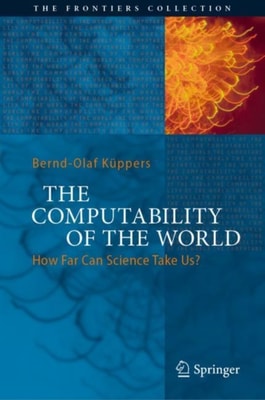
In this thought-provoking book Kuppers, an internationally renowned physicist, philosopher and theoretical biologist, addresses a number of science's deepest questions: Can physics advance to the origin of all things and explain the unique phenomena of life, time and history?
This book introduces and discusses both the fundamental aspects and the measurability of applications of time-symmetric kinetic quantities, outlining the features that constitute the non-dissipative branch of non-equilibrium physics.
Many people, including physicists, are confused about what the Second Law of thermodynamics really means, about how it relates to the arrow of time, and about whether it can be derived from classical mechanics.
This volume gathers contributions in the field of partial differential equations, with a focus on mathematical models in phase transitions, complex fluids and thermomechanics.
This volume collects ten surveys on the modeling, simulation, and applications of active particles using methods ranging from mathematical kinetic theory to nonequilibrium statistical mechanics.
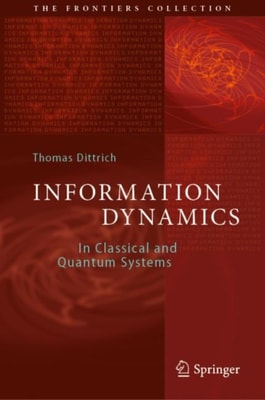
This wide-ranging book introduces information as a key concept not only in physics, from quantum mechanics to thermodynamics, but also in the neighboring sciences and in the humanities.
This book presents an in-depth systematic investigation of a dissipative effect which manifests itself as the growth of hydrodynamic stability and suppression of turbulence in relaxing molecular gas flows.
Thermal processes are ubiquitous and an understanding of thermal phenomena is essential for a complete description of the physics of nanoparticles, both for the purpose of modeling the dynamics of the particles and for the correct interpretation of experimental data.
This is a monograph on the emerging branch of mathematical biophysics combining asymptotic analysis with numerical and stochastic methods to analyze partial differential equations arising in biological and physical sciences.
This text systematically presents the basics of quantum mechanics, emphasizing the role of Lie groups, Lie algebras, and their unitary representations.
This volume collects chapters that examine representation theory as connected with affine Lie algebras and their quantum analogues, in celebration of the impact Vyjayanthi Chari has had on this area.
This book comprehensively presents the basic concepts of probability and Bayesian inference with sufficient generality to make them applicable to current problems in scientific research.
Unifying Themes in Complex Systems is a well-established series of carefully edited conference proceedings that serve to document and archive the progress made regarding cross-fertilization in this field.
This book presents a Lagrangian approach model to formulate various fields of continuum physics, ranging from gradient continuum elasticity to relativistic gravito-electromagnetism.
This book addresses the theoretical foundations and the main physical consequences of electromagnetic interaction, generally considered to be one of the four fundamental interactions in nature, in a mathematically rigorous yet straightforward way.
This book offers a theoretical description of topological matter in terms of effective field theories, and in particular topological field theories, focusing on two main topics: topological superconductors and topological insulators.
This book introduces and discusses the analysis of interacting many-body complex systems exhibiting spontaneous synchronization from the perspective of nonequilibrium statistical physics.
Murray Gell-Mann, Physics Nobel Prize Laureate in 1969 is known for his theoretical work on elementary particle physics and the introduction of quarks and together with H.
This book contains a collection of original research articles and review articles that describe novel mathematical modeling techniques and the application of those techniques to models of cell motility in a variety of contexts.
This textbook introduces step by step the basic numerical methods to solve the equations governing the motion of the atmosphere and ocean, and describes how to develop a set of corresponding instructions for the computer as part of a code.
Many open questions in Theoretical Physics pertain to strongly interacting quantum systems such as the quark-gluon plasma (QGP) produced in heavy-ion collisions or the strange-metal phase observed in many high-temperature superconductors.
This book is intended as an introductory lecture in material physics, in which the modern computational group theory and the electronic structure calculation are in collaboration.