The fast growing traffic demand in telecommunication networks, by use of the Internet and an increasing number of broadband services for multimedia com- munications, requires new high performance networking technologies.
Passive Components for Dense Optical Integration presents a theoretical and numerical investigation of high index-contrast (HIC) passive components that can serve as building blocks at the end-points and nodes of WDM communications systems.
High Field Science is a proceedings volume from a meeting at Lawrence Livermore Laboratory, and contains papers from the top experts in the fields of ultraintense laser technology, laser fusion energy, high energy laser electron acceleration, bright X-ray sources by lasers, laboratory laser astrophysics, and applications to relativity, high density and high energy physics.
Growth of Crystals, Volume 21 presents a survey, with detailed analysis, of the scientific and technological approaches, and results obtained, by leading Russian crystal growth specialists from the late 1990's to date.
Metropolitan Area WDM Networks: An AWG Based Approach provides a comprehensive and technically detailed overview of the latest metropolitan area WDM network experimental systems, architectures, and access protocols.
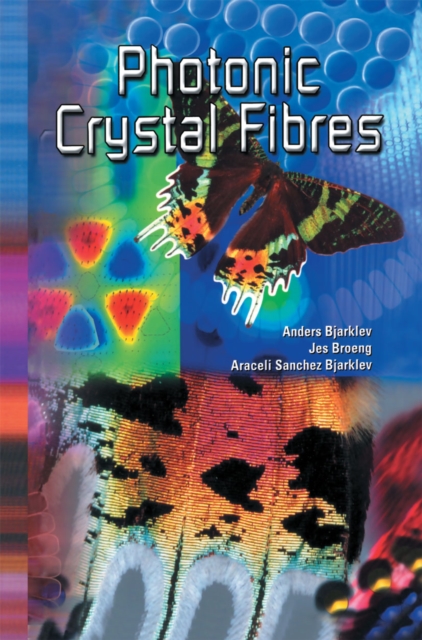
Photonic Crystal Fibres describes the fundamental properties of the optical waveguides known under the terms of photonic crystal fibres, microstructured fibres, or holey fibres.
All-optical networking is generally believed to be the only solution for coping with the ever-increasing demands in bandwidth, such as the World Wide Web application.
Nonlinear Optics, Quantum Optics, and Ultrafast Phenomena with X-Rays is an introduction to cutting-edge science that is beginning to emerge on state-of-the-art synchrotron radiation facilities and will come to flourish with the x-ray free-electron lasers currently being planned.
This book describes recent innovations in 3D media and technologies, with coverage of 3D media capturing, processing, encoding, and adaptation, networking aspects for 3D Media, and quality of user experience (QoE).
Bismuth-containing compounds comprise a relatively unexplored materials system that is expected to offer many unique and desirable optoelectronic, thermoelectric, and electronic properties for innovative device applications.
Topics in Nonlinear Dynamics, Volume 1: Proceedings of the 31st IMAC, A Conference and Exposition on Structural Dynamics, 2013, the first volume of seven from the Conference, brings together contributions to this important area of research and engineering.
From Hamiltonian Chaos to Complex Systems: A Nonlinear Physics Approach collects contributions on recent developments in non-linear dynamics and statistical physics with an emphasis on complex systems.
Optoelectronics--technology based on applications light such as micro/nano quantum electronics, photonic devices, laser for measurements and detection--has become an important field of research.
Nanoscale Applications for Information and Energy Systems presents nanotechnology fundamentals and applications in the key research areas of information technology (electronics and photonics) and alternative (solar) energy: plasmonics, photovoltaics, transparent conducting electrodes, silicon electroplating, and resistive switching.
"e;Telescopes and Techniques"e; has proved itself in its first edition, having become probably one of the most widely used astronomy texts, both for numerate amateur astronomers and for astronomy and astrophysics undergraduates.
Nonlinear Photonics and Novel Optical Phenomena contains contributed chapters from leading experts in nonlinear optics and photonics, and provides a comprehensive survey of fundamental concepts as well as hot topics in current research on nonlinear optical waves and related novel phenomena.
Enhancement cavities are passive optical resonators in which continuous-wave laser radiation or pulses of a frequency comb are coherently overlapped, allowing for a power and intensity scaling of up to several orders of magnitude.
Rectenna Solar Cells discusses antenna-coupled diode solar cells, an emerging technology that has the potential to provide ultra-high efficiency, low-cost solar energy conversion.
Topics in Nonlinear Dynamics, Volume 3, Proceedings of the 30th IMAC, A Conference and Exposition on Structural Dynamics, 2012, the third volume of six from the Conference, brings together 26 contributions to this important area of research and engineering.
Planetary Nebulae and How to Observe Them is for amateur astronomers who want to go beyond the Messier objects, concentrating on one of the most beautiful classes of astronomical objects in the sky.
In this brief we review several approaches that provide super resolved imaging, overcoming the geometrical limitation of the detector as well as the diffraction effects set by the F number of the imaging lens.
Reviews in Plasmonics 2010, the first volume of the new book serial from Springer, serves as a comprehensive collection of current trends and emerging hot topics in the field of Plasmonics and closely related disciplines.
Regularity and Complexity in Dynamical Systems describes periodic and chaotic behaviors in dynamical systems, including continuous, discrete, impulsive, discontinuous, and switching systems.
Fractional Dynamics and Control provides a comprehensive overview of recent advances in the areas of nonlinear dynamics, vibration and control with analytical, numerical, and experimental results.
The formation of images by ultrasound is a fascinating study, with well-established, yet rapidly growing, applic- ations in medicine and with increasing relevance to a surprisingly disparate set of problems in the non-destructive examination of materials and components.
This IMA Volume in Mathematics and its Applications SOLITONS IN PHYSICS, MATHEMATICS, AND NONLINEAR OPTICS is based on the proceedings of two workshops which were an integral part of the 1988-89 IMA program on NONLINEAR WAVES.
Many years spent in an industrial engineering laboratory have convinced me that there is ever-increasing need to present recent and current research in forms which can be easily assimilated by engineers, technical managers, and others concerned with applications and the development of new tech- nology.
The Advanced Study Institute on Fiber and Integrated Optics was held at Cargese from June 23 to July 7, 1978, at a time when both fields were undergoing a very rapid evolution.