Homogeneous Nucleation Theory: The Pretransition Theory of Vapor Condensation discusses the influence of classical thermodynamics, statistical mechanics, and multistate kinetics on the homogeneous nucleation theory.
Steam and Gas Tables with Computer Equations presents tables illustrating the thermodynamic properties of steam and air, along with computer equations.
Quantitative Theory of Critical Phenomena details in a self-contained manner the most popular and extensively practiced methods for the quantitative study of critical phenomena.
Modern Developments in Heat Transfer provides information pertinent to heat transfer investigation, including convective heat transfer, radiation heat transfer, as well as heat and mass transfer.
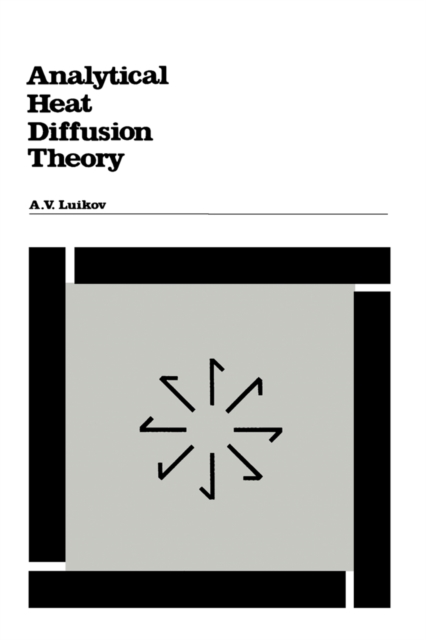
Analytical Heat Diffusion Theory is a revised edition of an earlier book by Academician Luikov, which was widely used throughout the Soviet Union and the surrounding socialist countries.
A Course in Statistical Thermodynamics explores the physical aspects of the methodology of statistical thermodynamics without the use of advanced mathematical methods.
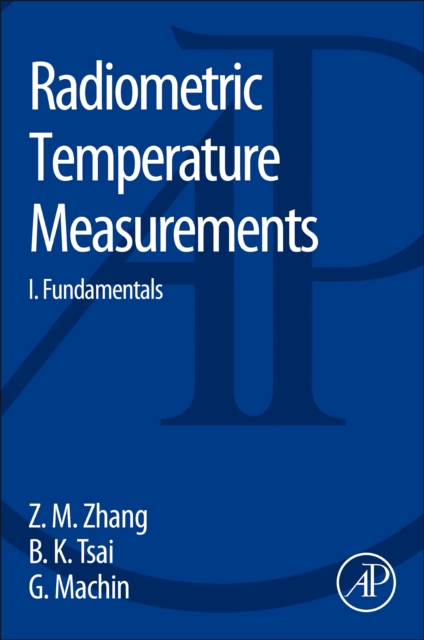
This book describes the theory of radiation thermometry, both at a primary level and for a variety of applications, such as in the materials processing industries and remote sensing.
Introductory Statistical Thermodynamics is a text for an introductory one-semester course in statistical thermodynamics for upper-level undergraduate and graduate students in physics and engineering.
This book describes the practice of radiation thermometry, both at a primary level and for a variety of applications, such as in the materials processing industries and remote sensing.
In the past several years, there has been an explosion in the ability of biologists, molecular biologists and biochemists to collect vast amounts of data on their systems.
This book describes the theory of radiation thermometry, both at a primary level and for a variety of applications, such as in the materials processing industries and remote sensing.
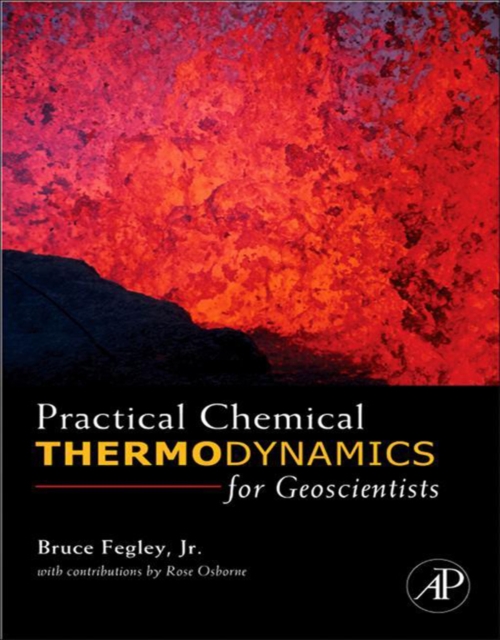
Practical Chemical Thermodynamics for Geoscientists covers classical chemical thermodynamics and focuses on applications to practical problems in the geosciences, environmental sciences, and planetary sciences.
Advances in Heat Transfer is designed to fill the information gap between regularly scheduled journals and university level textbooks by providing in-depth review articles over a broader scope than is allowablein either journals or texts.
Advances in Heat Transfer fills the information gap between regularly scheduled journals and university-level textbooks by providing wide-ranging and in-depth review articles.
Modeling in Transport Phenomena, Second Edition presents and clearly explains with example problems the basic concepts and their applications to fluid flow, heat transfer, mass transfer, chemical reaction engineering and thermodynamics.
Fundamentals and Technology of Combustion contains brief descriptions of combustion fundamental processes, followed by an extensive survey of the combustion research technology.
A group of distinguished scientists contributes to the foundations of a new discipline in Earth sciences: earthquake thermodynamics and thermodynamics of formation of the Earth's interior structures.
Alternative Mathematical Theory of Non-equilibrium Phenomena presents an entirely new theoretical approach to complex non-equilibrium phenomena, especially Gibbs/Falk thermodynamics and fluid mechanics.
Advances in Heat Transfer is designed to fill the information gap between regularly scheduled journals and university level textbooks by providing in-depth review articles over a broader scope than is allowable in either journals or texts.
Today the study of materials is concerned with the underlying thermodynamic and chemical processes involved in the manufacture and processing of a wide range of materials - metals, ceramics, semi-conductors, plastics and composites.
The most comprehensive and detailed treatment of thermal radiation heat transfer available for graduate students, as well as senior undergraduate students, practicing engineers and physicists is enhanced by an excellent writing style with nice historical highlights and a clear and consistent notation throughout.
Chemical Thermodynamics: Principles and Applications presents a thorough development of the principles of thermodynamics--an old science to which the authors include the most modern applications, along with those of importance in developing the science and those of historical interest.
The new edition will continue to be of use to engineers in industry and technological establishments, especially as brief reviews are included on many important aspects of Turbomachinery, giving pointers towards more advanced sources of information.
Advances in Heat Transfer fills the information gap between regularly scheduled journals and university level textbooks by providing in-depth review articles over a broader scope than in journals or texts.
The first strand involves a critical overview of the design of experimental methods used for examining the thermal behaviour of solid fuels [pyrolysis, liquefaction and gasification], while the second will emphasise chemical structures and molecular mass distributions of coal derived tars, extracts and pitches, petroleum-derived asphaltenes, and biomass derived heavy hydrocarbon liquids.
Cryogenic Technology and Applications describes the need for smaller cryo-coolers as a result of the advances in the miniaturization of electrical and optical devices and the need for cooling and conducting efficiency.
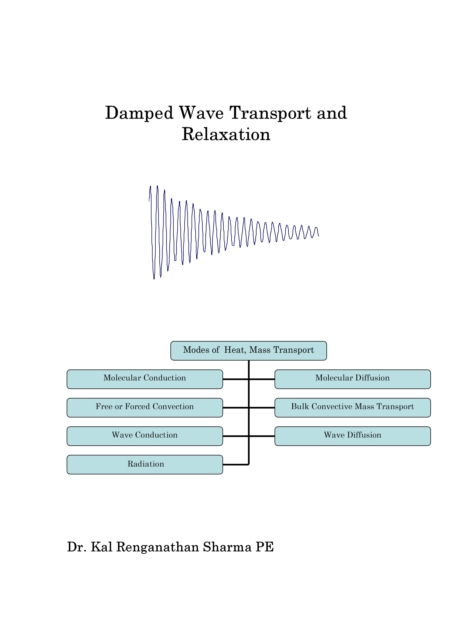
Transient problems in transport phenomena have a variety of applications, ranging from drug delivery systems in chemotherapy in bioengineering to heat transfer to surfaces in fluidized bed combustion (FBC) boilers in mechanical engineering.
Heat exchangers with minichannel and microchannel flow passages are becoming increasingly popular because of their ability to remove large heat fluxes under single-phase and two-phase applications.