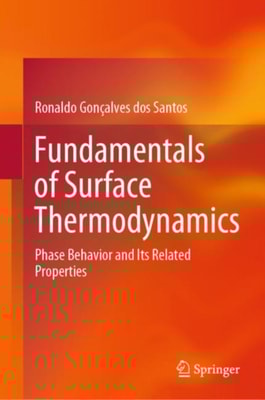
Statistical mechanics: the bane of many a physics student, and traditionally viewed as a long parade of ensembles, partition functions, and partial derivatives.
This book explains the modelling and simulation of thermal power plants, and introduces readers to the equations needed to model a wide range of industrial energy processes.
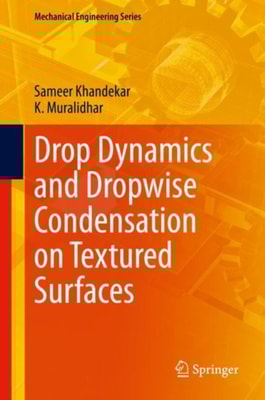
This book is an expanded form of the monograph, Dropwise Condensation on Inclined Textured Surfaces, Springer, 2013, published earlier by the authors, wherein a mathematical model for dropwise condensation of pure vapor over inclined textured surfaces was presented, followed by simulations and comparison with experiments.
The Mathematics of Thermal Modeling, Second Edition, provides an introduction to the basics of the mathematics and physics needed to understand and use the physical principles employed in constructing models of a number of aspects of thermal modeling in industrial processes, notably laser welding; most of the techniques are applicable to many other technological processes, however.
Thermal Analysis and Thermodynamic Properties of Solids, Second Edition covers foundational principles and recent updates in the field, presenting an authoritative overview of theoretical knowledge and practical applications across several fields.
Phase change material (PCM)-based composite heat sinks have attracted great interest in recent decades, especially in the context of thermal management of portable electronic devices such as mobile phones, digital cameras, personal digital assistants, and notebooks.
Phase change material (PCM)-based composite heat sinks have attracted great interest in recent decades, especially in the context of thermal management of portable electronic devices such as mobile phones, digital cameras, personal digital assistants, and notebooks.
Nuclear Waste Management Facilities: Advances, Environmental Impacts, and Future Prospects examines best practices and recent trends in improving nuclear safety and reducing the negative environmental impacts of nuclear waste.
Nuclear Waste Management Facilities: Advances, Environmental Impacts, and Future Prospects examines best practices and recent trends in improving nuclear safety and reducing the negative environmental impacts of nuclear waste.
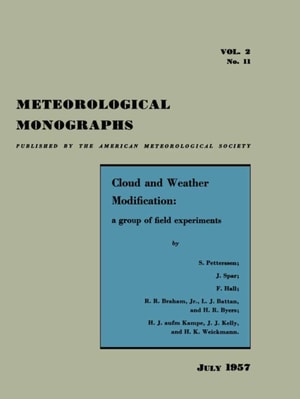
The objectives of the American Meteorological Society are "e;the development and dissemination of knowledge of meteorology in all its phases and applications, and the advancement of its professional ideals.
The objects of the American Meteorological Society are "e;the development and dissemination of knowledge of meteorology in all its phases and applications, and the advancement of its professional ideals.
Chemical Thermodynamics for Industry presents the latest developments in applied thermodynamics and highlights the role of thermodynamics in the chemical industry.
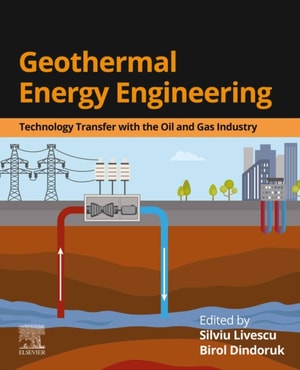
Geothermal Energy Engineering: Technology Transfer from the Oil and Gas Industry focuses on geothermal energy technology, engineering, field and operational topics, as seen from an oil and gas industry perspective.
Understanding Soils of Mountainous Landscapes: Sustainable Use of Soil Ecosystem Services and Management focuses on the patterns and processes of mountainous soils, including threats due to the fragile nature of mountain ecosystems, and the conservation and management of soil ecosystem services and restoration processes.
Pensees - Blaise Pascal - The Pensees ("e;Thoughts"e;) is a collection of fragments written by the French 17th-century philosopher and mathematician Blaise Pascal.
This book is a basic textbook of comprehensive thermal science and energy utilization technologies, which is divided into two parts: Engineering Thermodynamics and Heat Transfer.
A sound understanding of magnetism, transport theory, spin relaxation mechanisms, and magnetization dynamics is necessary to engage in spintronics research.
Nanofluids for Large-Scale Industrial Applications examines the challenges and current progress towards large-scale industrial application of nanofluids, summarizing and bringing together varied current research strands and providing potential solutions pertaining to the scientific, economic, and social barriers that currently exist.
The book Thermodynamics: Principles and Applications has been written especially for the undergraduate students, but it will be helpful for Engineering and Postgraduate students as well.
Reviews and original works devoted to different aspects of polymerization (kinetics and mechanism), to preparation of nanocomposites on the basis of clays, to studying of their properties and searches of ways of their applications, oxidizing processes, the new equipments for industrial applications, investigation of protein reactions, creation of new type of reactions, bioantioxidants, UV irradiation of biological molecules (erythrocytes, particularly), NMR- and ESR-spectroscopy, nonequilibrium phase transitions, chemistry of plastics and rubbers, photochemical reactions, preparation and characterization of catalysts, industrial installations, cement-based polymer composites, utilization of waste, diffusion properties, biodegradable films.
This book looks at global atmospheric processes from a physical standpoint using available current and past observational data taken from measurements of relevant atmospheric parameters.
This book consists of three chapters that each describe recent advancements in the field of thermodynamics, which is a branch of physics that deals with heat, work, and temperature.
Emissivity: Characteristics, Determination and Applications opens with an overview of a variety of remote sensing retrieval methods of land surface emissivity from space.
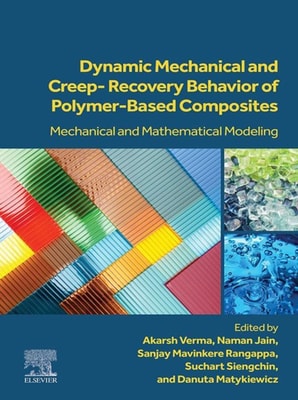
Dynamic Mechanical and Creep-Recovery Behaviour of Polymer-Based Composites: Mechanical and Mathematical Modeling covers mathematical modelling, dynamic mechanical analysis, and the ways in which various factors impact the creep-recovery behaviour of polymer composites.