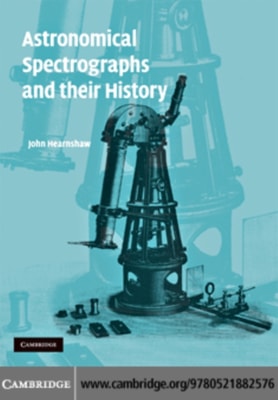
Indispensable reference on the historical development of spectrographs for advanced amateur and professional astronomers, graduate students, and historians of science.
This two-volume catalog is the first in-depth investigation of comets that were reported since the 17th century but not confirmed and subsequently lost.
This book is an innovative, interdisciplinary study of the nature of design as a form of communication within and across Britain and its empire in the long nineteenth century.
This book explores how steam engine technology was transferred into nineteenth-century China in the second half of the nineteenth century by focusing on the transmission of knowledge and skills.
This book looks at the types of new research organizations that drive scientific innovation and how ground-breaking science transforms research fields and their organization.
This book examines the fairies, demons, and nature spirits haunting the margins of Christendom from late-antique Egypt to early modern Scotland to contemporary Amazonia.
This multi-disciplinary essay collection explores the controversial life and achievements of Sir John Hill (1714-1775), a prolific contributor to Georgian England's literature, medicine and science.
This book examines the ways in which studies of science intertwined with Cold War politics, in both familiar and less familiar "e;battlefields"e; of the Cold War.
The Indian Ocean has been the site of multiple interconnected medical interactions that may be viewed in the context of the environmental factors connecting the region.
This interdisciplinary work, the first of two volumes, presents essays on various aspects of disease, medicine, and healing in different locations in and around the Indian Ocean from the ninth century to the early modern period.
The typical image of the Gezira Scheme, the large-scale irrigation scheme started under British colonial rule in Sudan, is of a centrally planned effort by a central colonial power controlling tenants and cotton production.
Religion and science were fundamental aspects of Eastern European communist political culture from the very beginning, and remained in uneasy tension across the region over the decades.
This volume of essays fills a lacunae in the current climate change debate by bringing new perspectives on the role of humanities scholars within this debate.
This books examines the conditions under which scientists compromised the ideals of science, and elucidates these with reference to the challenges of profit motives and national security concerns.