In 1900 Hungary was a regional power in Europe with imperial pretensions; by 1919 it was crippled by profound territorial, social and national transformations.
This book applies a systems and risk perspective on international energy relations, author Per Hogselius investigates how and why governments, businesses, engineers and other actors sought to promote - and oppose- the establishment of an extensive East-West natural gas regime that seemed to overthrow the fundamental logic of the Cold War.
Racism, race hygiene, eugenics, and their histories have for a long time been studied in terms of individual countries, whether genocidal ideology in Nazi Germany or scientific racial theories in the United States.
Explaining crime by reference to abnormalities of the brain is just one example of how the human and social sciences have influenced the approach to social problems in Western societies since 1880.
A study of the history of modern insomnia, this book explores how poets, journalists, and doctors of the Victorian period found themselves in near-universal agreement that modernity and sleep were somehow incompatible.
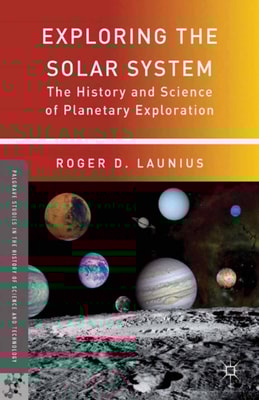
Beginning in the early days of the Space Age - well before the advent of manned spaceflight - the United States, followed soon by other nations, undertook an ambitious effort to study the planets of the solar system.
The Politics of Addiction examines power and policy-making in the context of a bitter conflict between private and publicly employed doctors treating addiction.
This book surveys the appearances of righteous heathens or virtuous pagans in travel literature, chronicles, romances, and sermons, as well as in the work of Langland, Chaucer and Gower.
This study of the female members of the Order or Hospital of Saint John of Jerusalem in the High Middle Ages analyses their presence in the context of female monasticism and compares their position to the position of women in other religious military orders.
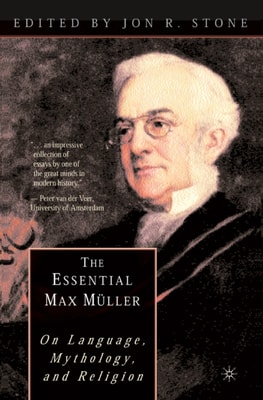
Max Muller is often referred to as the 'father of Religious Studies', having himself coined the term 'science of religion' (or religionswissenschaft) in 1873.
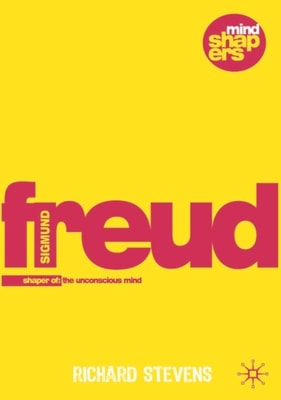
A beautifully written exposition of Freud's ideas and how they emerged from the zeitgeist of the age, Stevens offers students and general readers a stimulating and uniquely balanced assessment of Freud's work.
A unique analysis of the intensive interest in Jewish culture of early modern Christian Humanists as a part of their comprehensive program of study of Greek, Latin, and Hebrew.
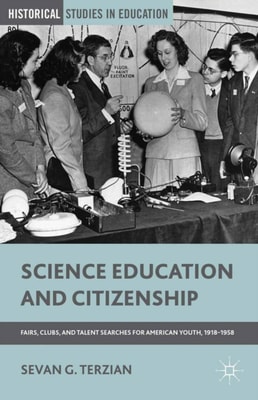
Science fairs, clubs, and talent searches are familiar fixtures in American education, yet little is known about why they began and grew in popularity.
This volume brings together essays from leading thinkers to examine what role Asian traditions of knowledge played in the rise of modern science in Europe, the implications this has for the epistemology of science, and whether pre-modern Asian traditions can provide resources for advancing scientific knowledge in future.
Christoph Laucht offers the first investigation into the roles played by two German-born emigre atomic scientists, Klaus Fuchs and Rudolf Peierls, in the development of British nuclear culture, especially the practice of nuclear science and the political implications of the atomic scientists' work, from the start of the Second World War until 1959.
This core textbook gathers an international team of historians to present a comprehensive account of the central themes in the histories of Britain, British America, and the British Caribbean seen in Atlantic perspective.
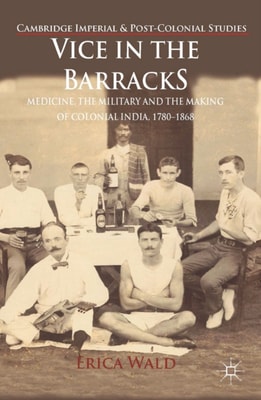
Using case studies of cholera, plague, malaria, and yellow fever, this book analyzes how factors such as public health diplomacy, trade, imperial governance, medical technologies, and cultural norms operated within global and colonial conceptions of political and epidemiological risk to shape infectious disease policies in colonial India.
Part of the library of Science and Public Affairs and originally published in 1851, this study relates views of the industry, science and the Government of England in 1851.
Part of the library of Science and Public Affairs and originally published in 1851, this study relates views of the industry, science and the Government of England in 1851.
The first book of its kind, Forensic Medicine in Western Society: A History draws on the most recent developments in the historiography, to provide an overview of the history of forensic medicine in the West from the medieval period to the present day.
The first book of its kind, Forensic Medicine in Western Society: A History draws on the most recent developments in the historiography, to provide an overview of the history of forensic medicine in the West from the medieval period to the present day.
This volume brings together a collection of new essays by leading scholars on the subject of causation in the early modern period, from Descartes to Lady Mary Shepherd.
This volume brings together a collection of new essays by leading scholars on the subject of causation in the early modern period, from Descartes to Lady Mary Shepherd.
This book is an oral history of the auditing profession in Britain from 1920s to the present day based on extended extracts from interviews with 77 past and present practitioners.
This book is an oral history of the auditing profession in Britain from 1920s to the present day based on extended extracts from interviews with 77 past and present practitioners.
The Routledge History of the Modern Maritime World since 1500 provides a wide-ranging set of chapters, covering the sixteenth century to the present, which represent the main lines of current enquiry in maritime history.