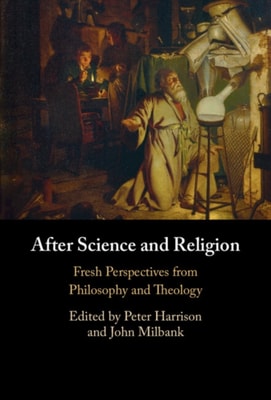
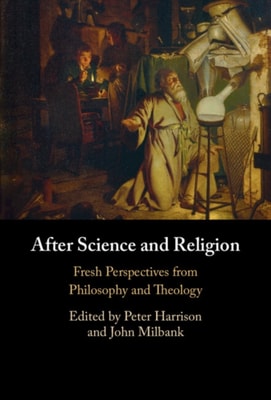
A ground-breaking volume of innovative conversations between science and religion which move beyond hackneyed positions of either conflict or dialogue.
A ground-breaking volume of innovative conversations between science and religion which move beyond hackneyed positions of either conflict or dialogue.
The author of this book takes us on an interesting journey to explore the world of black holes, as it begins with our definition of these mysterious astronomical phenomena and explains the aspects of their composition and nature.
This book presents a history of radioecology, from World War II through to the critical years of the Cold War, finishing with a discussion of recent developments and future implications for the field.
This book presents a history of radioecology, from World War II through to the critical years of the Cold War, finishing with a discussion of recent developments and future implications for the field.
Hidden and Devalued Feminized Labour in the Digital Humanities examines the data-driven labour that underpinned the Index Thomisticus-a preeminent project of the incunabular digital humanities-and advanced the data-foundations of computing in the Humanities.
Hidden and Devalued Feminized Labour in the Digital Humanities examines the data-driven labour that underpinned the Index Thomisticus-a preeminent project of the incunabular digital humanities-and advanced the data-foundations of computing in the Humanities.
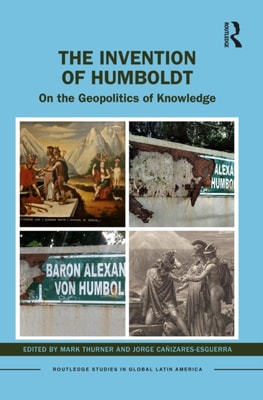
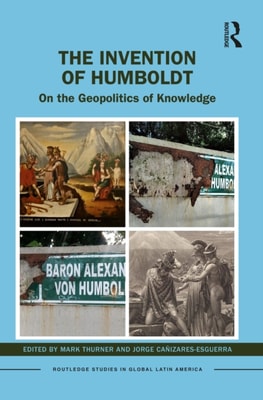
The Invention of Humboldt is a game-changing volume of essays by leading scholars of the Hispanic world that explodes many myths about Alexander von Humboldt and his world.
The Invention of Humboldt is a game-changing volume of essays by leading scholars of the Hispanic world that explodes many myths about Alexander von Humboldt and his world.
This book uses the 'strategic-relational approach' to explain how the Labour governments of Tony Blair and Gordon Brown integrated the United Kingdom into the US ballistic missile defence system in order to maintain national security and to uphold the 'special relationship' while at the same time recognising that voters were in general opposed to missile defence.
This book uses the 'strategic-relational approach' to explain how the Labour governments of Tony Blair and Gordon Brown integrated the United Kingdom into the US ballistic missile defence system in order to maintain national security and to uphold the 'special relationship' while at the same time recognising that voters were in general opposed to missile defence.
This collection of original essays offers a comprehensive examination of scientific progress, which has been a central topic in recent debates in philosophy of science.
This collection of original essays offers a comprehensive examination of scientific progress, which has been a central topic in recent debates in philosophy of science.
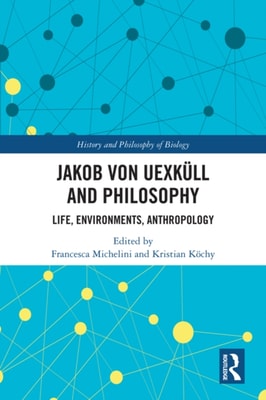
Dismissed by some as the last of the anti-Darwinians, his fame as a rigorous biologist even tainted by an alleged link to National Socialist ideology, it is undeniable that Jakob von Uexkull (1864-1944) was eagerly read by many philosophers across the spectrum of philosophical schools, from Scheler to Merleau-Ponty and Deleuze and from Heidegger to Blumenberg and Agamben.
Dismissed by some as the last of the anti-Darwinians, his fame as a rigorous biologist even tainted by an alleged link to National Socialist ideology, it is undeniable that Jakob von Uexkull (1864-1944) was eagerly read by many philosophers across the spectrum of philosophical schools, from Scheler to Merleau-Ponty and Deleuze and from Heidegger to Blumenberg and Agamben.
Bodies of Information initiates the Routledge Advances in the History of Bioethics series by encompassing interdisciplinary Bioethical discussions on a wide range of descriptions of bodies in relation to their contexts from varying perspectives: including literary analysis, sociology, criminology, anthropology, osteology and cultural studies, to read a variety of types of artefacts, from the Romano-British period to Hip Hop.
Bodies of Information initiates the Routledge Advances in the History of Bioethics series by encompassing interdisciplinary Bioethical discussions on a wide range of descriptions of bodies in relation to their contexts from varying perspectives: including literary analysis, sociology, criminology, anthropology, osteology and cultural studies, to read a variety of types of artefacts, from the Romano-British period to Hip Hop.
This volume is a comprehensive study of George Wilson, a leading advocate for evangelical science and for the role of biology in technology - it examines his work to develop a unitary vision of Victorian science and technology by drawing upon religion, transcendental natural history, and Baconian philosophyGeorge Wilson was the first Regius Professor of Technology at the University of Edinburgh and the founding Director of the Industrial Museum of Scotland (now the National Museum of Scotland).
This volume is a comprehensive study of George Wilson, a leading advocate for evangelical science and for the role of biology in technology - it examines his work to develop a unitary vision of Victorian science and technology by drawing upon religion, transcendental natural history, and Baconian philosophyGeorge Wilson was the first Regius Professor of Technology at the University of Edinburgh and the founding Director of the Industrial Museum of Scotland (now the National Museum of Scotland).