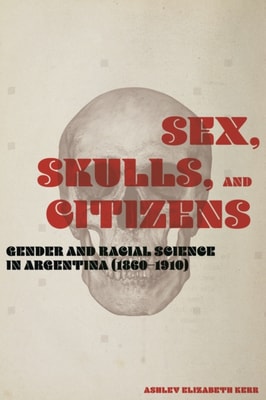
PROSE Awards Subject Category FinalistBiological Anthropology, Ancient History, and Archaeology, 2021 Best Nineteenth-Century Book Award, Latin American Studies Association Nineteenth-Century Section, 2021 Analyzing a wide variety of late-nineteenth-century sources, Sex, Skulls, and Citizens argues that Argentine scientific projects of the era were not just racial encounters, but were also conditioned by sexual relationships in all their messy, physical reality.
The essays in Copernirus and his Successors deal both with the influences on Copernicus, including that of Greek and Arabic thinkers, and with his own life and attitudes.
Traces the establishment of the Royal College of Physicians and Surgeons of Glasgow as a licensing body to its eminence as a centre of teaching in the 18th century.
The author sees the history of Western Science as the history of a vision and an argument, initiated by the ancient Greeks in their search for principles at once of nature and of argument itself.
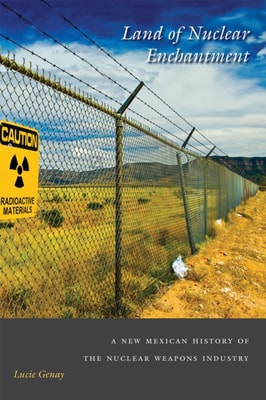
In this thoughtful social history of New Mexico's nuclear industry, Lucie Genay traces the scientific colonization of the state in the twentieth century from the points of view of the local people.
Through films that alternate between containment, order, and symmetry on the one hand, and obsession, explosiveness, and a lack of control on the other, Chantal Akerman has gained a reputation as one of the most significant filmmakers working today.
In the past two decades, scholars have transformed our understanding of the interactions between India and the West since the consolidation of British power on the subcontinent around 1800.
In Hitting the Brakes, Ann Johnson illuminates the complex social, historical, and cultural dynamics of engineering design, in which knowledge communities come together to produce new products and knowledge.
For much of the twentieth century scientists sought to explain objects and processes by reducing them to their components-nuclei into protons and neutrons, proteins into amino acids, and so on-but over the past forty years there has been a marked turn toward explaining phenomena by building them up rather than breaking them down.
The Monster in the Machine tracks the ways in which human beings were defined in contrast to supernatural and demonic creatures during the time of the Scientific Revolution.
In New Science, New World Denise Albanese examines the discursive interconnections between two practices that emerged in the seventeenth century-modern science and colonialism.
Cultural accounts of scientific ideas and practices have increasingly come to be welcomed as a corrective to previous-and still widely held-theories of scientific knowledge and practices as universal.
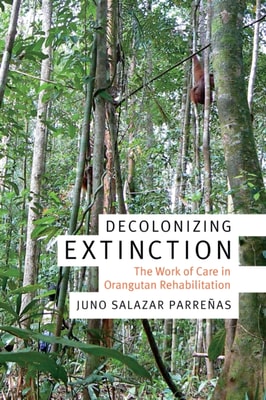
In Decolonizing Extinction Juno Salazar Parrenas ethnographically traces the ways in which colonialism, decolonization, and indigeneity shape relations that form more-than-human worlds at orangutan rehabilitation centers on Borneo.
This book examines a century of research on the relationship between bilingualism and intelligence and relates it to more recent research on bilingualism and executive functioning.
The Italian mathematician Mario Pieri (1860-1913) played a major role in the development of algebraic geometry and foundations of mathematics around the turn of the twentieth century.
A historical novel about the role of science in modern life, set against the backdrop of the 1925 Scopes Trial When William Jennings Bryan began a campaign to get evolution out of American schools in the 1920s, entomologist Martin Sullivan sought refuge from the tumult in his research.
Examines the domestic and international use of phenoxy herbicides by the United States in the mid-twentieth century In The Defoliation of America: Agent Orange Chemicals, Citizens, and Protests, Amy M.
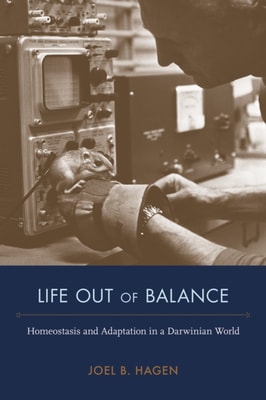
Traces historical developments in scientific conceptions of physiology, ecology, behavior, and evolutionary biology during the mid-twentieth century Life Out of Balance focuses on a period in history when new ideas of self-regulation, adaptation, and fitness became central to a variety of biological disciplines.
Journals and letters, translated from the original French, bring Michaux's work to modern readers and scientists Known to today's biologists primarily as the "e;Michx.
A study of the ways that southern Presbyterians in the wake of the Civil War contended with a host of cultural and theological questions Southern Presbyterian theologians enjoyed a prominent position in antebellum southern culture.
Shows how American scientists emerged from a disorganized group of amateurs into a professional body sharing a common orientation and common goals In this first effort to define an American scientific community, originally published in 1968, George Daniels has chosen for special study the 56 scientists most published in the 16 scientific journals identified as "e;national"e; during the period 1815 to 1845.
This book examines a century of research on the relationship between bilingualism and intelligence and relates it to more recent research on bilingualism and executive functioning.
The opening of this vital new book centers on a series of graves memorializing baboons killed near Amboseli National Park in Kenya in 2009--a stark image that emphasizes both the close emotional connection between primate researchers and their subjects and the intensely human qualities of the animals.
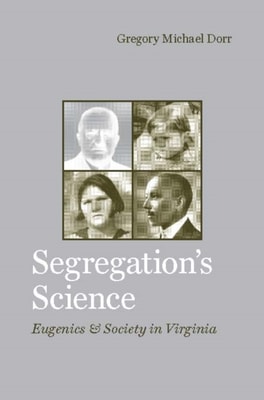
Blending social, intellectual, legal, medical, gender, and cultural history, Segregation's Science: Eugenics and Society in Virginia examines how eugenic theory and practice bolstered Virginia's various cultures of segregation--rich from poor, sick from well, able from disabled, male from female, and black from white and Native American.
For centuries, the southernmost region of the Florida peninsula was seen by outsiders as wild and inaccessible, one of the last frontiers in the quest to understand and reveal the natural history of the continent.
Military Writers Society of America Awards, Gold Medal for HistoryHighlighting men and women across the globe who have dedicated themselves to pushing the limits of space exploration, this book surveys the programs, technological advancements, medical equipment, and automated systems that have made space travel possible.
"e;This lively and fascinating book is an intelligent examination of how scientific endeavor operates over time and how community life can be focused and energized.
Eileen Reeves examines a web of connections between journalism, optics, and astronomy in early modern Europe, devoting particular attention to the ways in which a long-standing association of reportage with covert surveillance and astrological prediction was altered by the near simultaneous emergence of weekly newsheets, the invention of the Dutch telescope, and the appearance of Galileo Galilei's astronomical treatise, The Starry Messenger.