Hans Sloane was a young doctor from Northern Ireland who made his way in London and eventually become physician to the king and much of London society.
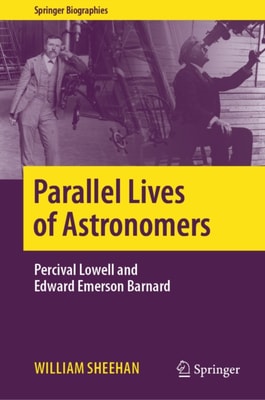
Using the "e;Parallel Lives"e; approach adopted by the Greek biographer Plutarch, noted historian of astronomy William Sheehan contrasts the lives and research careers of two famous astronomers, Percival Lowell and Edward Emerson Barnard.
From the ancient world to the present women have been critical to the progress of science, yet their importance is overlooked, their storieslost, distorted, or actively suppressed.
An authoritative interdisciplinary account of the historic discovery of gravitational wavesIn 1915, Albert Einstein predicted the existence of gravitational waves-ripples in the fabric of spacetime caused by the movement of large masses-as part of the theory of general relativity.
A bold and revolutionary perspective on the science and cultural history of menstruationMenstruation is something half the world does for a week at a time, for months and years on end, yet it remains largely misunderstood.
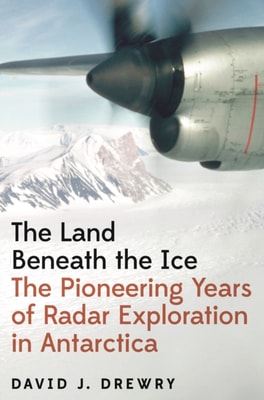
A wondrous story of scientific endeavorprobing the great ice sheets of AntarcticaFrom the moment explorers set foot on the ice of Antarctica in the early nineteenth century, they desired to learn what lay beneath.
A fun and fact-filled AZ treasury for the insect lover in all of usInsectpedia introduces you to the wonders of the insect world while inviting you to make discoveries of your own.
The epic story of human evolution, from our primate beginnings more than five million years ago to the agricultural eraOver the course of five million years, our primate ancestors evolved from a modest population of sub-Saharan apes into the globally dominant species Homo sapiens.
A comprehensive overview of symbiotic relationships between insects and microbesInsects and Their Beneficial Microbes is an authoritative and accessible synthesis of insect associations with beneficial microorganisms.
How the concept of ';deep time' began as a metaphor used by philosophers, poets, and naturalists in the eighteenth and nineteenth centuriesIn this interdisciplinary book, Noah Heringman argues that the concept of ';deep time'most often associated with geological epochsbegan as a metaphorical language used by philosophers, poets, and naturalists of the eighteenth and nineteenth centuries to explore the origins of life beyond the written record.
A meticulously researched history on the development of American mathematics in the three decades following World War IAs the Roaring Twenties lurched into the Great Depression, to be followed by the scourge of Nazi Germany and World War II, American mathematicians pursued their research, positioned themselves collectively within American science, and rose to global mathematical hegemony.
A fresh look at electricity and its powerful role in life on EarthWhen we think of electricity, we likely imagine the energy humming inside our home appliances or lighting up our electronic devices-or perhaps we envision the lightning-streaked clouds of a stormy sky.
From the Nobel Prizewinning physicist, a personal meditation on the quest for objective reality in natural scienceA century ago, thoughtful people questioned how reality could agree with physical theories that kept changing, from a mechanical model of the ether to electric and magnetic fields, and from homogeneous matter to electrons and atoms.
"e;Only a wayfarer born under unruly stars would attempt to put into practice in our epoch of proliferating knowledge the Heraclitean dictum that `men who love wisdom must be inquirers into very many things indeed.
In the seventeenth century the microscope opened up a new world of observation, and, according to Catherine Wilson, profoundly revised the thinking of scientists and philosophers alike.
The philosophical theory of scientific explanation proposed here involves a radically new treatment of causality that accords with the pervasively statistical character of contemporary science.
By the 1920s in Central Europe, it had become a truism among intellectuals that natural science had "e;disenchanted"e; the world, and in particular had reduced humans to mere mechanisms, devoid of higher purpose.
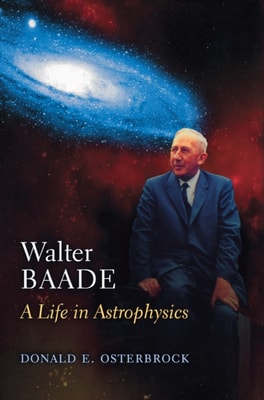
Although less well known outside the field than Edwin Hubble, Walter Baade was arguably the most influential observational astronomer of the twentieth century.
Particle or Wave is the first popular-level book to explain the origins and development of modern physical concepts about matter and the controversies surrounding them.
A captivating historical look at the cultural and artistic significance of shells in early modern EuropeAmong nature's most artful creations, shells have long inspired the curiosity and passion of artisans, artists, collectors, and thinkers.
By explaining how to sire multicolored horses, produce nuts without shells, and create an egg the size of a human head, Giambattista Della Porta's Natural Magic (1559) conveys a fascination with tricks and illusions that makes it a work difficult for historians of science to take seriously.
Ptolemy's Geography is the only book on cartography to have survived from the classical period and one of the most influential scientific works of all time.
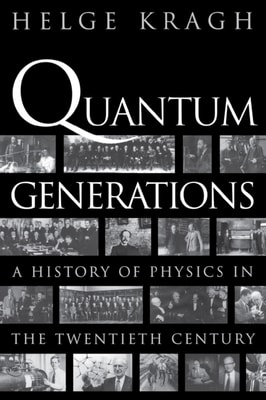
At the end of the nineteenth century, some physicists believed that the basic principles underlying their subject were already known, and that physics in the future would only consist of filling in the details.
An essential work on the origins of statisticsThe Rise of Statistical Thinking, 1820-1900 explores the history of statistics from the field's origins in the nineteenth century through to the factors that produced the burst of modern statistical innovation in the early twentieth century.
New perspectives on the iconic physicist's scientific and philosophical formationAt the end of World War II, Albert Einstein was invited to write his intellectual autobiography for the Library of Living Philosophers.
A comprehensive history of the biological sciences from antiquity to the modern eraThis book presents a global history of the biological sciences from ancient times to today, providing needed perspective on the development of biological thought while shedding light on the field's upheavals and key breakthroughs through the ages.
An in-depth look at the intersection of judgment and statistics in baseballScouting and scoring are considered fundamentally different ways of ascertaining value in baseball.
A handsome annotated edition of Einstein's celebrated book on relativityAfter completing the final version of his general theory of relativity in November 1915, Albert Einstein wrote Relativity.
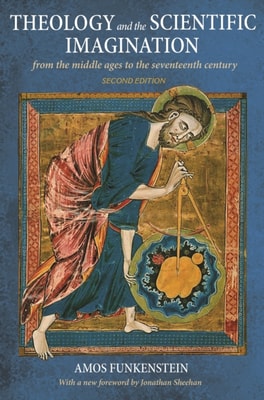
Theology and the Scientific Imagination is a pioneering work of intellectual history that transformed our understanding of the relationship between Christian theology and the development of science.
A stimulating intellectual history of Ptolemy's philosophy and his conception of a world in which mathematics reigns supremeThe Greco-Roman mathematician Claudius Ptolemy is one of the most significant figures in the history of science.
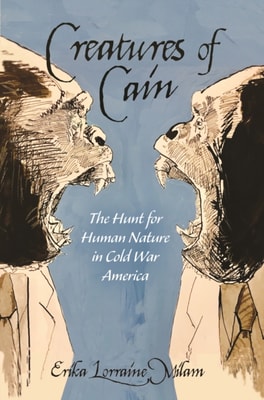
How Cold War America came to attribute human evolutionary success to our species' unique capacity for murderAfter World War II, the question of how to define a universal human nature took on new urgency.
A book that finally demystifies Newton's experiments in alchemyWhen Isaac Newton's alchemical papers surfaced at a Sotheby's auction in 1936, the quantity and seeming incoherence of the manuscripts were shocking.
The fascinating untold story of how the ancients imagined robots and other forms of artificial life-and even invented real automated machines The first robot to walk the earth was a bronze giant called Talos.
A wondrous story of scientific endeavorprobing the great ice sheets of AntarcticaFrom the moment explorers set foot on the ice of Antarctica in the early nineteenth century, they desired to learn what lay beneath.
A stimulating intellectual history of Ptolemy's philosophy and his conception of a world in which mathematics reigns supremeThe Greco-Roman mathematician Claudius Ptolemy is one of the most significant figures in the history of science.
A Physics Today Best Book of the YearThe first biography of a pioneering scientist who made significant contributions to our understanding of dark matter and championed the advancement of women in science.