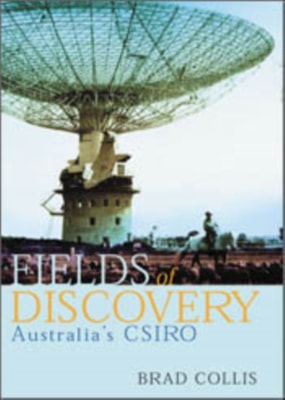
This book describes the evolution and development of the Division's research throughout the years and the ways in which scientists responded to the needs of the community.
Windows on Meteorology: Australian Perspective answers a host of questions about Australia's weather and climate, and explains the underlying causes of floods, droughts and cyclones.
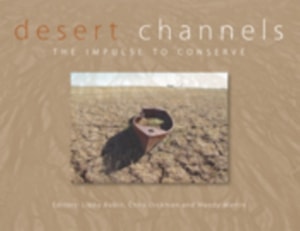
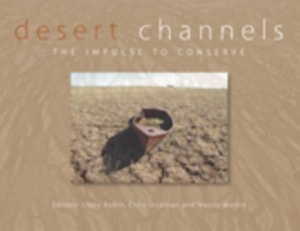
Desert Channels is a book that combines art, science and history to explore the 'impulse to conserve' in the distinctive Desert Channels country of south-western Queensland.
At the cutting edge of international research and development, the Commonwealth Scientific and Industrial Research Organisation, CSIRO, has been at the forefront of some of the most extraordinary technological and scientific advances in the world during the second half of the twentieth century.
Pastoral Australia tells the story of the expansion of Australia's pastoral industry, how it drove European settlement and involved Aboriginal people in the new settler society.
Pictures of Time Beneath examines three celebrated heritage landscapes: Adelaide’s Hallett Cove, Lake Callabonna in the far north of South Australia, and the World Heritage listed Willandra Lakes Region of New South Wales.
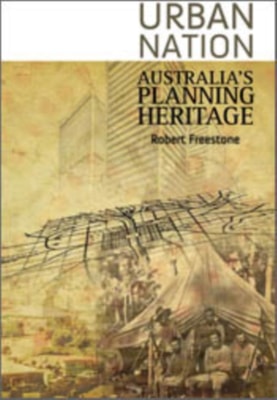
Urban Nation: Australia's Planning Heritage provides the first national survey of the historical impact of urban planning and design on the Australian landscape.
Cochlear Ltd, together with its university partner and many other collaborators, has returned hearing to over 160 000 people thanks to the development of its hearing implant.
Desert Channels is a book that combines art, science and history to explore the ‘impulse to conserve’ in the distinctive Desert Channels country of south-western Queensland.
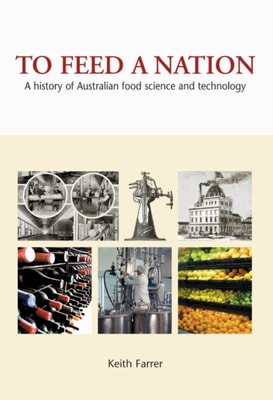
To Feed a Nation takes the reader on a journey over the centuries, describing the slow and arduous development of Australian food technology and science from before European settlement to the latter half of the twentieth century.
To Feed a Nation takes the reader on a journey over the centuries, describing the slow and arduous development of Australian food technology and science from before European settlement to the latter half of the twentieth century.
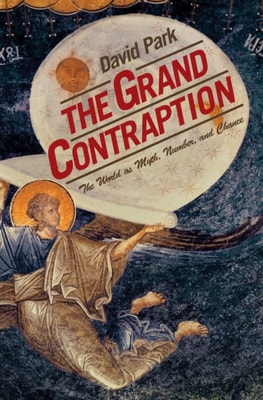
The Grand Contraption tells the story of humanity's attempts through 4,000 years of written history to make sense of the world in its cosmic totality, to understand its physical nature, and to know its real and imagined inhabitants.
In diesem faszinierenden Werk zu den Grenzwissenschaften wird eine atemberaubende Erkundung der Möglichkeit extraterrestrischen Lebens und dessen Einfluss auf die Menschheit präsentiert.
A systematic survey and comparison of the work of 19th-century American and British women in scientific research, this book covers the two countries in which women of the period were most active in scientific work and examines all the fields in which they were engaged.
From the Nobel Prizewinning physicist, a personal meditation on the quest for objective reality in natural scienceA century ago, thoughtful people questioned how reality could agree with physical theories that kept changing, from a mechanical model of the ether to electric and magnetic fields, and from homogeneous matter to electrons and atoms.
THE TIMES SCIENCE BOOK OF THE YEARNEW YORKER BEST BOOK OF THE YEARFINALIST FOR THE LOS ANGELES TIMES BOOK PRIZE FOR SCIENCE AND TECHNOLOGYA revelatory and vibrant story of measurement which will make you look at the world around you anew.
Darwin and the Barnacle by Rebecca Stott, lavishly illustrated and superbly told, is the fascinating story of how genius sometimes proceeds through indirection - and how one small item of curiosity contributed to history's most spectacular scientific breakthrough.
An epic story of courage, genius and terrible folly, this is the first history of how the Soviet Union's scientists became both the glory and the laughing stock of the intellectual world.
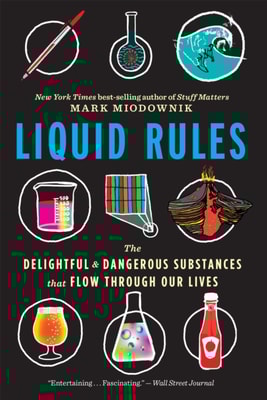
The New York Times-bestselling author of Stuff Matters offers an "e;entertaining discussion of the various ways our lives are enriched by fluids"e; (The Wall Street Journal).
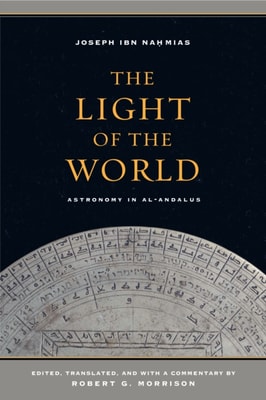
This book contains an editionwith an extensive introduction, translation and commentaryof The Light of the World, a text on theoretical astronomy by Joseph Ibn Nahmias, composed in Judeo-Arabic around 1400 C.
In 1633, at the end of one of the most famous trials in history, the Inquisition condemned Galileo for contending that the Earth moves and that the Bible is not a scientific authority.
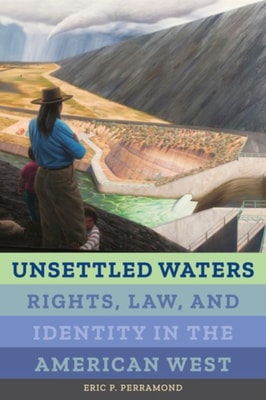
Among the most far-reaching effects of the modern environmental movement was the widespread acknowledgment that human beings were inescapably part of a larger ecosystem.
This study, beginning with the Dutch-invented telescope of 1608 and then Galileo''s discoveries, casts the European advancements in modern science, technology, and economic development into a global framework.