The aim of this book is to explore the body in various historical contexts and to take it as a point of departure for broader historiographical projects.
This book reconstructs the history of conception, pregnancy and childbirth in Europe from antiquity to the 20th century, focusing on its most significant turning points: the emergence of a medical-scientific approach to delivery in Ancient Greece, the impact of Christianity, the establishment of the man-midwife in the 18th century, the medicalisation of childbirth, the emergence of a new representation of the foetus as "e;unborn citizen"e;, and, finally, the revolution of reproductive technologies.
This book provides, for the very first time, a critical edition and an English translation (accompanied by critical notes and technical analyses) of the chapter on spheres (goladhyaya) from Nityananda's Sarvasiddhantaraja, a Sanskrit astronomical text written in seventeenth-century Mughal India.
Over the years, Jeremy Bernstein has been in contact with many of the world's most renowned physicists and other scientists, many of whom were involved in politics, literature, and language.
[the text below needs editing and we must be careful not to say things about Dan Brown's book that could get Springer in legal trouble]Dan Brown s novel, The Da Vinci Code, was first published in 2003; its sales have reached 40 million worldwide.
David Harland opens with a review of the robotic probes, namely the Rangers which returned television before crashing into the Moon, the Surveyors which 'soft landed' in order to investigate the nature of the surface, and the Lunar Orbiters which mapped prospective Apollo landing sites.
Scientists and other keen observers of the natural world sometimes make or write a statement pertaining to scientific activity that is destined to live on beyond the brief period of time for which it was intended.
The advancement of a scientific discipline depends not only on the "e;big heroes"e; of a discipline, but also on a community's ability to reflect on what has been done in the past and what should be done in the future.
International Federation for Information Processing The IFIP series publishes state-of-the-art results in the sciences and technologies of information and communication.
Since the discovery of ferrocene and the sandwich-type complexes, the development of organometallic chemistry took its course like an avalanche and became one of the scientific success stories of the second half of the twentieth century.
Finalist for the Los Angeles Times Book Prize | Finalist for the 2022 Edgar AwardWinner of the 2021 Quinn AwardAn innovative biography of Edgar Allan Poe-highlighting his fascination and feuds with science.
First published in 1966, in Human Robots in Myth and Science, the author traces the idea of the robot from antiquity until the present day (1960s) and sketches the lines of its likely development in the future.
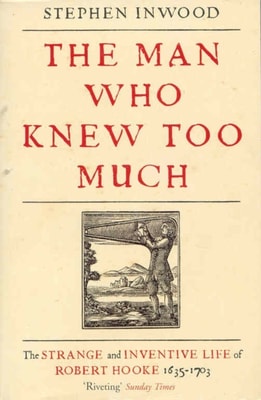
Robert Hooke was one of the most inventive, versatile and prolific scientists of the late 17th Century, but for 300 years his reputation has been overshadowed by those of his two great contemporaries, his friend Sir Christopher Wren and his rival Sir Isaac Newton.
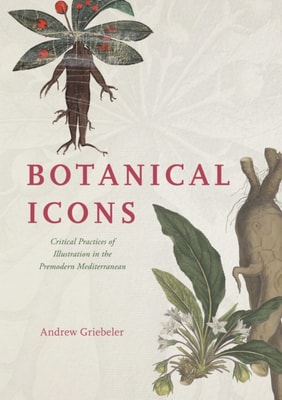
A richly illustrated account of how premodern botanical illustrations document evolving knowledge about plants and the ways they were studied in the past.
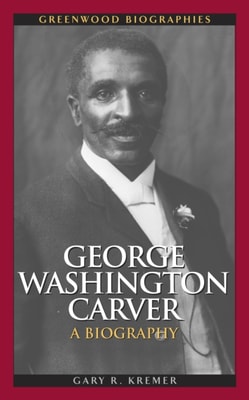
This book strips away the myths surrounding the famed scientist George Washington Carver and portrays him as a brilliant, creative man who nonetheless possessed very human peculiarities and frailties.
Revealing the career histories of successful 20th century scientists, this exciting resource offers students fascinating reads, a wonderful research tool, and tips to launching a science career.
This reference work describes the trial-and-error experiments, discoveries, and inventions of early humans who lived from before recorded history to the Middle Ages.
Science, the Singular, and the Question of Theology explores the role that the singular plays in the theories of science of Robert Grosseteste, Thomas Aquinas, Duns Scotus, William of Ockham, Marsilius of Inghen, and Pierre d'Ailly.
*SHORTLISTED FOR THE 2022 BARBELLION PRIZE**A BBC Radio 4 Book of the Week*As seen on Sky Arts Book Club with Elizabeth Day and Andi OliverAn eye-opening account of disability, identity, and how robotics and technology are changing what it means to be human - from the bestselling author of Anatomy of a SoldierHarry Parker's life changed overnight, when he lost his legs to an IED in Afghanistan.
THE PERFECT GIFT FOR ALL BIBLIOMANIACSA BOOK OF THE YEAR IN THE TIMES, FINANCIAL TIMES, SPECTATOR AND DAILY MAILA WATERSTONES BEST POPULAR SCIENCE BOOK Plunge into this rich and thought-provoking A-Z compendium to discover how our fixations have taken shape, from the Middle Ages to the present day, as bestselling author Kate Summerscale deftly traces the threads between the past and present, the psychological and social, the personal and the political.
Reveals the cutting edge of New Science and shows how established science disallows inquiry that challenges the status quo--even when it produces verifiable results *; Contains 43 essays by 19 researchers denoting cutting-edge, heretical, or suppressed scientific research, including Immanuel Velikovsky, Nikola Tesla, Rupert Sheldrake, and Masaru Emoto *; Edited by Atlantis Rising publisher, J.
Informative, easy-to-use guide to everyday science questions, concepts and fundamentals celebrates its twenty-fifth year and over one million copies sold!
BY THE AUTHOR OF THE BESTSELLING, PRIZE-WINNING STUFF MATTERS Sometimes explosive, often delightful, occasionally poisonous, but always fascinating: the secret lives of liquids, from one of our best-known scientists________________A series of glasses of transparent liquids is in front of you: but which will quench your thirst and which will kill you?
With Dot Complicated: Untangling Our Wired Lives, new media pioneer Randi Zuckerberg offers an entertaining and essential guide to understanding how technology and social media influence and inform our lives online and off.