In the tradition of Jared Diamond's Guns, Germs, and Steel, this gives the very early history of how human ingenuity overcame the risk of famine through productive agriculture.
Starting from the botanical crazes inspired by Linnaeus in the eighteenth century, and exploring the variations it spawned--natural history, landscape architecture, polemical battles over botany's prurience--this study offers a fresh, detailed reading of the courtship novel from Jane Austen to George Eliot and Henry James.
With a never-before published paper by Lord Henry Cavendish, as well as a biography on him, this book offers a fascinating discourse on the rise of scientific attitudes and ways of knowing.
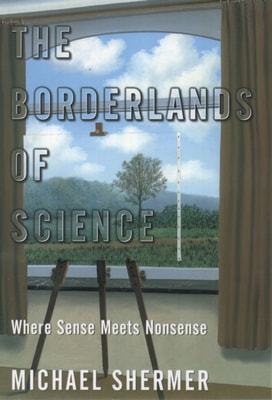
As author of the bestselling Why People Believe Weird Things and How We Believe, and Editor-in-Chief of Skeptic magazine, Michael Shermer has emerged as the nation's number one scourge of superstition and bad science.
Peter Mitchell, winner of the 1978 Nobel Prize for chemistry for his chemiosmotic theory, was a highly original scientist who revolutionized our understanding of cellular metabolism and bioenergetics.
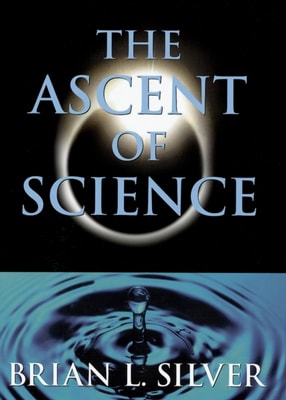
From the revolutionary discoveries of Galileo and Newton to the mind-bending theories of Einstein and Heisenberg, from plate tectonics to particle physics, from the origin of life to universal entropy, and from biology to cosmology, here is a sweeping, readable, and dynamic account of the whole of Western science.
Most people believe that science arose as a natural end-product of our innate intelligence and curiosity, as an inevitable stage in human intellectual development.
This fascinating study examines the rise of American molecular biology to disciplinary dominance, focusing on the period between 1930 and the elucidation of DNA structure in the mid 1950s.
Since the New Testament's inception as written text, its manuscripts have been subject to all the dangers of history: scribal error, emendation, injury, and total destruction.
A World From Dust describes how a set of chemical rules combined with the principles of evolution in order to create an environment in which life as we know it could unfold.
A World From Dust describes how a set of chemical rules combined with the principles of evolution in order to create an environment in which life as we know it could unfold.
Historically, the scientific method has been said to require proposing a theory, making a prediction of something not already known, testing the prediction, and giving up the theory (or substantially changing it) if it fails the test.
In the summer of 1978, residents of Love Canal, a suburban development in Niagara Falls, NY, began protesting against the leaking toxic waste dump in their midst-a sixteen-acre site containing 100,000 barrels of chemical waste that anchored their neighborhood.
Max Planck is credited with being the father of quantum theory, and his work was described by his close friend Albert Einstein as "e;the basis of all twentieth-century physics.
Max Planck is credited with being the father of quantum theory, and his work was described by his close friend Albert Einstein as "e;the basis of all twentieth-century physics.
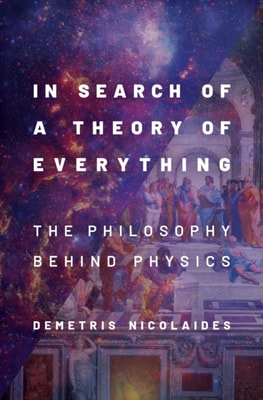
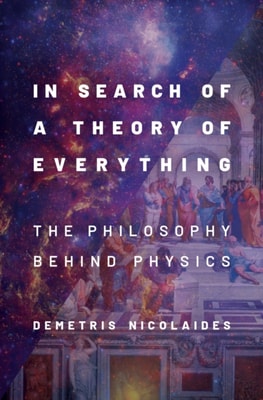
In Search of a Theory of Everything takes readers on an adventurous journey through space and time on a quest for a unified "e;theory of everything"e; by means of a rare and agile interplay between the natural philosophies of influential ancient Greek thinkers and the laws of modern physics.
In Search of a Theory of Everything takes readers on an adventurous journey through space and time on a quest for a unified "e;theory of everything"e; by means of a rare and agile interplay between the natural philosophies of influential ancient Greek thinkers and the laws of modern physics.
In a society more concerned with how to cope with existential dread than how to make actionable changes to save the planet, a surprisingly large number of Americans identify as environmentalists.
In a society more concerned with how to cope with existential dread than how to make actionable changes to save the planet, a surprisingly large number of Americans identify as environmentalists.
We hear about pieces of ice the size of continents breaking off of Antarctica, rapidly melting glaciers in the Himalayas, and ice sheets in the Arctic crumbling to the sea, but does it really matter?
We hear about pieces of ice the size of continents breaking off of Antarctica, rapidly melting glaciers in the Himalayas, and ice sheets in the Arctic crumbling to the sea, but does it really matter?
Dismal spending on government health services is often considered a necessary consequence of a low per-capita GDP, but are poor patients in poor countries really fated to be denied the fruits of modern medicine?
Dismal spending on government health services is often considered a necessary consequence of a low per-capita GDP, but are poor patients in poor countries really fated to be denied the fruits of modern medicine?
The world is undergoing a profound set of digital disruptions that are changing the nature of how governments counter dissent and assert control over their countries.