Today, predicting the impact of human activities on the earth's climate hinges on tracking interactions among phenomena of radically different dimensions, from the molecular to the planetary.
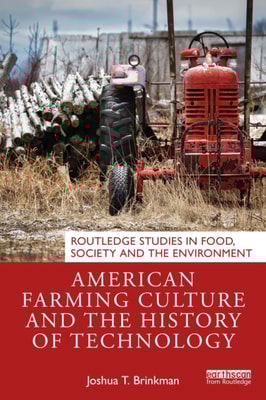
Presenting a history of agriculture in the American Corn Belt, this book argues that modernization occurred not only for economic reasons but also because of how farmers use technology as a part of their identity and culture.
As polar exploration reached its zenith, and in the same month that Captain Robert Falcon Scott perished in Antarctica, four young scientists from Zurich took ship for Greenland.
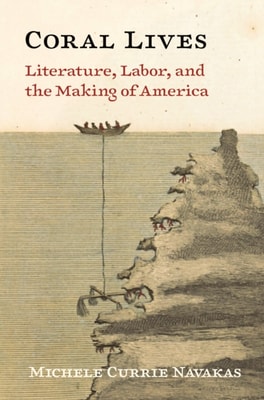
A literary and cultural history of coralas an essential element of the marine ecosystem, a personal ornament, a global commodity, and a powerful political metaphorToday, coral and the human-caused threats to coral reef ecosystems symbolize our ongoing planetary crisis.
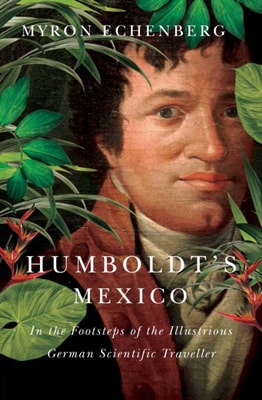
The incalculable influence of Alexander von Humboldt (1769-1859) on biology, botany, geology, and meteorology deservedly earned him the reputation as the world's most illustrious scientist before Charles Darwin.
Australia is home to many distinctive species of birds, and Aboriginal peoples have developed close alliances with them over the millennia of their custodianship of this country.
This project is born out of similar questions and discussions on the topic of organicism emergent from two critical strands regarding the discourse of organic self-generation: one dealing with the problem of stopping in the design processes in history, and the other with the organic legacy of style in the nineteenth century as a preeminent form of aesthetic ideology.
This project is born out of similar questions and discussions on the topic of organicism emergent from two critical strands regarding the discourse of organic self-generation: one dealing with the problem of stopping in the design processes in history, and the other with the organic legacy of style in the nineteenth century as a preeminent form of aesthetic ideology.
This book presents an analysis of the institutional development of selected social science and humanities (SSH) disciplines in Argentina, France, Germany, Hungary, Italy, the Netherlands, Sweden and the United Kingdom.
This revealing work examines an approach from ancient astronomy to what was then a particularly important question, namely that of understanding the relationship between the position in the ecliptic and the time it takes for a fixed-length of the ecliptic beginning at that point to rise above the eastern horizon.
While it is well known that the Delian problems are impossible to solve with a straightedge and compass - for example, it is impossible to construct a segment whose length is cube root of 2 with these instruments - the discovery of the Italian mathematician Margherita Beloch Piazzolla in 1934 that one can in fact construct a segment of length cube root of 2 with a single paper fold was completely ignored (till the end of the 1980s).
Through the original writings and photography of renowned geologist Harold Rollin Wanless, this book paints a thorough and engaging picture of the White River Badlands' landscape, geology, biology, pioneer settlers, and how life was lived 100 years ago in a harsh, challenging, remote setting.
In the wake of the Great Depression, economic recovery and nutritional improvement in Britain simultaneously occurred with their decline in British Africa.
This book provides insight and expert advice on the challenges of Trust, Identity, Privacy, Protection, Safety and Security (TIPPSS) for the growing Internet of Things (IoT) in our connected world.
This volume provides a much needed, historically accurate narrative of the development of theories of space up to the beginning of the eighteenth century.
This is a volume of chapters on the historical study of information, computing, and society written by seven of the most senior, distinguished members of the History of Computing field.
This book offers insights relevant to modern history and epistemology of physics,mathematics and, indeed, to all the sciences and engineering disciplines emergingof 19th century.
This book reveals how, when, where, and why vitalism and its relationship to new scientific theories, philosophies and concepts of energy became seminal from the fin de siecle until the Second World War for such Modernists as Sophie Taeuber-Arp, Hugo Ball, Juliette Bisson, Eva Carriere, Salvador Dali, Robert Delaunay, Marcel Duchamp, Edvard Munch, Picasso, Yves Tanguy, Gino Severini and John Cage.
This volume presents new research on Cartesian psychophysiology that combines historical and textual analysis with a consideration of recent advances in contemporary neuroscience research.
A vivid portrait of the life and work of Carl LinnaeusCarl Linnaeus (17071778), known as the father of modern biological taxonomy, formalized and popularized the system of binomial nomenclature used to classify plants and animals.
Providing scientifically accurate, detailed, and accessible information to students and general readers, this book presents the history of vaccination; describes the administration, manufacturing, and regulation of vaccines in the United States; and explains the most recent scientific findings about vaccination while addressing concerns of those who oppose immunization.
'By mixing lo-fi charm into hi-fi science Into the Groove captures all the wonder and absurdity of its subject, jumping and skipping with real analogue delight.
Das Buch „Der Mensch im Kosmos – Lebenswelten und Kosmologien“ (Man within the Cosmos – Lifeworlds and Cosmologies) präsentiert die Vorträge der Tagung der Gesellschaft für Archäoastronomie in Weimar 2023 in 17 Kapiteln – Kulturgeschichte der Astronomie von der Steinzeit bis zur Goethezeit.
auch als Farbversion und preiswerte schwarz-weiß-Version erhältlichDieses Büchlein handelt von dem, was auf den Etiketten, die an den Insekten einer historischen Sammlung hängen, zu lesen steht.