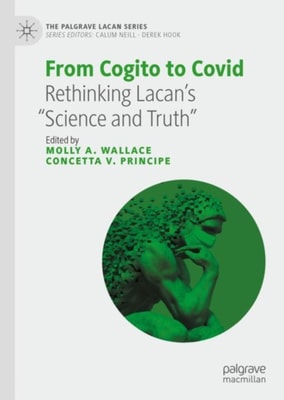
This edited collection examines the contemporary relevance of Lacan's 1965 essay "e;Science and Truth"e; to debates on science, psychoanalysis, ethics and truth.
This book provides an overview of a diverse array of preventive strategies relating to mental illness, and identifies their achievements and shortcomings.
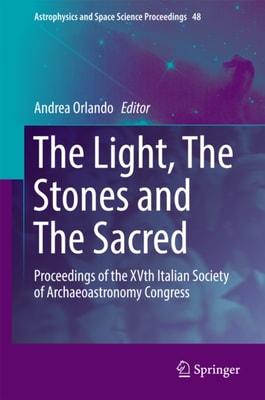
This book addresses a variety of topics within the growing discipline of Archaeoastronomy, focusing especially on Archaeoastronomy in Sicily and the Mediterranean and Cultural Astronomy.
Seen from "e;inside the IAU,"e; this book tells the in-depth story of a major crisis in which China "e;divorced"e; from the International Astronomical Union in 1960 as a protest against the admission of Taiwan.
In this incisive analysis of academic psychology, Gregg Henriques examines the fragmented nature of the discipline and explains why the field has had enormous difficulty specifying its subject matter and how this has limited its ability to advance our knowledge of the human condition.
This book is about our ordinary concept of matter in the form of enduring continuants and the processes in which they are involved in the macroscopic realm.
This book explores how physicists, astronomers, chemists, and historians in the late nineteenth and early twentieth centuries employed 'epistemic virtues' such as accuracy, objectivity, and intellectual courage.
This book offers a survey of the historic development of selected areas of chemistry and chemical physics, discussing in detail the European, American and Russian approaches to the development of chemistry.
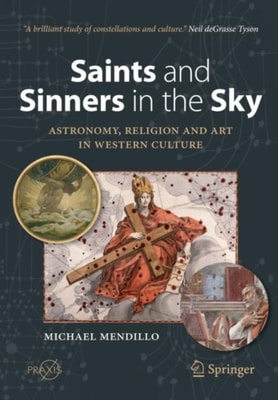
In this book, Boston University Professor of Astronomy Michael Mendillo takes readers deep into the annals of history, showing how visual depictions of the heavens evolved in tandem with science and religion throughout much of Western culture.
This book is an enthusiastic account of Pierre Laszlo's life and pioneering work on catalysis of organic reactions by modified clays, and his reflections on doing science from the 1960s to 1990s.
Astrology and Magic from the Medieval Latin and Islamic World to Renaissance Europe brings together ten of Paola Zambelli's papers on the subject, four of which are published in English for the first time.
This book traces the global chemical history of cannabidiol (CBD), which is a compound that originates partially from hemp (the fiber), marijuana (the popularized term for medicinal/recreational use), and cannabis (the species sativa).
This book collects a renowned scholar's essays from the past five decades and reflects two main concerns: an approach to logic that stresses argumentation, reasoning, and critical thinking and that is informal, empirical, naturalistic, practical, applied, concrete, and historical; and an interest in Galileo's life and thought-his scientific achievements, Inquisition trial, and methodological lessons in light of his iconic status as "e;father of modern science.
This book aims to make Galileo Galilei (1564-1642) accessible to the modern reader by refashioning the great scientist's masterpiece "e;Discourses and Mathematical Demonstrations Relating to Two New Sciences"e; in today's language.
This book offers an unprecedented study of the influence of the skepticism of the New Platonic Academy on David Hume's and Immanuel Kant's critiques of metaphysics.
This book discusses central concepts and theories in cell biology from the ancient past to the 21st century, based on the premise that understanding the works of scientists like Hooke, Hofmeister, Caspary, Strasburger, Sachs, Schleiden, Schwann, Mendel, Nemec, McClintock, etc.
This book provides new and critical perspectives on the internal development of the Pugwash Conferences on Science and World Affairs (the PCSWA; Pugwash) and its role in international nuclear diplomacy during the 1960s Cold War.
The first book-length study to address issues in modal logic at the eve of the Renaissance, this monograph provides important new insights into the way the debates on modal logic during the post-medieval period tied in with the so-called Wegestreit, the divide between the via antiqua and via moderna that dominated the discourse on logic during the 15th and early 16th centuries.
Philanthropies funded by the Rockefeller family have been prominent in the social history of the twentieth century for their involvement in medicine and applied science.
Wolfgang Lefevre, Jiirgen Renn, and Vrs Schoepflin General The origin of this volume is a workshop held has a deeper, more complex structure which in 1997 in Berlin as part of a series of work- must be assumed if its analysis is only based shops organized in the framework of the on text.
The history of mechanics, and more particularly, the history of mechanics applied to constructions, constitutes a field of research that is relatively recent.
In this incisive analysis of academic psychology, Gregg Henriques examines the fragmented nature of the discipline and explains why the field has had enormous difficulty specifying its subject matter and how this has limited its ability to advance our knowledge of the human condition.
This multi-authored effort, Mathematics of the nineteenth century (to be fol- lowed by Mathematics of the twentieth century), is a sequel to the History of mathematics fram antiquity to the early nineteenth century, published in three 1 volumes from 1970 to 1972.
In this volume, a distinguished set of international scholars examine the nature of collaboration between life partners in the sciences, with particular attention to the ways in which personal and professional dynamics can foster or inhibit scientific practice.
This book concerns the origins of mathematical problem solving at the internationally active Osram and Telefunken Corporations during the golden years of broadcasting and electron tube research.
This book is about a side of Isaac Newton's character that has not been examined - Isaac Newton as architect as demonstrated by his reconstruction of Solomon's Temple.
A contemporary of Christopher Wren, Robert Boyle, and Isaac Newton, and close friend of all but Newton, Robert Hooke (1635-1703), one of the founders of the early scientific revolution, faded into almost complete obscurity after his death and remained there for nearly three centuries.
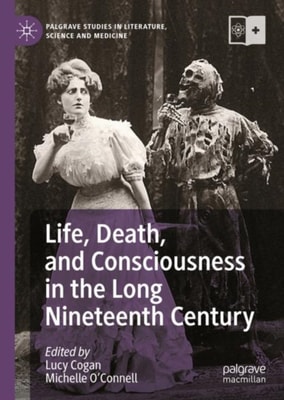
This book explores how the writers, poets, thinkers, historians, scientists, dilettantes and frauds of the long-nineteenth century addressed the "e;limit cases"e; regarding human existence that medicine continuously uncovered as it stretched the boundaries of knowledge.
Quantum mechanics is one of the most fascinating elements of the physics curriculum, but its conceptual nuances and mathematical complexity can be daunting for beginning students.