This book presents, for the first time in English, a comprehensive anthology of essays on Christian Wolff's psychology written by leading international scholars.
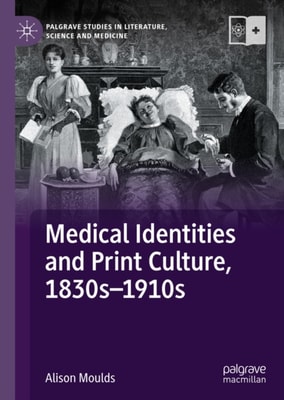
This book examines how the medical profession engaged with print and literary culture to shape its identities between the 1830s and 1910s in Britain and its empire.
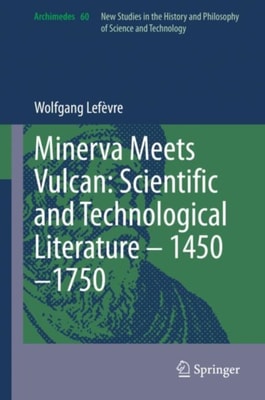
This book offers a comprehensive study and account of the co-evolution of technological and scientific literature in the early modern period (1450-1750).
This edited collection brings together new research by world-leading historians and anthropologists to examine the interaction between images of plague in different temporal and spatial contexts, and the imagination of the disease from the Middle Ages to today.
This book aims to make Galileo Galilei (1564-1642) accessible to the modern reader by refashioning the great scientist's masterpiece "e;Discourses and Mathematical Demonstrations Relating to Two New Sciences"e; in today's language.
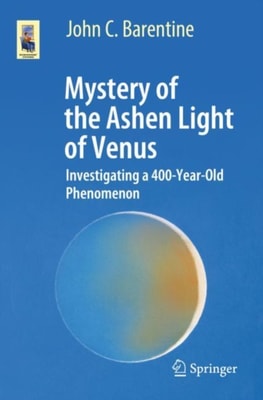
The "e;Ashen Light"e; of Venus-a ghostly emission of light from the night side of our nearest planetary neighbor-is among the last unsolved mysteries of astronomical history.
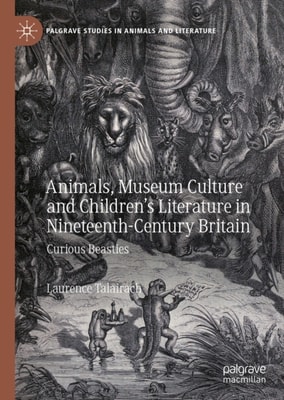
Animals, Museum Culture and Children's Literature in Nineteenth-Century Britain: Curious Beasties explores the relationship between the zoological and palaeontological specimens brought back from around the world in the long nineteenth century-be they alive, stuffed or fossilised-and the development of children's literature at this time.
This book, Philosophy of Chemistry, is dedicated to some of the general principles of philosophy of chemistry, the special branch of philosophy of science.
This book provides an overview of the origins and evolution of the periodic system from its prehistory to the latest synthetic elements and possible future additions.
Energy, Ecocriticism, and Nineteenth-Century Fiction: Novel Ecologies draws on energy concepts to revisit some of our favorite books-Mansfield Park, Jane Eyre, Great Expectations, and The War of the Worlds-and the ways these shape our sense of ourselves as ecological beings.
With foreword by astrophysicist and Queen guitarist Brian MayThis book describes the unlikely development of astrophysics in Spain, set against the final decade of Franco's rule and the country's transition to democracy.
This volume explores the challenges of sustaining long-term ecological research through a historical analysis of the Long Term Ecological Research Program created by the U.
This book traces the history of Arnold Sommerfeld's famous "e;nursery of theoretical physics"e; at the University of Munich and demonstrates the centrality of developing personal and institutional networks for the emergence of quantum theory.
This book introduces the reader to the statues, busts, and memorial plaques of scientists, explorers, medicine men and women, and inventors found in the bustling capital of the United Kingdom, London.
This book is a consequence of the international meeting organized in Marseilles in November 2018 devoted to the aftermath of the Great War for mathematical communities.
This short but revealing biography tells the story of Kurt Mendelssohn FRS, one of the founding figures in the field of cryogenics, from his beginnings in Berlin through his move to Oxford in the 1930s, and his groundbreaking work in low temperature and solid state physics.
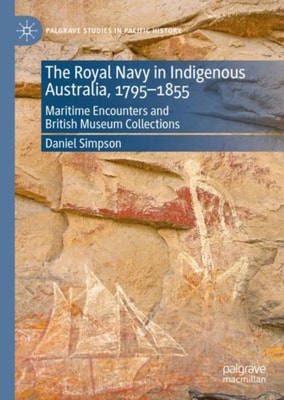
This book offers the first in-depth enquiry into the origins of 135 Indigenous Australian objects acquired by the Royal Navy between 1795 and 1855 and held now by the British Museum.
This book traces the global chemical history of cannabidiol (CBD), which is a compound that originates partially from hemp (the fiber), marijuana (the popularized term for medicinal/recreational use), and cannabis (the species sativa).
This book examines the role that science and culture held as instruments of nationalization policies during the first phase of the Franco regime in Spain.
This book is a historical analysis of the quantum mechanical revolution and the emergence of a new discipline from the perspective, not of a professor, but of a recent or actual Ph.
This book looks at the different ways in which Russian historians and authors have thought about their country's first Antarctic expedition (1819-21) over the past 200 years.
National Science Foundation (NSF) is a unique federal agency because it supports scientific research financially, but does not engage in scientific work itself.
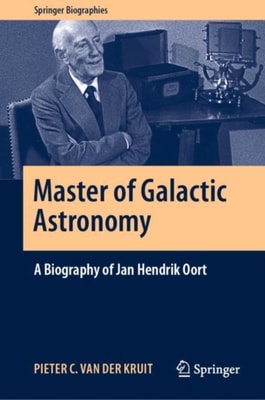
This accessible and entertaining biography chronicles the life and triumphs of astronomer Jan Hendrik Oort, who helped lay the foundations of modern astronomy in the 20th century.
This handbook features essays written by both literary scholars and mathematicians that examine multiple facets of the connections between literature and mathematics.
This non-technical biography of Jacobus Cornelius Kapteyn (1851-1922) presents to the general reader the scientific life of the astronomer who pioneered the studies of the structure of the Milky Way Galaxy.
This book provides a fascinating insight into the life and scientific work of Laura Bassi, the first female member of the influential Academy of Sciences of the Institute of Bologna and also the first woman to be appointed a university professor in physics, or universal philosophy as it was then termed.
This book presents a concise yet comprehensive survey of methods used in the expanding studies of human evolution, paying particular attention to new work on social evolution.