This book reconnects health and thought, as the two were treated together in the seventeenth century, and by reuniting them, it adds a significant dimension to our historical understanding.
This book provides insight into research and development of key aerospace materials that have enabled some of the most exciting air and space technologies in recent years.
This multidisciplinary collection of essays provides a critical and comprehensive understanding of how knowledge has been made, moved and used, by whom and for what purpose.
Earth at Risk in the 21st Century offers critical interdisciplinary reflections on peace, security, gender relations, migration and the environment, all of which are threatened by climate change, with women and children affected most.
Pound, Frost, Moore and Poetic Precision: Science in American Modernist Poetry examines three major poets in light of the demand that poetry aspire to scientific precision.
This volume views the study of disease as essential to understanding the key historical developments underpinning the foundation of contemporary Indian Ocean World (IOW) societies.
Max Wertheimer (1880-1943), a pioneer of 20th-century psychology, had a major influence on the development of cognitive psychology, especially the psychology of perception and of productive thinking.
This book situates the work of the Soviet psychologist and neurologist Alexander Luria (1902-1977) in its historical context and explores the 'romantic' approach to scientific writing developed in his case histories.
In this book, Istvan Hargittai, an internationally renowned physical chemist, narrates his life by introducing over forty personalities that played noteworthy roles in his career.
This volume approaches the history of water in the Iberian Peninsula in a novel way, by linking it to the ongoing international debate on water crisis and solutions to overcome the lack of water in the Mediterranean.
On the road toward a history of turbulence, this book focuses on what the actors in this research field have identified as the "e;turbulence problem"e;.
This Palgrave Pivot investigates the efforts of five aerospace companies-SpaceX, Blue Origin, Virgin Galactic, Orbital Sciences, and the Boeing Company-to launch their entry into the field of commercial space transportation.
A principal aim of this first biography of Robert Le Rossignol, engineer of the Haber process, is to bring new evidence to the attention of the scientific community allowing a re-assessment of the origins of the 'Haber' process.
Contemporary anxieties about climate change have fueled a growing interest in how landscapes are formed and transformed across spans of time, from decades to millennia.
This book explores the understudied history of the so-called 'incurables' in the Victorian period, the people identified as idiots, imbeciles and the weak-minded, as opposed to those thought to have curable conditions.
This book provides a perspective on the concepts placebo and placebo effects, which has been missing so far: a detailed analysis of the history of the terms, their current use, suggested alternatives and the implications of the conceptual confusion.
This Brief presents an historical investigation into the reaction between ferric ions and thiocyanate ions, which has been viewed in different ways throughout the last two centuries.
This book takes a historical and anthropological approach to understanding how non-human hosts and vectors of diseases are understood, at a time when emerging infectious diseases are one of the central concerns of global health.
This book is an investigation of the ideological dimensions of the disciplinary discourses on science in line with the scholarly tradition of historical epistemology.
This book paints a comprehensive portrait of Mexico's system of assisted reproduction first from a historical perspective, then from a more contemporary viewpoint.
This book describes how and why the early modern period witnessed the marginalisation of astrology in Western natural philosophy, and the re-adoption of the cosmological view of the existence of a plurality of worlds in the universe, allowing the possibility of extraterrestrial life.
This book presents a comprehensive and coherent summary of techniques for enhancing the resolution and image contrast provided by far-field optical microscopes.
This monograph details the entire scientific thought of an influential natural philosopher whose contributions, unfortunately, have become obscured by the pages of history.
This book has been defined around three important issues: the first sheds light on how people, in various philosophical, religious, and political contexts, understand the natural environment, and how the relationship between the environment and the body is perceived; the second focuses on the perceptions that a particular natural environment is good or bad for human health and examines the reasons behind such characterizations ; the third examines the promotion, in history, of specific practices to take advantage of the health benefits, or avoid the harm, caused by certain environments and also efforts made to change environments supposed to be harmful to human health.
This is a volume of chapters on the historical study of information, computing, and society written by seven of the most senior, distinguished members of the History of Computing field.
This book gathers, and makes available in English, with new introductions, previously out of print or otherwise difficult to access articles by Fr Roberto Busa S.
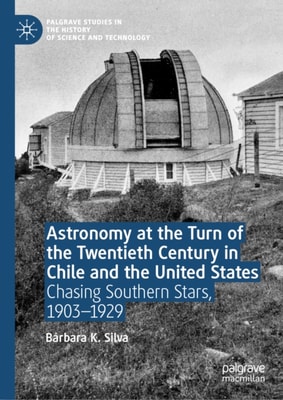
This Palgrave Pivot tells the transnational story of the astronomical observatory in the hills near Santiago, Chile, built in the early twentieth century through the efforts of astronomers from the Lick Observatory in California.
This lucid and captivating book takes the reader back to the early history of all the sciences, starting from antiquity and ending roughly at the time of Newton - covering the period which can legitimately be called the "e;dawn"e; of the sciences.
This book offers a thorough reanalysis of Charles Darwin's Origin of Species, which for many people represents the work that alone gave rise to evolutionism.
In the late nineteenth century, dreams became the subject of scientific study for the first time, after thousands of years of being considered a primarily spiritual phenomenon.