Dams have been used to control water for thousands of years, with the oldest known dam being a small earthen structure in present-day Jordan dating to c.
Immunity is as old as illness itself, yet historians have only just begun to take up the challenge of reconstructing the modern transformation of attempts to protect against disease.
Immunity is as old as illness itself, yet historians have only just begun to take up the challenge of reconstructing the modern transformation of attempts to protect against disease.
Ranging from music to astronomy, gardening to the Bible, this essay collection is the first multi-disciplinary volume to examine a kind of text that was a staple of early modern English publishing: the how-to book.
Ranging from music to astronomy, gardening to the Bible, this essay collection is the first multi-disciplinary volume to examine a kind of text that was a staple of early modern English publishing: the how-to book.
Commemorating the 400th anniversary of the publication of Francis Bacon's Advancement of Learning (1605), this collection examines Bacon's recasting of proto-scientific philosophies and practices into early modern discourses of knowledge.
Commemorating the 400th anniversary of the publication of Francis Bacon's Advancement of Learning (1605), this collection examines Bacon's recasting of proto-scientific philosophies and practices into early modern discourses of knowledge.
Though Mary Shelley's Frankenstein has inspired a vast body of criticism, there are no book-length studies that contextualise this widely taught novel in contemporary scientific and literary debates.
Though Mary Shelley's Frankenstein has inspired a vast body of criticism, there are no book-length studies that contextualise this widely taught novel in contemporary scientific and literary debates.
In his study of Eliot as a psychological novelist, Michael Davis examines Eliot's writings in the context of a large volume of nineteenth-century scientific writing about the mind.
In his study of Eliot as a psychological novelist, Michael Davis examines Eliot's writings in the context of a large volume of nineteenth-century scientific writing about the mind.
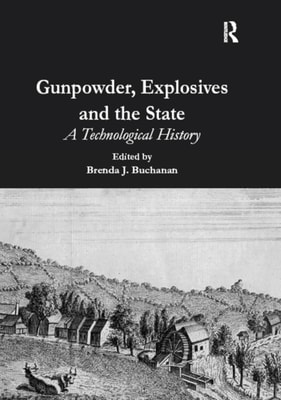
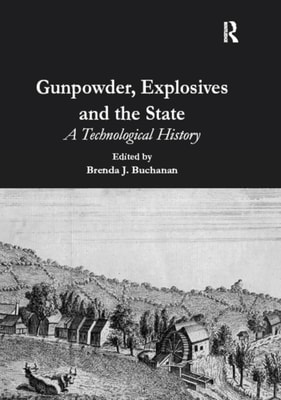
Gunpowder studies are still in their infancy despite the long-standing civil and military importance of this explosive since its discovery in China in the mid-ninth century AD.
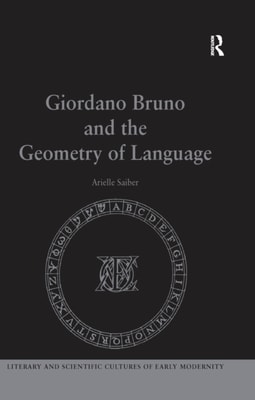
Giordano Bruno and the Geometry of Language brings to the fore a sixteenth-century philosopher's role in early modern Europe as a bridge between science and literature, or more specifically, between the spatial paradigm of geometry and that of language.
Giordano Bruno and the Geometry of Language brings to the fore a sixteenth-century philosopher's role in early modern Europe as a bridge between science and literature, or more specifically, between the spatial paradigm of geometry and that of language.
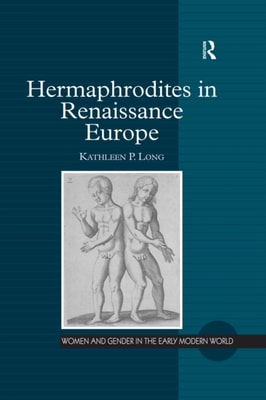
Kathleen Long explores the use of the hermaphrodite in early modern culture wars, both to question traditional theorizations of gender roles and to reaffirm those views.
Kathleen Long explores the use of the hermaphrodite in early modern culture wars, both to question traditional theorizations of gender roles and to reaffirm those views.
This fresh collection of essays questions how the historical process affects our conception of science, including our understanding of its validity as well as our general conception of knowledge.
This fresh collection of essays questions how the historical process affects our conception of science, including our understanding of its validity as well as our general conception of knowledge.
Gunpowder studies are still in their infancy despite the long-standing civil and military importance of this explosive since its discovery in China in the mid-ninth century AD.
Combining historical and interpretive work, this collection examines changing perceptions of and relations between human and nonhuman animals in Britain over the long eighteenth century.
Combining historical and interpretive work, this collection examines changing perceptions of and relations between human and nonhuman animals in Britain over the long eighteenth century.
In 1833 John Herschel sailed from London to Cape Town, southern Africa, to undertake (at his own expense) an astronomical exploration of the southern heavens, as well as a terrestrial exploration of the area around Cape Town.
In 1833 John Herschel sailed from London to Cape Town, southern Africa, to undertake (at his own expense) an astronomical exploration of the southern heavens, as well as a terrestrial exploration of the area around Cape Town.
Exploring the significance of animals in Romantic-period writing, this new study shows how in this period they were seen as both newly different from humankind (subjects in their own right, rather than simply humanity's tools or adjuncts) and also as newly similar, with the ability to feel and perhaps to think like human beings.
Exploring the significance of animals in Romantic-period writing, this new study shows how in this period they were seen as both newly different from humankind (subjects in their own right, rather than simply humanity's tools or adjuncts) and also as newly similar, with the ability to feel and perhaps to think like human beings.
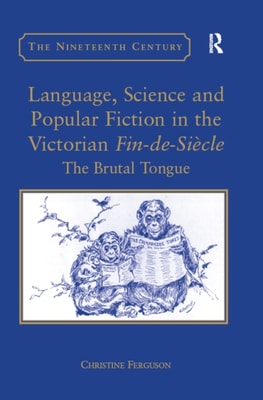
Christine Ferguson's timely study is the first comprehensive examination of the importance of language in forming a crucial nexus among popular fiction, biology, and philology at the Victorian fin-de-siecle.
Christine Ferguson's timely study is the first comprehensive examination of the importance of language in forming a crucial nexus among popular fiction, biology, and philology at the Victorian fin-de-siecle.