The surprising history of education technology and its political, financial, and social impact on higher education and our worldFrom AI tutors who ensure individualized instruction but cannot do math to free online courses from elite universities that were supposed to democratize higher education, claims that technological innovations will transform education often fall short.
En este ensayo, lúcido y a ratos mordaz, Raquel Ferrández explora las modalidades del deseo y sus pulsiones de vida y muerte en un mundo que se presenta como una extensión de la web, donde es posible vincularse infinitamente.
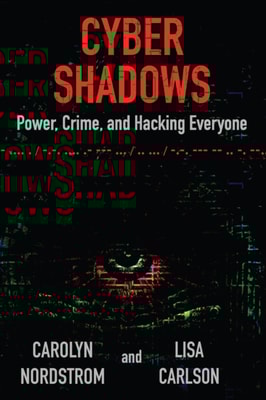
Cyber Shadows is a tour de horizon of the digital world's dark places, the threats and innovations in cybercrime, espionage, and surveillance - and new attacks moving beyond identity theft to hacking our behavioral patterns, brains, and DNA to buy and sell as lucrative business.
Officials and religious scholars in the Gulf states have repeatedly banned the teaching of the theory of evolution because of its association with atheism.
Officials and religious scholars in the Gulf states have repeatedly banned the teaching of the theory of evolution because of its association with atheism.
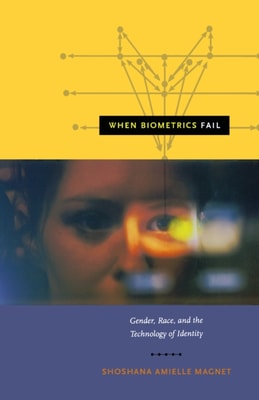
From digital fingerprinting to iris and retina recognition, biometric identification systems are a multibillion dollar industry and an integral part of post-9/11 national security strategy.
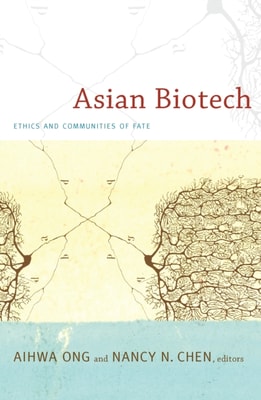
Providing the first overview of Asia's emerging biosciences landscape, this timely and important collection brings together ethnographic case studies on biotech endeavors such as genetically modified foods in China, clinical trials in India, blood collection in Singapore and China, and stem-cell research in Singapore, South Korea, and Taiwan.
The renowned cultural theorist and media designer Anne Balsamo maintains that technology and culture are inseparable; those who engage in technological innovation are designing the cultures of the future.
In The Mangle of Practice (1995), the renowned sociologist of science Andrew Pickering argued for a reconceptualization of research practice as a "e;mangle,"e; an open-ended, evolutionary, and performative interplay of human and non-human agency.
In New Science, New World Denise Albanese examines the discursive interconnections between two practices that emerged in the seventeenth century-modern science and colonialism.
During the past decade, skepticism about climate change has frustrated those seeking to engage broad publics and motivate them to take action on the issue.
In Fungible Life Aihwa Ong explores the dynamic world of cutting-edge bioscience research, offering critical insights into the complex ways Asian bioscientific worlds and cosmopolitan sciences are entangled in a tropical environment brimming with the threat of emergent diseases.
While digital media give us the ability to communicate with and know the world, their use comes at the expense of an immense ecological footprint and environmental degradation.
Cultural accounts of scientific ideas and practices have increasingly come to be welcomed as a corrective to previous-and still widely held-theories of scientific knowledge and practices as universal.
In the industrialized nations of the global North, well-funded agencies like the CDC attend to citizens' health, monitoring and treating for toxic poisons like lead.
An exploration of the moral and ethical implications of new biotechnologies Many of the ethical issues raised by new technologies have not been widely examined, discussed, or indeed settled.
Investigates public administration's increasing dependence on technology and how its pervasive use in complex and interrelated socioeconomic and political affairs has outstripped the ability of many public administrators and the public to grasp the consequences of their choices In this well-informed yet anxious age, public administrators have constructed vast cisterns that collect and interpret a meteoric shower of facts.
Addressing the big questions about how technological change is transforming economies and societiesRapid technological change-likely to accelerate as a consequence of the COVID-19 pandemic-is reshaping economies and how they grow.
Revisiting Marshall McLuhan's work on the ways that technologies influence societies, Adria reconsiders the effects technologies have had on Canadian regionalism and nationalism.
In a marketplace that demands perpetual upgrades, the survival of interactive play ultimately depends on the adroit management of negotiations between game producers and youthful consumers of this new medium.
'Twisty and terrifying, LEAVE THE LIGHTS ON will keep you guessing until the end' B A Paris 'Utterly addictive' CRIME MONTHLY'A twisty, thoroughly modern thriller with a plot as smart as the deadly home it depicts' RACHEL EDWARDS'I was completely hooked from the start of this creepy, very contemporary thriller' SUE WATSON***WHAT REAL READERS SAY ABOUT EGAN HUGHES***"e;100% kept me on the edge of my seat"e; 5 stars"e; Intriguingly structured and plotted"e; 5 stars"e;Such a compelling book"e; 5 stars"e;A brilliant read"e; 5 stars"e;Had me guessing right until the end"e; 5 stars___________________Their new 'smart home' is Joe's dream.
Recent developments in biotechnology and genetic research are raising complex ethical questions concerning the legitimate scope and limits of genetic intervention.
Exits to the Posthuman Future is media theory for a global digital society which thrives, and sometimes perishes, at the intersection of technologies of speed, distant ethics and a pervasive cultural anxiety.
The use of webcam, especially through Skype, has recently become established as one more standard media technology, but so far there has been no attempt to assess its fundamental nature and consequences.
This book examines the implications of new communication technologies in the light of the most recent work in social and cultural theory and argues that new developments in electronic media, such as the Internet and Virtual Reality, justify the designation of a "e;second media age"e;.