For readers of Michio Kaku and Stephen Hawking, the book readers have acclaimed asA mega-comprehensive outlook at intelligence as convincing as it is surprising and Atruly breathtaking forecast on the future of intelligence.
New perspectives on the iconic physicist's scientific and philosophical formationAt the end of World War II, Albert Einstein was invited to write his intellectual autobiography for the Library of Living Philosophers.
Science and innovation have the power to transform our lives and the world we live in - for better or worse in ways that often transcend borders and generations: from the innovation of complex financial products that played such an important role in the recent financial crisis to current proposals to intentionally engineer our Earth s climate.
A concise primer that complicates a convenient truth in biology-the divide between germ and somatic cells-with far-reaching ethical and public policy ramifications.
Discover the extraordinary role of plants in modern forensics, from their use as evidence in the trials of high profile murderers such as Ted Bundy to high value botanical trafficking and poaching.
Global warming and, even more recently, the COVID pandemic have brought into public focus our dependence on science and the lens with which it considers the world.
For readers of Naomi Klein and Nicole Perlroth, a myth-dissolving expose of how artificial intelligence exploits human labor, and a resounding argument for a more equitable digital future.
Taking off at the height of China's socio-economic reforms in the mid-1990s, the Internet developed alongside the twists and turns of the country's rapid transformation.
Whether we are checking emails, following friends on Facebook and Twitter, catching up on gossip from TMZ, planning holidays on TripAdvisor, arranging dates on Match.
An essential introduction to the philosophy of biologyThis is a concise, comprehensive, and accessible introduction to the philosophy of biology written by a leading authority on the subject.
Revisiting Marshall McLuhan's work on the ways that technologies influence societies, Adria reconsiders the effects technologies have had on Canadian regionalism and nationalism.
In Pragmatism's Evolution, Trevor Pearce demonstrates that the philosophical tradition of pragmatism owes an enormous debt to specific biological debates in the late 1800s, especially those concerning the role of the environment in development and evolution.
Invention to Innovation charts a course for scientists, leaders, investors and policy makers to translate research into growing innovative, competitive companies and industries.
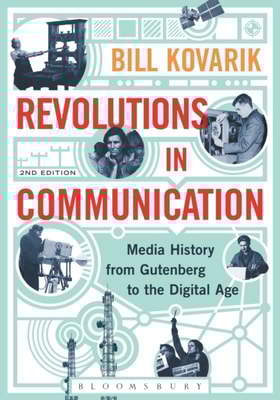
Revolutions in Communication offers a new approach to media history, presenting an encyclopedic look at the way technological change has linked social and ideological communities.