Rather than seeing science and religion as oppositional, in Origins: God, Evolution, and the Question of the Cosmos Philip Rolnick demonstrates the remarkable compatibility of contemporary science and traditional Christian theology.
The Dark Side of Technology is intended as a powerful wake-up call to the potential dangers that could, in the near future, destroy our current advanced civilizations.
The Dark Side of Technology is intended as a powerful wake-up call to the potential dangers that could, in the near future, destroy our current advanced civilizations.
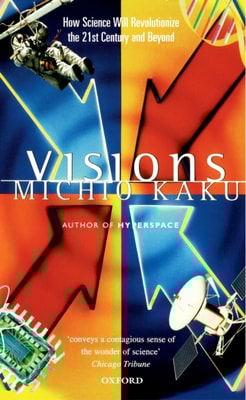
New in paperback, from the bestselling author of Hyperspace, this spellbinding book brings together the cutting-edge research of today's foremost scientists to explore the science of tomorrow.
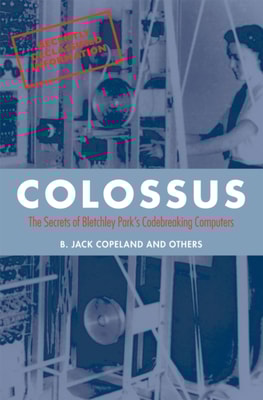
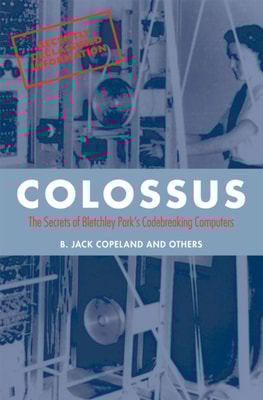
The mathematical genius Alan Turing, now well known for his crucial wartime role in breaking the ENIGMA code, was the first to conceive of the fundamental principle of the modern computer-the idea of controlling a computing machine's operations by means of a program of coded instructions, stored in the machine's 'memory'.
The mathematical genius Alan Turing, now well known for his crucial wartime role in breaking the ENIGMA code, was the first to conceive of the fundamental principle of the modern computer-the idea of controlling a computing machine's operations by means of a program of coded instructions, stored in the machine's 'memory'.
From the sudden expansion of a cloud of gas or the cooling of a hot metal, to the unfolding of a thought in our minds and even the course of life itself, everything is governed by the four Laws of Thermodynamics.
October 15, 1951 marks the birthday of one of the key episodes in 20th century social history: the first synthesis of a steroid oral contraceptive in a small laboratory in Mexico City - an event that triggered the development of the Pill.
New in paperback, from the bestselling author of Hyperspace, this spellbinding book brings together the cutting-edge research of today's foremost scientists to explore the science of tomorrow.
This book began with the aim of telling the almost forgotten story of Thomas Hancock, the rubber developer who in his own day was acknowledged as one of the great scientific pioneers of the Industrial Revolution.
This book began with the aim of telling the almost forgotten story of Thomas Hancock, the rubber developer who in his own day was acknowledged as one of the great scientific pioneers of the Industrial Revolution.
From the sudden expansion of a cloud of gas or the cooling of a hot metal, to the unfolding of a thought in our minds and even the course of life itself, everything is governed by the four Laws of Thermodynamics.
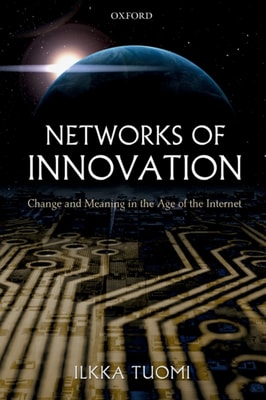
This volume analyses some of the major current trends and policy challenges in the 'new economy' from the point of view of technical innovation and competence building.
How to use information and communication technologies in organizations and how to manage their impact has been the traditional domain of computer specialists and management consultants.
Imagine a world without rubber - neither tyres for motoring or flying, nor bouncing balls for sports, neither seals for washing machines and dishwashers, nor medical gloves - no elastics.
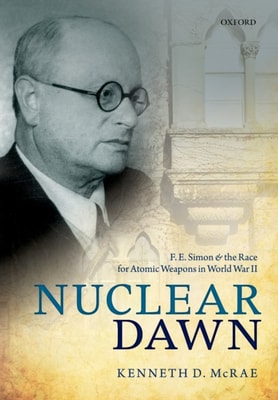
This book provides a rounded biography of Franz (later Sir Francis) Simon, his early life in Germany, his move to Oxford in 1933, and his experimental contributions to low temperature physics approximating absolute zero.
This book provides a rounded biography of Franz (later Sir Francis) Simon, his early life in Germany, his move to Oxford in 1933, and his experimental contributions to low temperature physics approximating absolute zero.
The Earth that sustains us today was born out of a few remarkable, near-catastrophic revolutions, started by biological innovations and marked by global environmental consequences.
The Earth that sustains us today was born out of a few remarkable, near-catastrophic revolutions, started by biological innovations and marked by global environmental consequences.