This book presents a complete state of the art for different types of nanomaterial, their environmental fate, and their use in textile waste remediation.
A new high-level book for professionals from Atlantis Press providing an overview of nanotechnologies now and their applications in a broad variety of fields, including information and communication technologies, environmental sciences and engineering, societal life, and medicine, with provision of customized treatments.
This book is based on the lectures and contributions of the NATO Advanced Study Institute on "e;Nanoscience and Nanotechnology in Security and Protection Against CBRN Threats"e; held in Sozopol, Bulgaria, September 2019.
Over the last decade, techniques for materials preparation and processing at nanometer scale have advanced rapidly, leading to the introduction of novel principles for a new generation of sensors and detectors.
The increasing prevalence of nanotechnologies has led to the birth of "e;nanoelectromagnetics,"e; a novel applied science related to the interaction of electromagnetic radiation with quantum mechanical low-dimensional systems.
This book presents a blueprint for researchers in the area of nanotechnology for chemical defense, especially with regard to future research on detection and protection.
This book brings together more closely researchers working in the two fields of quantum optics and nano-optics and provides a general overview of the main topics of interest in applied and fundamental research.
This volume gives a broad overview of advanced technologies for detection and defence against chemical, biological, radiological and nuclear (CBRN) agents.
The 3rd edition of this important dictionary offers more than 12,000 entries with expanded encyclopaedic-style definitions making this major reference work invaluable to practitioners, researchers and students working in the area of polymer science and technology.
This book provides a comprehensive overview of nano-optics, including basic theory, experiment and applications, particularly in nanofabrication and optical characterization.
This book describes the development of core technologies to address two of the most challenging issues in research for future IT platform development, namely innovative device design and reduction of energy consumption.
The current work consists of nine contributions describing recent progress in the interdisciplinary of Nanoscience, which involves physics, chemistry, engineering, biology and medicine and one essay outlining some important historical and socioeconomic factors pertaining to recent developments in nanoscale science and technology.
The chemistry and physics of group 14 elements such as silicon and germanium have been extensively studied, largely due to their fundamental importance in the development of semiconductor electronics.
The topics discussed at the NATO Advanced Research Workshop "e;Nanotechnology in the Security Systems"e; included nanophysics, nanotechnology, nanomaterials, sensors, biosensors security systems, explosive detection.
The "e;bioelectronic nose"e;, the device which has a similar function to the human smell sensing system, can be realized by combining the olfactory cells or receptors with nanotechnology.
This book provides a comprehensive introduction to a recently-developed approach to the growth mechanism of thin films and nanostructures via chemical vapour deposition (CVD).
This book presents the most relevant and recent results in the study of "e;Nanoelectromagnetics"e;, a recently born fascinating research discipline, whose popularity is fast arising with the intensive penetration of nanotechnology in the world of electronics applications.
This collection of selected review papers focuses on topics such as digital radiation sensors and nanosensory systems for nanotechnology applications and integrated X-ray/PET/CT detectors; nanophosphors and nanocrystal quantum dots as X-ray radiation sensors; the luminescence efficiency of CdSe/ZnS QD and UV-induced luminescence efficiency distribution; investigations devoted to the quantum and multi-parametrical nature of disasters and the modeling thereof using quantum search and quantum query algorithms; sum-frequency-generation, IR fourier and raman spectroscopy methods; as well as investigations into the vibrational modes of viruses and other pathogenic microorganisms aimed at creating optical biosensory systems.
This book underscores the essential principles of photocatalysis and provides an update on its scientific foundations, research advances, and current opinions, and interpretations.
The present work reflects a multi-disciplinary effort to address the topic of confined hydrosystems developed with a cross-fertilization panel of physics, chemists, biologists, soil and earth scientists.
The science and technology relating to nanostructures continues to receive significant attention for its applications to various fields including microelectronics, nanophotonics, and biotechnology.
Thermal processes are ubiquitous and an understanding of thermal phenomena is essential for a complete description of the physics of nanoparticles, both for the purpose of modeling the dynamics of the particles and for the correct interpretation of experimental data.
Thermoelectric devices could play an important role in making efficient use of our energy resources but their efficiency would need to be increased for their wide scale application.
A concise description of models and quantitative parameters in structural chemistry and their interrelations, with 280 tables and >3000 references giving the most up-to-date experimental data on energy characteristics of atoms, molecules and crystals (ionisation potentials, electron affinities, bond energies, heats of phase transitions, band and lattice energies), optical properties (refractive index, polarisability), spectroscopic characteristics and geometrical parameters (bond distances and angles, coordination numbers) of substances in gaseous, liquid and solid states, in glasses and melts, for various thermodynamic conditions.
Among the highlights of this book is the use of novel insecticides acting on a specific site in an insect group and are compatible with natural enemies and the environment.
Physical implementation of the memristor at industrial scale sparked the interest from various disciplines, ranging from physics, nanotechnology, electrical engineering, neuroscience, to intelligent robotics.
The title "e;Nano Biotechnology for Biomedical and Diagnostics Research"e; will address research aspects related to nanomaterial in imaging and biological research, nanomaterials as a biosensing tool, DNA nanotechnology, nanomaterials for drug delivery, medicinal and therapeutic application and cytotoxicity of nanomaterials.
This book is devoted to a wide range of problems concerning applications of nanomaterials and nanodevices as effective solutions to modern ecological problems.
This book arises from the NATO Advanced Study Institute "e;Technological Innovations in Detection and Sensing of CBRN Agents and Ecological Terrorism"e; held in Chisinau, Republic of Moldova in June 2010.
This volume presents a comprehensive perspective on the global scientific, technological, and societal impact of nanotechnology since 2000, and explores the opportunities and research directions in the next decade to 2020.
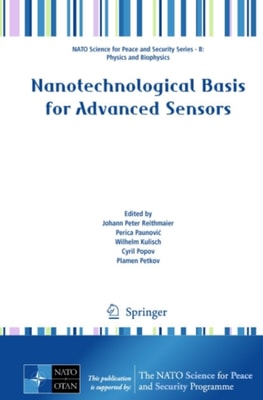
Bringing together experts from 15 countries, this book is based on the lectures and contributions of the NATO Advanced Study Institute on "e;Nanotechnological Basis for Advanced Sensors"e; held in Sozopol, Bulgaria, 30 May - 11 June, 2010.
Regular Nanofabrics in Emerging Technologies gives a deep insight into both fabrication and design aspects of emerging semiconductor technologies, that represent potential candidates for the post-CMOS era.
Recent advances in nanoscience have demonstrated that fundamentally new physical phenomena are found when systems are reduced to sizes comparable to the fundamental microscopic length scales of the material investigated.
The Mathematics and Topology of Fullerenes presents a comprehensive overview of scientific and technical innovations in theoretical and experimental studies.
Just as the health costs of aging threaten to bankrupt developed countries, this book makes the scientific case that a biological "e;bailout"e; could be on the way, and that human aging can be different in the future than it is today.
An outstanding international scientific event in the field of metathesis chemistry, the NATO ASI "e;Green Metathesis Chemistry: Great Challenges in Synthesis, Catalysis and Nanotechnology"e; has been recently organized in Bucharest, Romania (July 21- August 2, 2008).