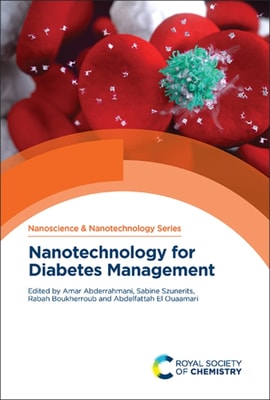
This unique book is the only one to discuss various new techniques developed to enhance the application of nanoparticulate drug delivery systems using surface modification of nanoparticles.
This book describes the role and fundamental aspects of the diverse ranges of nanostructured materials for energy applications in a comprehensive manner.
This book provides the fundamental aspects of the diverse ranges of nanostructured materials (0D, 1D, 2D and 3D) for energy and environmental applications in a comprehensive manner written by specialists who are at the forefront of research in the field of energy and environmental science.
This book explores the recent advances in designing and synthesizing one- and two-dimensional metal chalcogenide nanostructures, along with their practical applications, helping readers understand what has happened, and what is currently happening in the field of nanotechnology.
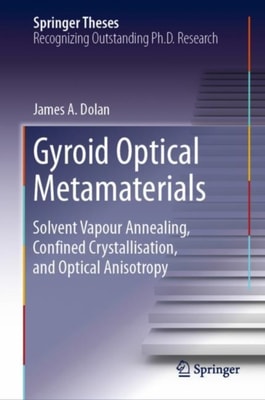
This thesis explores the fabrication of gyroid-forming block copolymer templates and the optical properties of the resulting gyroid optical metamaterials, significantly contributing to our understanding of both.
This book presents not only the simultaneous combination of optical methods based on holographic principles for marker-free imaging, real-time trapping, identification and tracking of micro objects, but also the application of substantial low coherent light sources and non-diffractive beams.
This book presents not only the simultaneous combination of optical methods based on holographic principles for marker-free imaging, real-time trapping, identification and tracking of micro objects, but also the application of substantial low coherent light sources and non-diffractive beams.
Nanopollutants are nanoparticles that have escaped into the environment and can include engineered nanoparticles as well as nanoparticles that are products of degradation (e.
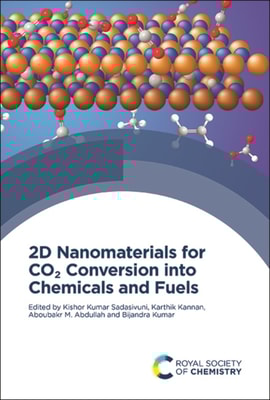
Since the discovery of graphene, two-dimensional nanomaterials including Transition metal dichalcogenides (TMDCs), Hexagonal Boron Nitride (hBN), non-layered compounds, black phosphorous, and Xenes with large lateral dimensions, have emerged as promising candidates for heterogenous electrocatalysis owing to their exceptional physical, chemical, and electronic properties.
Since the discovery of graphene, two-dimensional nanomaterials including Transition metal dichalcogenides (TMDCs), Hexagonal Boron Nitride (hBN), non-layered compounds, black phosphorous, and Xenes with large lateral dimensions, have emerged as promising candidates for heterogenous electrocatalysis owing to their exceptional physical, chemical, and electronic properties.
Functional and structural nanomaterials are emerging materials that display interesting physical and chemical properties because of their size and surface area to volume ratio.
Functional and structural nanomaterials are emerging materials that display interesting physical and chemical properties because of their size and surface area to volume ratio.
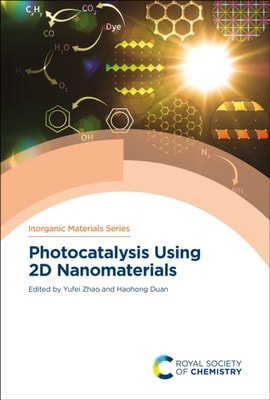
Two-dimensional (2D) materials for photocatalytic applications have attracted attention in recent years due to their unique thickness-dependent physiochemical properties.
Two-dimensional (2D) materials for photocatalytic applications have attracted attention in recent years due to their unique thickness-dependent physiochemical properties.
Beneficial properties of graphitic carbon nitride (gCN) have been discovered in recent years during the promotion of its visible-light-driven photocatalytic activity for water splitting.
The field of nanoscience continues to grow and, with such a vast landscape of material, careful distillation of the most important discoveries will help researchers find the key information they require.
Nanoparticles can be synthesised via a number of methods, including chemical vapor deposition, ball milling, laser ablation, thermal decomposition and chemical reduction.
Nanoparticles can be synthesised via a number of methods, including chemical vapor deposition, ball milling, laser ablation, thermal decomposition and chemical reduction.
Magnetic nanoparticles (MNPs) uniquely combine superparamagnetic performance with dimensions that are smaller than or similar size to molecular analytes.
Magnetic nanoparticles (MNPs) uniquely combine superparamagnetic performance with dimensions that are smaller than or similar size to molecular analytes.
The nanopore provides a highly electrochemically confined space within which single-molecule characteristics can be efficiently converted into measurable electrochemical signatures with high temporal and current resolution.
The exploration of photothermal nanomaterials with high light-to-heat conversion efficiency has paved the way for practical applications, including in cancer therapy, environmental remediation, catalysis, imaging and biomedicine.
The exploration of photothermal nanomaterials with high light-to-heat conversion efficiency has paved the way for practical applications, including in cancer therapy, environmental remediation, catalysis, imaging and biomedicine.
This book presents a complete state of the art for different types of nanomaterial, their environmental fate, and their use in textile waste remediation.
The concept of nanoarchitechtonics was introduced to describe the correct manipulation of nanoscale materials in the creation of nano-devices and applications.
The concept of nanoarchitechtonics was introduced to describe the correct manipulation of nanoscale materials in the creation of nano-devices and applications.
The field of nanoscience continues to grow and, with such a vast landscape of material, careful distillation of the most important discoveries will help researchers find the key information they require.
The field of nanoscience continues to grow at an impressive rate and, with such a vast landscape of material, careful distillation of the most important discoveries will help researchers find the key information they require.
Minimally invasive techniques such as Photodynamic Therapy (PDT) and Photochemical Internalisation (PCI) have for years been under investigation for the treatment of solid cancers.
Electromagnetic metamaterials are a family of shaped periodic materials which achieve extraordinary scattering properties that are difficult or impossible to achieve with naturally occurring materials.
Handbook of Modern Biophysics brings current biophysics topics into focus, so that biology, medical, engineering, mathematics, and physical-science students or researchers can learn fun damental concepts and the application of new techniques in addressing biomedical challenges.
This book provides a systematic presentation of the principles and practices behind the synthesis and functionalization of graphene and grapheme oxide (GO), as well as the fabrication techniques for transparent conductors from these materials.