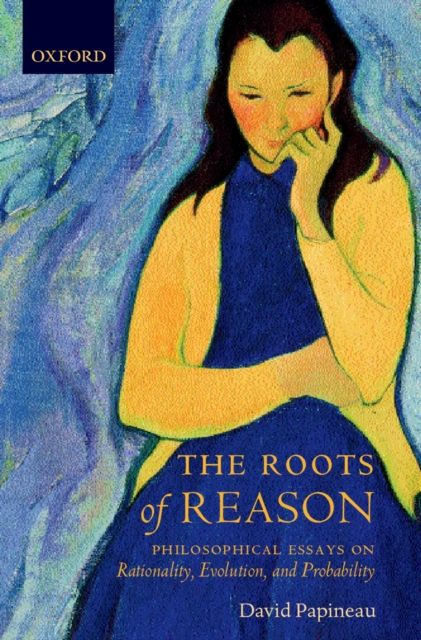
David Papineau presents a controversial view of human reason, portraying it as a normal part of the natural world, and drawing on the empirical sciences to illuminate its workings.
This edited volume, aimed at both students and researchers in philosophy, mathematics and history of science, highlights leading developments in the overlapping areas of philosophy and the history of modern mathematics.
Bernard Bolzano (1781-1848, Prague) was a remarkable thinker and reformer far ahead of his time in many areas, including philosophy, theology, ethics, politics, logic, and mathematics.
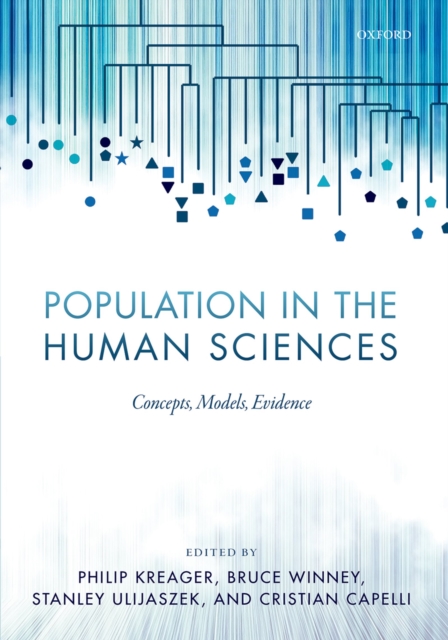
The Human Sciences address problems in nature and society that often require coordinated approaches of several scientific disciplines and scholarly research, embracing the social and biological sciences, and history.
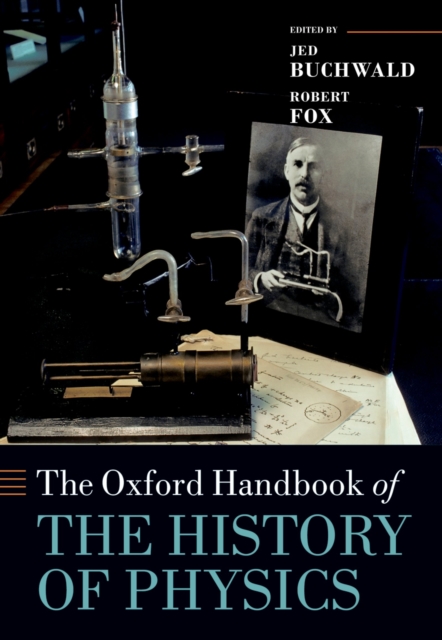
The Oxford Handbook of the History of Physics brings together cutting-edge writing by more than twenty leading authorities on the history of physics from the seventeenth century to the present day.
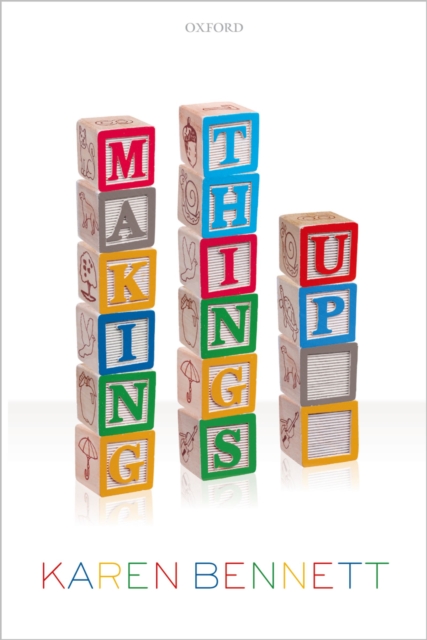
A certain kind of talk is ubiquitous among both philosophers and so-called "e;ordinary people"e;: talk of one phenomenon generating or giving rise to another, or talk of one phenomenon being based in or constructed from another.
The theory of relativity convinced many philosophers that space and time are fundamentally alike, and that they are mere aspects of a more fundamental space-time.
This book is focused on the first three parts of Bolzano's Theory of Sciene and introduces a more systematic reconsideration of Bolzano's logial thought.
This book is focused on the first three parts of Bolzano's Theory of Sciene and introduces a more systematic reconsideration of Bolzano's logial thought.
God Over All: Divine Aseity and the Challenge of Platonism is a defense of God's aseity and unique status as the Creator of all things apart from Himself in the face of the challenge posed by mathematical Platonism.
Volume III of a tetralogy devoted to Divine Agency and Divine Action articulates a comprehensive vision of systematic theology focused on divine action from creation to eschatology.
Divine Agency and Divine Action, Volume II builds on Volume I, which established that no generic concept of action will suffice for understanding the character of divine actions explicit in the Christian faith.
Since Hilary Putnam offered multiple realization as an empirical hypothesis in the 1960s, philosophical consensus has turned against the idea that mental processes could be identified with brain processes, and multiple realization has become the keystone of the 'antireductive consensus' across philosophy of science broadly.
The New Mechanical Philosophy argues for a new image of nature and of science--one that understands both natural and social phenomena to be the product of mechanisms, and that casts the work of science as an effort to discover and understand those mechanisms.
The New Mechanical Philosophy argues for a new image of nature and of science--one that understands both natural and social phenomena to be the product of mechanisms, and that casts the work of science as an effort to discover and understand those mechanisms.
The applications of Artificial Intelligence lie all around us; in our homes, schools and offices, in our cinemas, in art galleries and - not least - on the Internet.
The applications of Artificial Intelligence lie all around us; in our homes, schools and offices, in our cinemas, in art galleries and - not least - on the Internet.
The applications of Artificial Intelligence lie all around us; in our homes, schools and offices, in our cinemas, in art galleries and - not least - on the Internet.
Tim Lewens aims to understand what it means to take an evolutionary approach to cultural change, and why it is that this approach is often treated with suspicion.
Social epistemology has been flourishing in recent years, expanding and making connections with political philosophy, virtue epistemology, philosophy of science, and feminist philosophy.
Social epistemology has been flourishing in recent years, expanding and making connections with political philosophy, virtue epistemology, philosophy of science, and feminist philosophy.
According to Grothendieck, the notion of topos is "e;the bed or deep river where come to be married geometry and algebra, topology and arithmetic, mathematical logic and category theory, the world of the continuous and that of discontinuous or discrete structures"e;.
According to Grothendieck, the notion of topos is "e;the bed or deep river where come to be married geometry and algebra, topology and arithmetic, mathematical logic and category theory, the world of the continuous and that of discontinuous or discrete structures"e;.
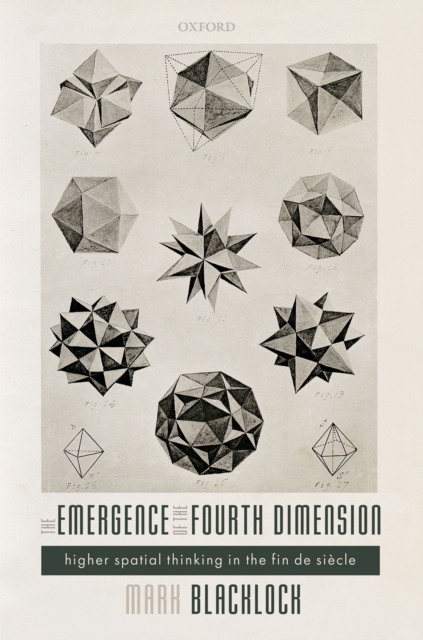
The Emergence of the Fourth Dimension describes the development and proliferation of the idea of higher dimensional space in the late nineteenth- and early twentieth-centuries.
The Oxford Handbook of German Philosophy in the Nineteenth Century is the first collective critical study of this important period in intellectual history.
The Oxford Handbook of German Philosophy in the Nineteenth Century is the first collective critical study of this important period in intellectual history.
This book argues that if we consider the ubiquity of small effect sizes in medicine, the extent of misleading evidence in medical research, the thin theoretical basis of many interventions, and the malleability of empirical methods, and if we employ our best inductive framework, then our confidence in medical interventions ought to be low.