The essays in this volume constitute a portion of the research program being carried out by the International Society for Phenomenology and the Human Sciences.
These remarks preface two volumes consisting of the proceedings of the Third International Conference on the History and Philosophy of Science of the International Union of History and Philosophy of Science.
These remarks preface two volumes consisting of the proceedings of the Third International Conference on the History and Philosophy of Science of the International Union of History and Philosophy of Science.
Among the myriad of changes that took place in Great Britain in the first half of the nineteenth century, many of particular significance to the historian of science and to the social historian are discernible in that small segment of British society drawn together by a shared interest in natural phenomena and with sufficient leisure or opportunity to investigate and ponder them.
The first six chapters of this volume present the author's 'predictive' or information theoretic' approach to statistical mechanics, in which the basic probability distributions over microstates are obtained as distributions of maximum entropy (Le.
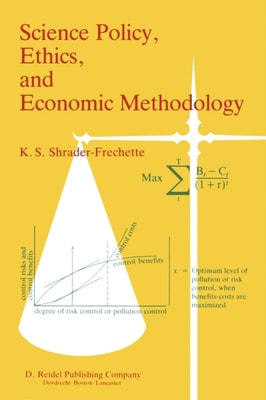
If indeed scientists and technologists, especially economists, set much of the agenda by which the future is played out, and I think they do, then the student of scientific methodology and public ethics has at least three options.
Only in fairly recent years has History and Philosophy of Science been recognized - though not always under that name - as a distinct field of scholarly endeavour.
Einstein often expressed the sentiment that "e;the eternal mystery of the world is its comprehensibility,"e; and that science is the means through which we comprehend it.
To the scientists and philosophers of our time, Hegel has been either a ne- glected or a provocative thinker, a source of irrelevant dark metaphysics or of complex but insightful analysis.
Tran Duc Thao, a wise and learned scientist and an eminent Marxist philoso- pher, begins this treatise on the origins of language and consciousness with a question: "e;One of the principal difficulties of the problem of the origin of consciousness is the exact determination of its beginnings.
This remarkable collection of essays, diverse but united by the theme of critical reasoning, testifies to the attention and respect paid by the authors to the philosophical career of Gerard Radnitzky.
To introduce this collection of research studies, which stem from the pro- grams conducted by The World Phenomenology Institute, we need say a few words about our aims and work.
This collection is the first proceedings volume of the lectures delivered within the framework of the Israel Colloquium for the History, Philosophy and Sociology of Science, in its year of inauguration 1981-82.
Were one to characterize the aims of this book ambitiously, it could be said to sketch the philosophical foundations or underpinnings of the scientific world view or, better, of the scientific conception of the world.
The idea for this issue arose during a gathering of scholars to com- memorate the hundredth anniversary of Moritz Schlick (1882-1936), the philosopher from Germany whose influence gave Austria its most characteristic philosophical voice between the two world wars.
The tremendous progress in astronomical observations over the past sixty years has revealed a vast structured universe whose fundamental parti- cles are galaxies, and clusters thereof.
The papers presented in this special collection focus upon conceptual, the- oretical and epistemological aspects of sociobiology, an emerging discipline that deals with the extent to which genetic factors influence or control patterns of behavior as well as the extent to which patterns of behavior, in turn, influence or control genetic evolution.
The Boston Colloquium for the Philosophy of Science began 2S years ago as an interdisciplinary, interuniversity collaboration of friends and colleagues in philosophy, logic, the natural sciences and the social sciences, psychology, religious studies, arts and literature, and often the celebrated man-in-the- street.
Much of the work in this volume was supported by the National Science Foundation under Grant SES82-05112 from the Program in History and Philosophy of Science and the Division of Policy Research and Analysis.
When the author of Identity and Reality accepted Langevin's suggestion that Meyerson "e;identify the thought processes"e; of Einstein's relativity theory, he turned from his assured perspective as historian of the sciences to the risky bias of contemporary philosophical critic.
The papers in this volume are offered in celebration of the 200th anni versary of the pub 1 i cat i on of Inmanue 1 Kant's The MetaphysicaL Foundations of NatupaL Science.
Boris Kuznetsov was a scientist among humanists, a philosopher among scientists, a historian for those who look to the future, an optimist in an age of sadness.
The institutionalization of History and Philosophy of Science as a distinct field of scholarly endeavour began comparatively earl- though not always under that name - in the Australasian region.
Prefatory Explanation It must be remarked at once that I am 'editor' of this volume only in that I had the honor of presiding at the symposium on Spinoza and the Sciences at which a number of these papers were presented (exceptions are those by Hans Jonas, Richard Popkin, Joe VanZandt and our four European contributors), in that I have given some editorial advice on details of some of the papers, including translations, and finally, in that my name appears on the cover.
Until recently, the philosophy and history of science proceeded in a separate way from the philosophy and history of technology, and indeed with respect to both science and technology, philosophical and historical inquiries were also following their separate ways.
In this stimulating investigation, Gideon Freudenthal has linked social history with the history of science by formulating an interesting proposal: that the supposed influence of social theory may be seen as actual through its co- herence with the process of formation of physical concepts.
Within the last ten years, the interest of historians and philosophers of science in the epistemological writings of the Polish medical microbiologist Ludwik Fleck (1896-1961), who had up to then been almost completely unknown, has advanced with great strides.
This third volume of American University Publications in Philos- ophy continues the tradition of presenting books in the series shaping current frontiers and new directions in phi.
On May 27-31, 1985, a series of symposia was held at The University of Western Ontario, London, Canada, to celebrate the 70th birthday of Pro- fessor V.
For protophysics, the fascinating and impressive constructive re-establish- ment of the foundations of science by Professor Paul Lorenzen, working with his colleagues and students of the Erlangen School, no task is more central than to.