Recently the scholarly community and popular media have highlighted the denial of science by conservative Christians, linking a low view of scientific expertise to the United States' current cultural turmoil.
In Unsettled Borders Felicity Amaya Schaeffer examines the ongoing settler colonial war over the US-Mexico border from the perspective of Apache, Tohono O'odham, and Maya who fight to protect their sacred land.
Scientists have identified southern China as a likely epicenter for viral pandemics, a place where new viruses emerge out of intensively farmed landscapes and human--animal interactions.
In Surrogate Humanity Neda Atanasoski and Kalindi Vora trace the ways in which robots, artificial intelligence, and other technologies serve as surrogates for human workers within a labor system entrenched in racial capitalism and patriarchy.
Praise for THE SPECIFIC DENSITY OF SCIENTISTS:As an expert in understanding and defining the cult mentality, David Conn manages, through logic and his strong faith, to explain the inability, or the refusal, of many scientists to separate the spiritual self from the scientifically driven self (in other words, "e;to bifurcate"e;).
From one of America's best-known biologists, a revolutionary new way of thinking about evolution that shows ';why, in light of our origins, humans are still special' (Edward J.
If you read (or write) popular science, you might sometimes wonder: how do the authors manage to make subjects that once put you to sleep in science class both so entertaining and approachable?
From April through December of 1945, ten of Nazi Germany's greatest nuclear physicists were detained by Allied military and intelligence services in a kind of gilded cage at Farm Hall, an English country manor near Cambridge.
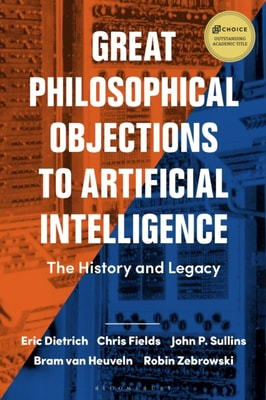
A 2022 Choice Outstanding Academic TitleThis book surveys and examines the most famous philosophical arguments against building a machine with human-level intelligence.
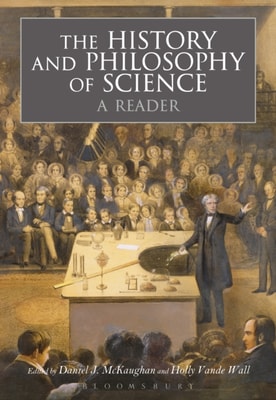
The History and Philosophy of Science: A Reader brings together seminal texts from antiquity to the end of the nineteenth century and makes them accessible in one volume for the first time.
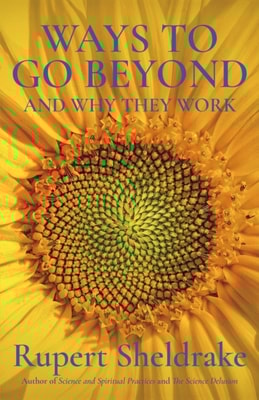
To go beyond is to move into a higher state of consciousness, to a place of bliss, greater understanding, love, and deep connectedness, a realm where we finally find life's meaning - experiences for which all spiritual seekers seek.
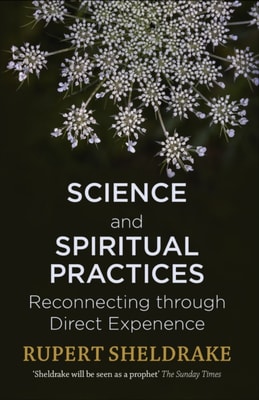
In this pioneering book Rupert Sheldrake shows how science helps validate seven practices on which all religions are built, and which are part of our common human heritage: Meditation Gratitude Connecting with nature Relating to plants Rituals Singing and chanting Pilgrimage and holy places.
Discover the second volume of an epic, beautifully illustrated graphic history of humankind, based on Yuval Noah Harari's multi-million copy bestselling phenomenon.
From the world's foremost neuroscientist of romantic love comes a personal story of connection and heartbreak that brings new understanding to an old truth: it is better to have loved and lost than never to have loved at all.
'A truly awe-inspiring piece of writing' David Robson, author of The Intelligence TrapIn recent decades, many philosophers and cognitive scientists have declared the question of consciousness unsolvable, but Antonio Damasio is convinced that recent findings in neuroscience, psychology and artificial intelligence have given us the necessary tools to solve its mystery.
'A dazzling chronicle, a bracing challenge to modernity's smug assumptions' - Bryce Christensen, Booklist'O what a world of profit and delightOf power, of honour and omnipotenceIs promised to the studious artisan.
This book provides a unique and multifaceted view on and understanding of borders and their manifestations: physical and mental, cultural and geographical, and as a question of life and death.
This compact and elegant work (equally fitting for both academic as well as the trade audiences) provides a readily accessible and highly readable overview of Bhutan's unique opportunities and challenges; all her prominent environmental legislation, regulatory statutes, ecological customs and practices, both in historic and contemporary terms.
Internationally renowned theoretical physicist and bestselling author Lawrence Krauss offers provocative, revelatory answers to the biggest philosophical questions: Where did our universe come from?
This book calls on research and experience to take a new look at the practices of dowsing, such as "e;water-witching"e; and other such mechanical techniques to obtain information not available to the physical senses, and to examine the astonishing psychological and psychic consequences.
For many years there has been a growing conflict between the evidence we have been accumulating and the assumptions we have had about the nature of reality.
Reality 101 takes you on a young man's trip into adulthood while he struggles to incorporate his fundamentalist indoctrination into an understanding of science's discoveries and teaching.