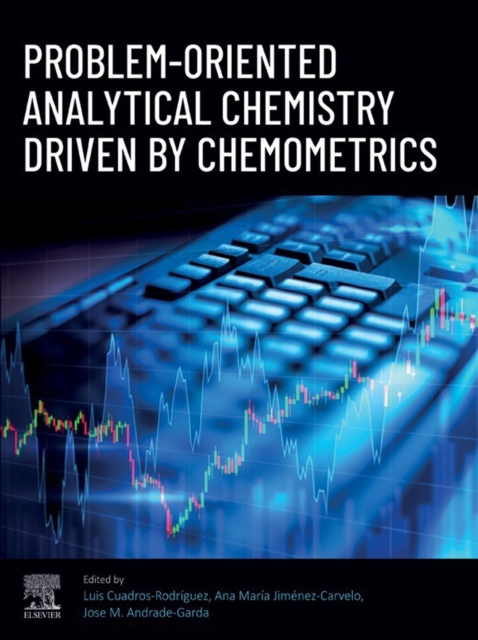
Problem-Oriented Analytical Chemistry Driven by Chemometrics covers challenges that are relevant to many fields using analytical techniques, including food quality and safety, environmental studies, product authentication, and petrochemistry using an analytical data science approach.
This introductory book is a beginner-friendly resource that empowers you to harness Python programming for exploring and understanding biomedical data.
This introductory book is a beginner-friendly resource that empowers you to harness Python programming for exploring and understanding biomedical data.
This book provides a general introduction as well as a selected survey of key advances in the fascinating field of plant cell and tissue culture as a tool in biotechnology.
Applications:- Applications of Microbial Cell Sensors, by Mifumi Shimomura-Shimizu and Isao Karube- Whole-Cell Bioreporters for the Detection of Bioavailable Metals, by Anu Hynninen and Marko Virta- Bacteriophage-Based Pathogen Detection, by Steven Ripp- Cell-Based Genotoxicity Testing, by Georg Reifferscheid and Sebastian Buchinger- Cytotoxicity and Genotoxicity Reporter Systems Based on the Use of Mammalian Cells, by Christa Baumstark-Khan, Christine E.
Table of ContentsReporter cells: - Yeast Based Sensorsby Mifumi Shimomura-Shimizu and Isao Karube - Mammalian Cell-Based Sensor Systemsby Pratik Banerjee, Briana Franz, and Arun K.
This fully updated volume focuses on analytical separations by chromatographic and electrophoretic techniques, providing some overview along with a multitude of practical applications.
This fully updated volume focuses on analytical separations by chromatographic and electrophoretic techniques, providing some overview along with a multitude of practical applications.
Advances in Lichens and Non-Flowering Plants Fungal Endophytes Research provides a better understanding of endophytic fungal diversity from lichens and non-flowering plants, and their applications.
Advances in Lichens and Non-Flowering Plants Fungal Endophytes Research provides a better understanding of endophytic fungal diversity from lichens and non-flowering plants, and their applications.
Transplantation in South Asia faces unique immunological challenges, yet comprehensive data on genetic and epigenetic factors in the region remains sparse.
This book presents an overview of advanced biophysical techniques that can be used to understand the physicochemical properties of biomolecules and biomaterials and expand their potential for biomedical applications.
Transplantation in South Asia faces unique immunological challenges, yet comprehensive data on genetic and epigenetic factors in the region remains sparse.
This book presents an overview of advanced biophysical techniques that can be used to understand the physicochemical properties of biomolecules and biomaterials and expand their potential for biomedical applications.
This detailed volume explores digital polymerase chain reaction (dPCR), a third generation PCR technology that enables absolute quantification by counting positive and negative partitions after endpoint amplification.
This detailed volume explores digital polymerase chain reaction (dPCR), a third generation PCR technology that enables absolute quantification by counting positive and negative partitions after endpoint amplification.
This extensive volume explores the phenomena of chaotic genomic rearrangements, known as chromoanagenesis, their formation mechanisms, and the state-of-the-art techniques used to detect them.
This extensive volume explores the phenomena of chaotic genomic rearrangements, known as chromoanagenesis, their formation mechanisms, and the state-of-the-art techniques used to detect them.
This third edition volume expands on the previous editions with new chapters discussing advancements in mass spectrometry resolution, sensitivity, and speed, including the refinement of the identification of peptides presented on the surface of major histocompatibility proteins.
This third edition volume expands on the previous editions with new chapters discussing advancements in mass spectrometry resolution, sensitivity, and speed, including the refinement of the identification of peptides presented on the surface of major histocompatibility proteins.
This book is a fundamental work for those seeking to understand the structure and properties of crystalline materials from a rigorous and systematic approach.
This book is a fundamental work for those seeking to understand the structure and properties of crystalline materials from a rigorous and systematic approach.
This book presents the latest advances in intelligent biomaterials, a fast developing area for disease diagnosis and treatments, health management and rehabilitations.
This book presents the latest advances in intelligent biomaterials, a fast developing area for disease diagnosis and treatments, health management and rehabilitations.
The primary aim of the book entitled "e;Teaching biology - Photosynthetic Organisms"e; is to support practice-oriented teaching of biology, therefore it includes detailed descriptions of illustrated investigations and experiments alongside basic theoretical knowledge.
The primary aim of the book entitled "e;Teaching biology - Photosynthetic Organisms"e; is to support practice-oriented teaching of biology, therefore it includes detailed descriptions of illustrated investigations and experiments alongside basic theoretical knowledge.
Magnetic resonance systems are used in almost every academic and industrial chemistry, physics and biochemistry department, as well as being one of the most important imaging modalities in clinical radiology.
This book discusses current developments and upcoming trends in the microbial synthesis of various bioactive compounds from waste product which have a very good market worldwide.