A major update of a best-selling textbook that introduces students to the key experimental and analytical techniques underpinning life science research.
A major update of a best-selling textbook that introduces students to the key experimental and analytical techniques underpinning life science research.
This second edition provides state-of-the-art and novel methods on antibiotic isolation and purification, identification of antimicrobial killing mechanisms, as well as methods for the analysis and detection of microbial responses and adaptation strategies.
This book covers various state-of-the-art techniques regarding the associations between transcription factors (TFs) and genes, with a focus on providing methodological and practical references for researchers.
This detailed volume provides an updated overview of current uses of peptide microarray technology, showcasing consolidated applications while highlighting some of the most intriguing novelties and emerging fields of use.
This volume provides a comprehensive reference for researchers aiming to bring new techniques and approaches to their scientific research using urodeles.
This volume provides an overview of well-established methods optimized for diverse archaeal model organisms and is a source of protocols facilitating access to the molecular and cellular biology characterization of these fascinating organisms.
This detailed book presents recent methodologies for the task of inspecting the genomic world of plants, extracting valuable information, and presenting it in a readable way.
This detailed volume provides a comprehensive collection of protocols for epigenomic research, powering our ability to analyze epigenetic modifications across the entire genome.
This book combines discursive chapters that present the latest progress in molecular biology, drug discovery, organ-tissue engineering, and related fields, with a number of descriptive chapters on methods, protocols, and case studies.
This third edition expands on the previous editions by providing updated protocols and current methods that cover recent breakthroughs in Drosophila research.
Bioremediation using microbes is a sustainable technology for biodegradation of target compounds, and an omics approach gives more clarity on these microbial communities.
Bioremediation using microbes is a sustainable technology for biodegradation of target compounds, and an omics approach gives more clarity on these microbial communities.
In situ hybridization is a technique that allows for the visualization of specific DNA and RNA sequences in individual cells, and is an especially important method for studying nucleic acids in heterogeneous cell populations.
Atomic force microscopy (AFM) can be used to analyze and measure the physical properties of all kinds of materials at nanoscale in the atmosphere, liquid phase, and ultra-high vacuum environment.
Atomic force microscopy (AFM) can be used to analyze and measure the physical properties of all kinds of materials at nanoscale in the atmosphere, liquid phase, and ultra-high vacuum environment.
This interdisciplinary book, Advanced Microscopy: A Strong Analytical Tool in Materials Science, covers the methodology and applications of different advanced microscopic techniques in various research fields, including chemistry, nanotechnology, polymers, chemical engineering, and biomedical engineering, providing an informative overview that helps to determine the best applications for advanced materials.
This interdisciplinary book, Advanced Microscopy: A Strong Analytical Tool in Materials Science, covers the methodology and applications of different advanced microscopic techniques in various research fields, including chemistry, nanotechnology, polymers, chemical engineering, and biomedical engineering, providing an informative overview that helps to determine the best applications for advanced materials.
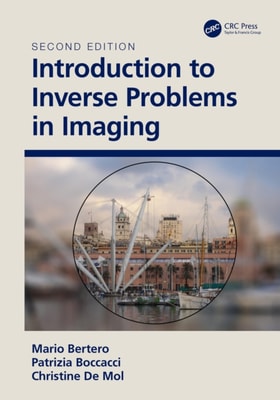
Fully updated throughout and with several new chapters, this second edition of Introduction to Inverse Problems in Imaging guides advanced undergraduate and graduate students in physics, computer science, mathematics and engineering through the principles of linear inverse problems, in addition to methods of their approximate solution and their practical applications in imaging.