Although many of the practical and intellectual traditions that make up modern science date back centuries, the category of "e;science"e; itself is a relative novelty.
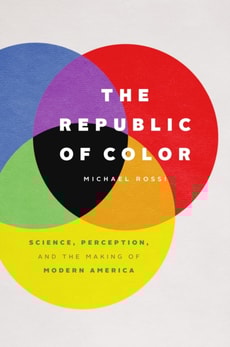
The Republic of Color delves deep into the history of color science in the United States to unearth its origins and examine the scope of its influence on the industrial transformation of turn-of-the-century America.
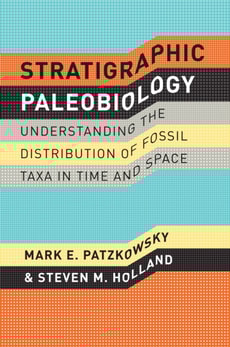
Whether the fossil record should be read at face value or whether it presents a distorted view of the history of life is an argument seemingly as old as many fossils themselves.
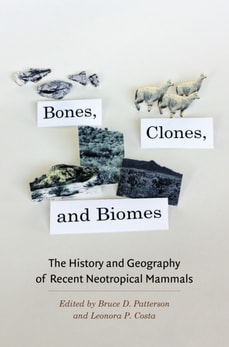
As explorers and scientists have known for decades, the Neotropics harbor a fantastic array of our planet's mammalian diversity, from capybaras and capuchins to maned wolves and mouse opossums to sloths and sakis.
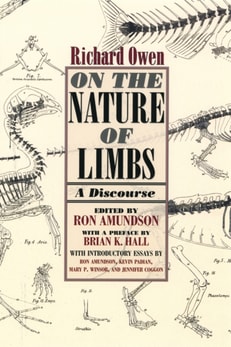
The most prominent naturalist in Britain before Charles Darwin, Richard Owen made empirical discoveries and offered theoretical innovations that were crucial to the proof of evolution.
The Society for Psychical Research was established in 1882 to further the scientific study of consciousness, but it arose in the surf of a larger cultural need.
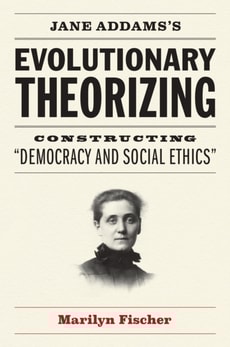
In Jane Addams's Evolutionary Theorizing, Marilyn Fischer advances the bold and original claim that Addams's reasoning in her first book, Democracy and Social Ethics, is thoroughly evolutionary.
Paleobiology struggled for decades to influence our understanding of evolution and the history of life because it was stymied by a focus on microevolution and an incredibly patchy fossil record.
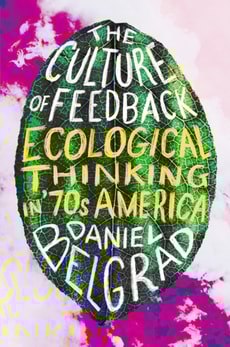
Since the birth of the modern environmental movement in the 1970s, the United States has witnessed dramatic shifts in social equality, ecological viewpoints, and environmental policy.
Naturalism as a guiding philosophy for modern science both disavows any appeal to the supernatural or anything else transcendent to nature, and repudiates any philosophical or religious authority over the workings and conclusions of the sciences.
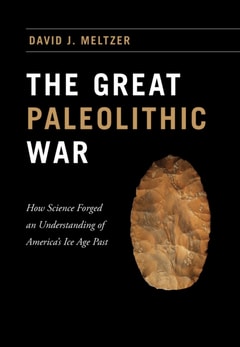
Following the discovery in Europe in the late 1850s that humanity had roots predating known history and reaching deep into the Pleistocene era, scientists wondered whether North American prehistory might be just as ancient.
At the close of the Second World War, modernist poets found themselves in an increasingly scientific world, where natural and social sciences claimed exclusive rights to knowledge of both matter and mind.
In recent years, many members of the intellectual community have embraced a radical relativism regarding knowledge in general and scientific knowledge in particular, holding that Kuhn, Quine, and Feyerabend have knocked the traditional picture of scientific knowledge into a cocked hat.
The advent of recombinant DNA technology in the 1970s was a key moment in the history of both biotechnology and the commercialization of academic research.
Ecologists can spend a lifetime researching a small patch of the earth, studying the interactions between organisms and the environment, and exploring the roles those interactions play in determining distribution, abundance, and evolutionary change.
In six short years, Galileo Galilei went from being a somewhat obscure mathematics professor running a student boarding house in Padua to a star in the court of Florence to the recipient of dangerous attention from the Inquisition for his support of Copernicanism.
Research publications have always been key to building a successful career in science, yet little if any formal guidance is offered to young scientists on how to get research papers peer reviewed, accepted, and published by leading scientific journals.
During the first half of the twentieth century, supporters of the eugenics movement offered an image of a racially transformed America by curtailing the reproduction of "e;unfit"e; members of society.
The rapid growth of the American environmental movement in recent decades obscures the fact that long before the first Earth Day and the passage of the Endangered Species Act, naturalists and concerned citizens recognized-and worried about-the problem of human-caused extinction.
Professionals in many disciplines, from archeology to forensic science and anthropology, must be able to identify organic and inorganic fibers and particles.
In a series of revolts starting in 1820, four military officers rode forth on horseback from obscure European towns to bring political freedom and a constitution to Spain, Naples, and Russia; and national independence to the Greeks.
In a series of revolts starting in 1820, four military officers rode forth on horseback from obscure European towns to bring political freedom and a constitution to Spain, Naples, and Russia; and national independence to the Greeks.
In this long-awaited book, pre-eminent analytical philosopher Alvin Plantinga argues that the conflict between science and theistic religion is actually superficial, and that at a deeper level they are in concord.
Over recent years, the psychology of concepts has been rejuvenated by new work on prototypes, inventive ideas on causal cognition, the development of neo-empiricist theories of concepts, and the inputs of the budding neuropsychology of concepts.
Striving to boldly redirect the philosophy of science, this book by renowned philosopher Philip Kitcher examines the heated debate surrounding the role of science in shaping our lives.
For many of us, the great scientific discoveries of the modern age--the Big Bang, evolution, quantum physics, relativity-- point to an existence that is bleak, devoid of meaning, pointless.
In this book David Chalmers follows up and extends his thoughts and arguments on the nature of consciousness that he first set forth in his groundbreaking 1996 book, The Conscious Mind.
In this long-awaited book, pre-eminent analytical philosopher Alvin Plantinga argues that the conflict between science and theistic religion is actually superficial, and that at a deeper level they are in concord.