This book narrates the history of the initiation and development of elementary particle physics in India and by Indians, focusing on the first half of the twentieth century.
This book provides an up-to-date revision of materialism's central tenets, its main varieties, and the place of materialistic philosophy vis a vis scientific knowledge.
This book presents a detailed history of chemical warfare development during the First World War and discusses design approaches to gas masks and the performance of new filter materials that decontaminate chemical warfare agents (CWA) when applied in the vapor phase.
One of the most popular and widely read books of the Middle Ages, Physiologus contains allegories of beasts, stones, and trees both real and imaginary, infused by their anonymous author with the spirit of Christian moral and mystical teaching.
When insulin was discovered in the early 1920s, even jaded professionals marveled at how it brought starved, sometimes comatose diabetics back to life.
Following the discovery in Europe in the late 1850s that humanity had roots predating known history and reaching deep into the Pleistocene era, scientists wondered whether North American prehistory might be just as ancient.
Nineteenth-century paleontologists boasted that, shown a single bone, they could identify or even reconstruct the extinct creature it came from with infallible certainty-"e;Show me the bone, and I will describe the animal!
Neither Donkey nor Horse tells the story of how Chinese medicine was transformed from the antithesis of modernity in the early twentieth century into a potent symbol of and vehicle for China's exploration of its own modernity half a century later.
The nineteenth century was an age of transformation in science, when scientists were rewarded for their startling new discoveries with increased social status and authority.
Galileo never set foot on the Iberian Peninsula, yet, as Enrique Garcia Santo-Tomas unfolds in The Refracted Muse, the news of his work with telescopes brought him to surprising prominence-not just among Spaniards working in the developing science of optometry but among creative writers as well.
The seemingly unlimited technological potential of nanotechnology brings with it new practices of governance, networking, and exercising power and agency.
The last decades of the Ming dynasty, though plagued by chaos and destruction, saw a significant increase of publications that examined advances in knowledge and technology.
In the mysterious and pristine forests of the tropics, a wealth of ethnobotanical panaceas and shamanic knowledge promises cures for everything from cancer and AIDS to the common cold.
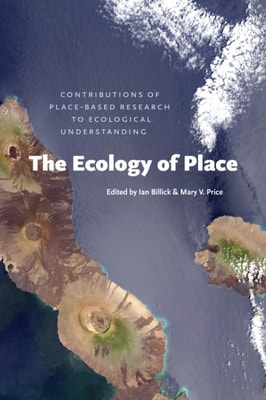
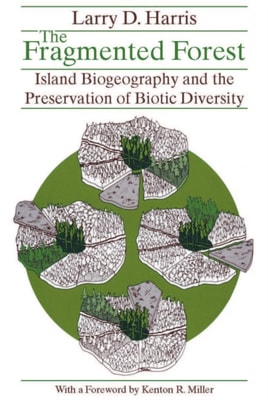
Ecologists can spend a lifetime researching a small patch of the earth, studying the interactions between organisms and the environment, and exploring the roles those interactions play in determining distribution, abundance, and evolutionary change.
The end of the eighteenth century saw the start of a new craze in Europe: tiny portraits of single eyes that were exchanged by lovers or family members.
In The Powers of Ten by Charles and Ray Eames, a view of two people enjoying a picnic zooms up and away to show their surroundings, moving progressively farther into space, then zooms back in for a close-up of the hand of the picnicker, travelling deep into the microscopic realm.
In The Scientist and the Forger: Probing a Turbulent Art World the author draws upon an enthralling range of case studies, from Botticelli to Leonardo, Campendonk to Pollock and Chagall to Freud, equipping the reader with a holistic understanding of an art world shaped by fast-moving trends, and increasingly permeated by science.
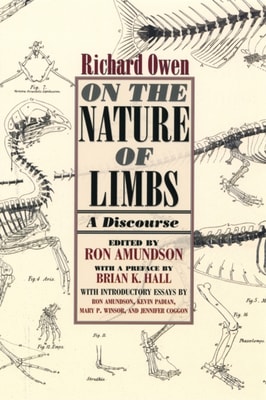
The most prominent naturalist in Britain before Charles Darwin, Richard Owen made empirical discoveries and offered theoretical innovations that were crucial to the proof of evolution.
This handbook features essays written by both literary scholars and mathematicians that examine multiple facets of the connections between literature and mathematics.
The news that a flowering weed-mousear cress (Arabidopsis thaliana)-can sense the particular chewing noise of its most common caterpillar predator and adjust its chemical defenses in response led to headlines announcing the discovery of the first "e;hearing"e; plant.
While there is enormous public interest in biodiversity, food sourcing, and sustainable agriculture, romantic attachments to heirloom seeds and family farms have provoked misleading fantasies of an unrecoverable agrarian past.
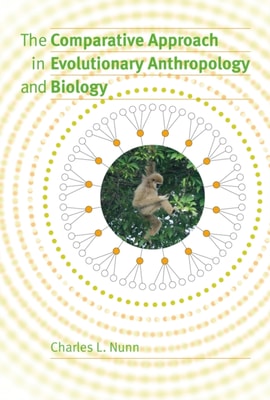
The natural world is infinitely complex and hierarchically structured, with smaller units forming the components of progressively larger systems: molecules make up cells, cells comprise tissues and organs that are, in turn, parts of individual organisms, which are united into populations and integrated into yet more encompassing ecosystems.
In recent years, emotions have become a major, vibrant topic of research not merely in the biological and psychological sciences but throughout a wide swath of the humanities and social sciences as well.
Mice are used as model organisms across a wide range of fields in science today-but it is far from obvious how studying a mouse in a maze can help us understand human problems like alcoholism or anxiety.
This book, in language accessible to the general reader, investigates twelve of the most notorious, most interesting, and most instructive episodes involving the interaction between science and Christianity, aiming to tell each story in its historical specificity and local particularity.
This book is intended for healthcare professionals, biomedical researchers, health policy experts, and graduate students who frequently write and publish scientific manuscripts in peer reviewed journals.