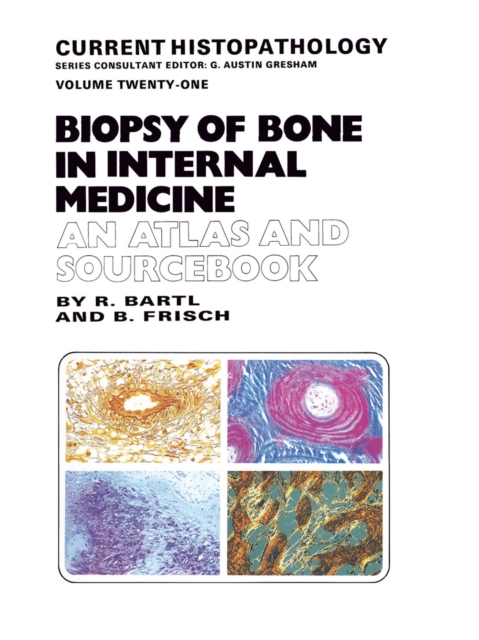
This text illustrates bone marrow aspirate, imprint and biopsy specimens showing characteristic features of a wide variety of neoplastic and non-neoplastic conditions.
The Blood Group Antigen FactsBook - winner of a 2013 Highly Commended BMA Medical Book Award for Internal Medicine - has been an essential resource in the hematology, transfusion and immunogenetics fields since its first publication in the late 1990s.
This detailed volume collects updates on the technical advances in hematopoietic stem cell research and incorporates new techniques focused on the molecular/genetic, cellular, and whole organism levels.
Bringing together intellectual and scientific experts from pediatrics, adolescent medicine, general medicine, pathology, biology, nursing and psychology, this book is the first of its kind to cover the topics of leukemias and lymphomas in young patients ranging from infants to young adults.
This book is a compendium of case studies in hematologic malignancies such as acute leukemias, myelodysplastic and myeloproliferative neoplasms, chronic leukemias and multiple myeloma covering cytogenetics (karyotyping Fluorescence in sitn hybridization (FISH)) and molecular studies in detail.
This book discusses key aspects of childhood acute lymphoblastic leukemia (ALL), presenting the latest research on the biology and treatment of the disease and related issues.
This book provides a concise yet comprehensive summary of the current state of knowledge concerning the pathophysiology, differential diagnosis and treatment options that support day-to-day patient management.
This book describes the pathogenesis and treatment of several representative hematological disorders in children, with a special focus on genetic and molecular aspects.
It has been generally accepted that angiogenesis is involved in the pathogenesis of hematological malignancies, like acute and chronic leukemia, lymphoma, myelodysplastic syndromes, myeloproliferative neoplasms and multiple myeloma.
Is the nephrology community facilitating excess cardiovascular deaths in patients with kidney failure and anemia by treating to a subnormal hematocrit?
The aim of this book is to introduce the medical student, recent medical graduates involved in postgraduate training and physicians in practice to the role of the platelet in physiology and disease.
Since 1952, postgraduate courses for practising physicians and speci- alists have been given by the Medical Faculty of the University of Leiden in the Boerhaave Quarter, in which most of its clinics and laboratories are located.
clinical efficacy of haemostatic agents had to be published work and had to fulftl most of the following minimum requirements: (1) Quantitation ofthe measured blood loss was required, and not merely a clinical impression of the amount of blood lost, if the document pertained to a planned but open clinical trial.
This book contains the proceedings of a symposium on the use of synthetic substrates in clinical blood coagulation assays, which was held at the University of Leuven, Belgium, on March 1st, 1980.
The contact between the human blood and foreign technical apparatus (circulatory) and respiratory assist devices, arti- ficial kidneys) leads to changes in the plasmatic and cel- lular components of the blood, which have often only been taken as signs of gross but passive blood destruction.
Dr W J Jenkins In 1977 when the Sheffield Transfusion Centre took delivery of the first GROUPAMATIC blood grouping machine in the UK it was equipped with a sample identification system involving complicated and expensive disposable punched cards.
Less than 50 years ago it was discovered that steady-state protein concentrations in plasma are the net result of continuous elimination and synthesis of protein molecules.
The practice of transfusing blood started at the bedside but over the last few decades blood transfusion has become more and more a laboratory directed discipline.
This book is an edited verbatim account of the proceedings of the Second London Workshop on Red Cell Filtration and Deformability, organised jointly by the Royal Society of Medicine and the Groupe de Travail sur la Filtration Erythrocytaire.
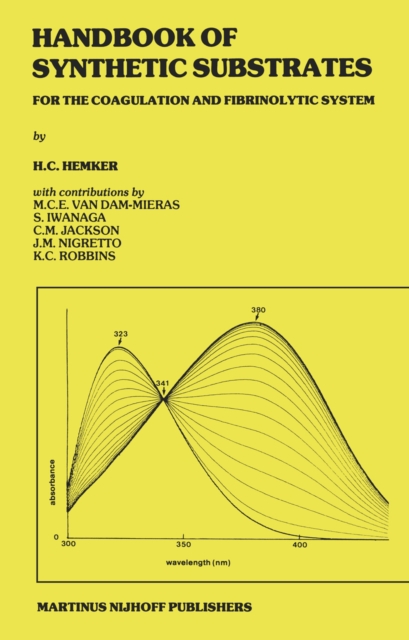
The need for a handbook on the use of synthetic substrates for assay of proteases of the coagulation and fibrinolytic systems became evident several years ago during the activities of the Subcommittee on Synthetic Substrates of the International Committee on Thrombosis and Haemo- stasis (lCTH).