First published in 2004, this book provides an authoritative treatment of the developmental biology of the ocular lens for graduate students and researchers.
Arguably the most important ancillary test available to ophthalmologists worldwide, optical coherence tomography (OCT) has revolutionized the field, and now includes angiographic evaluations (OCTA) that provide vascular flow data without eye injection.
The first reference of its kind, An Evidence Base for Ophthalmic Nursing Practice alleviates the need for every ophthalmic practice area to develop diverse, often contradictory, guidelines.
The new edition of this highly successful book provides a concise and practical guide to eye disease for the non-specialist, avoiding jargon and giving clear guidance on the practical management of common eye complaints.
Foremost neurophysiologists and psychophysicists provide pertinent information on the nature of representation at the earliest stages as this will constrain the disposition of all subsequent processing.
The application of evidence-based veterinary medicine (EBVM) can assist in improving and optimising the diagnosis, prognosis, control, treatment and ultimately the welfare of animals.
This handbook is designed to help shape the thought processes of the eye clinician or trainee and guide them toward the right decision-making pathway in emergency ophthalmology situations.
Neuro-ophthalmology is a merged subspecialty of neurology and ophthalmology dealing with complex multisystem diseases presenting with visual manifestations.
This handbook is designed to help shape the thought processes of the eye clinician or trainee and guide them toward the right decision-making pathway in emergency ophthalmology situations.
Neuro-ophthalmology is a merged subspecialty of neurology and ophthalmology dealing with complex multisystem diseases presenting with visual manifestations.
This comprehensive and detailed text deals with the diagnosis and surgery of blepharoptosis, and will benefit any practicing physician, fellow or resident who deals with blepharoptosis.
Sensory Neuroscience: Four Laws of Psychophysics organizes part of psychophysics -- a science of quantitative relationships between human sensations and the stimuli that evoke them.
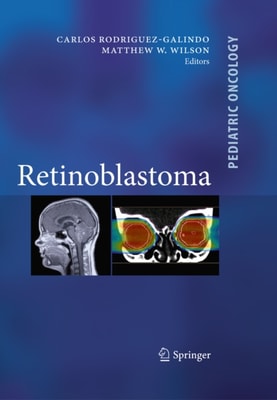
Although rare, retinoblastoma has been at the fore- fortunate; while in the developed world eye preser- front of cancer research and treatment for the last tion has become a priority, developing countries c- three decades.
This text presents the range of clinical problems encountered by ophthalmologists in managing patients with diabetic retinopathy and provides an evidence-based approach to solving these problems.
"e;Pearls for Leaders in Academic Medicine"e; is a collection of concise bits of advice for medical school administrators on how to manage the challenges of playing a leadership role.
Retinal Degenerations is the result of The International Symposium on Retinal Degeneration which has become perhaps the most important research meeting in the field.
"e;Due to the generous representation of the afferent visual system within the brain, neurological disease may disrupt vision as a presenting symptom or as a secondary effect of the disease.
A "e;Clinical Pearl"e; is shorthand for that critical nugget of information that makes a procedure or a treatment option or therapeutic agent more effective, more efficient, and produces the best possible outcome.
This book presents the salient features of optic nerve disorders, enc- passing optic neuritis, papilledema, ischemic optic neuropathies, c- pressive and in?
Color Atlas of Strabismus Surgery: Strategies and Techniques provides concise, comprehensive descriptions of surgical procedures by one of the world's leading experts.
Artificial sight is a frontier area of modern ophthalmology combining the multidisciplinary skills of surgical ophthalmology, biomedical engineering, biological physics, and psychophysical testing.
Retinal Degenerations is the result of the International Symposium on Retinal degeneration which has become perhaps the most important research meeting in the field.
Mechanisms of neural plasticity enable the encoding and memorization of information based on sensory inputs and can be harnessed to partially restore function after CNS assault such as stroke or head trauma.
The desire to teach and the fulfillment attained from teaching have again prompted us to produce a work that we hope is both useful and enlightening to our readers.
During the last few centuries, natural philosophers, and more recently vision scientists, have recognized that a fundamental problem in biological vision is that the sources underlying visual stimuli are unknowable in any direct sense, because of the inherent ambiguity of the stimuli that impinge on sensory receptors.