Offering lower toxicity and higher accuracy than conventional therapies, this source offers illustrative coverage of this new method to treat tumors associated with brain, breast, lung, and neuroendocrine cancers.
This unique book provides an accessible introduction to both the scientific background and the key people involved in the discovery and use of radiation and radioactivity.
This unique book provides an accessible introduction to both the scientific background and the key people involved in the discovery and use of radiation and radioactivity.
Written specifically for those candidates about to sit for the FRCR part II examination, the format will also be of use to other trainee radiologists who are not specialists in this field.
This monograph explains the considerable impact that monoclonal antibodies and molecular probes have had on the diagnosis of tumor types and sub-types.
Written specifically for those candidates about to sit for the FRCR part II examination, the format will also be of use to other trainee radiologists who are not specialists in this field.
This monograph explains the considerable impact that monoclonal antibodies and molecular probes have had on the diagnosis of tumor types and sub-types.
Written by world authorities, this reference explores the utilization and advancement of state-of-the-art imaging modalities for the analysis of pulmonary function-providing an up-to-date and global perspective of imaging applications with detailed contributions from experts in Europe, North America, Japan, and Australia.
This authoritative reference reviews current and emerging molecular imaging modalities that are expected to impact the detection and treatment of lung diseases in the near future-including applications in gene expression and inflammation imaging; the imaging of pulmonary cytokine regulation; the molecular imaging of angiogenesis, the airways, and l
Reflecting the past 20 years of intense research in radioimmunotherapy, this timely reference surveys an expansive breadth of topics on the evolving developments in radiation therapy.
Edited by Dominique Delbeke and Ora Israel, two leading authorities in the field of nuclear medicine, this practical guide is a reference source of cases for images obtained on state-of-the-art integrated PET/CT and SPECT/CT imaging systems.
Among all the clinical indications for which radiologists, nuclear medicine phy- cians, neurologists, neurosurgeons, psychiatrists (and others examining disorders of the brain) order and read brain PET scans, demand is greatest for those pertaining to dementia and related disorders.
Nuclear Oncology: Pathophysiology and Clinical Applications is a comprehensive textbook covering the increasing role of radionuclide-based technologies in the management of oncologic patients, with disease-oriented chapters giving a detailed overview of current indications and developments.
This multidisciplinary textbook is designed to be the standard on the subject and is geared for use by physicians who are involved in the care and/or diagnosis of cancer patients.
Combined positron emission tomography (PET) or single photon emission computed tomography (SPECT) with computed tomography (CT) has developed into the faste- growing imaging modality largely because combined PET or SPECT with CT data acquisition is highly synergistic in diagnosis and therapeutic evaluation.
When the history of medicine in the latter half of the twentieth century is written, the advances in cardiovascular diagnosis, therapy, and prevention will stand out as one of the most important achievements.
This book is designed to give the reader a solid understanding of the physics and instrumentation aspects of PET, including how PET data are collected and formed into an image.
Evidence-Based Imaging presents the radiologist with a user-friendly guide to the evidence-based science and the merit behind the diagnostic imaging studies performed in medicine.
PACS: A Guide to the Digital Revolution, Second Edition, fills an incredible need by explaining the technological advances associated with the transition of radiology departments to filmless environments.
This book is an ideal text on PET imaging technology that focuses on the basics, such as physics, instrumentation, production of radionuclides and radiopharmaceuticals, and regulations affecting PET.
The goal of this book is to provide Endocrinologists, Surgeons, Nuclear Medicine Physicians, and Radiation Oncologists with practical advice about managing patients with thyroid cancer.
Practical FDG Imaging provides the reader with a reference source of cases with FDG images obtained both on dedicated PET tomographs and hybrid scintillation cameras.
Imaging-Guided Interventional Breast Techniques instructs the reader on the performance of invasive breast procedures and discusses issues related to the selection and purchase of equipment to perform these cutting edge techniques.
Atlas of Selective Lymphadenectomy for Melanoma, Breast Cancer and Colon Cancer emphasizes a multidisciplinary approach combining the experiences of a nuclear medicine physician, surgeon, and pathologist.
After World War II, the US Atomic Energy Commission (AEC) began mass-producing radioisotopes, sending out nearly 64,000 shipments of radioactive materials to scientists and physicians by 1955.
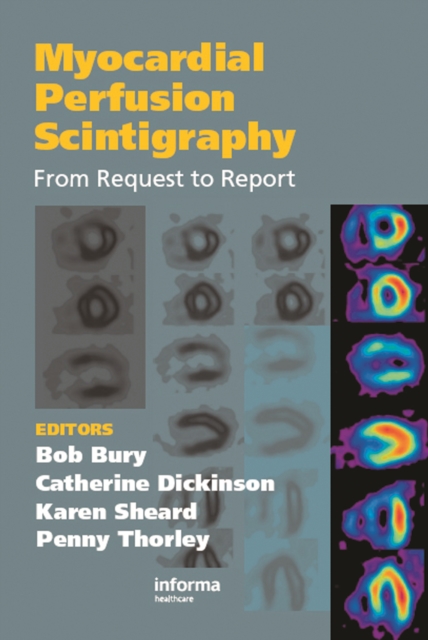
There is general recognition that nuclear cardiology, and particularly myocardial perfusion scintigraphy (MPS), is under-utilized in the UK when compared with practice in mainland Europe and the USA.
Formulated by members of the International Scientific Committee of Radionuclides in Nephro-urology (ISCORN), Functional Imaging in Nephro-urology is not a textbook on uronephrology or radionuclides in nephro-urology, or even a book on new techniques in imaging.