Epigenetics is one of the fastest moving fields in drug discovery, with almost every large pharmaceutical company and a substantial number of biotechnology companies targeting epigenetic processes to treat diseases ranging from cancer to Huntington's disease and from inflammation to sickle cell anaemia.
Despite ongoing efforts to prohibit the production, storage and use of chemical warfare agents recent world events highlight the enduring threat to the population from these agents.
Fragment-based drug discovery is a rapidly evolving area of research, which has recently seen new applications in areas such as epigenetics, GPCRs and the identification of novel allosteric binding pockets.
Cardiovascular and metabolic diseases remain the number one cause of death in developed countries and their prevalence is increasing rapidly in developing nations.
Since the pioneering pharmacotherapy for treatment of schizophrenia in the 1950s by antipsychotics, only a few major innovations have been made, pointing to a general stagnation in the field of pharmacology of schizophrenia.
Despite ongoing efforts to prohibit the production, storage and use of chemical warfare agents recent world events highlight the enduring threat to the population from these agents.
Cardiovascular and metabolic diseases remain the number one cause of death in developed countries and their prevalence is increasing rapidly in developing nations.
One strategy to expedite the discovery of new drugs, a process that is somewhat slow and serendipitous, is the identification and use of privileged scaffolds.
Fragment-based drug discovery is a rapidly evolving area of research, which has recently seen new applications in areas such as epigenetics, GPCRs and the identification of novel allosteric binding pockets.
Formulation is a key step in the drug design process, where the active drug is combined with other substances that maximise the therapeutic potential, safety and stability of the final medicinal product.
Contamination of drinking water is a worldwide problem, and ongoing work is taking place across the globe to address the issues affecting this precious commodity.
The first book to cover this fast developing field, Masked Mycotoxins in Food will provide a full overview of the issues relating to the toxicology of masked mycotoxins present in food products.
The incorporation of Green Chemistry is a relatively new phenomenon in the drug discovery discipline, since the scale that chemists operate on in drug discovery is smaller than those of process and manufacturing chemistry.
Concerns about the adverse effects of chemicals present in the environment have created a need for better systems to assess their potential consequences on human health.
This book reviews macrocycles in drug discovery, both those of natural origin and semi-synthetic derivatives of natural products, and those designed and synthesized based on principles of medicinal chemistry.
Chemical health threats can have impacts across national borders and so may be more effectively tackled by international cooperation than by individual governments acting alone.
The network approaches of systems pharmacology and toxicology serve as early predictors of the most relevant screening approach to pursue both in drug discovery and development and ecotoxicological assessments.
In recent years, a significant amount of progress has been made using green chemistry in the synthesis of synthetically useful compounds and molecules by replacing hazardous chemicals with greener alternatives.
The rapid expansion of the nanotechnology field raises concerns, like any new technology, about the toxicity and environmental impact of nanomaterials.
Research over the past decade has demonstrated that TGx methods of various types can be used to discriminate modes of mutagenesis as a function of dose.
Research and legislation in food microbiology continue to evolve, and outbreaks of foodborne disease place further pressure on the industry to provide microbiologically safe products.
Aimed at practitioners and students of librarianship, this book is about interesting and unusual practical projects currently being run by academic liaison librarians.
Novel Formulations and Future Trends, Volume Three in the Recent and Future Trends in Pharmaceutics series, explores aspects of pharmaceutics with an original approach focused on technology, novelties and future trends.
This valuable new book, Handbook of Research on Medicinal Chemistry: Innovations and Methodologies, presents some of the latest advancements in the various fields of combinatorial chemistry, drug discovery, biochemical aspects, pharmacology of medicinal agents, current practical problems, and nutraceuticals.
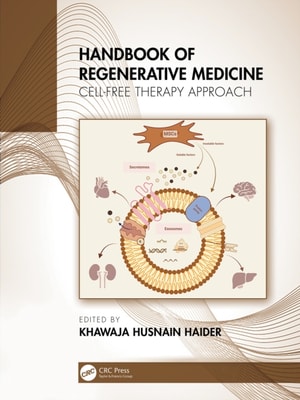
This book comprehensively reviews cell-free therapy approaches, focusing on the therapeutic potential of mesenchymal stem cell-derived extracellular vesicles (EVs) and secretomes across various reparative and regenerative medicine fields.
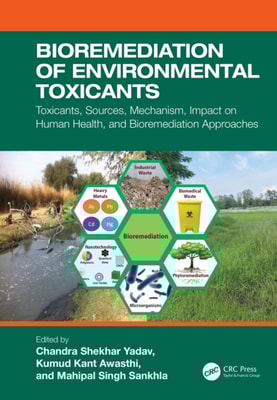
Bioremediation of Environmental Toxicants: Toxicants, Sources, Mechanism, Impact on Human Health, and Bioremediation Approaches provides insight into the nature of environmental toxicants, the impact on human health, and their bioremediation approaches, viz.
To the surprise of many people, several pounds of good bacteria populate our digestive tract, help us maintain normal digestion, and protect us against stomach flus, candida overgrowth, and many other types of infection.