The Treatment is the story of one tragedy of medical research that stretched over eleven years and affected the lives of hundreds of people in an Ohio city.
This edited volume contains a selection of chapters that are an outgrowth of the - ropean Conference on Mathematical and Theoretical Biology (ECMTB05, Dresden, Germany, July 2005).
One of the primary purposes and obligations of science, in addition to - derstandingnatureingeneralandlifeinparticular, istoassistinenhancing the quality and longevity of life, indeed a most daunting challenge.
This invaluable guide shows students and professionals how measurements and data can be used to balance quality services and financial viability and how measures can help to evaluate and improve organizational, clinical, and financial processes.
To achieve this goal the institute divided its operation into four strands: two of the strands were the research areas - the study of advanced radiation therapy and biology, which worked separatively but cooperatively; a third was patient care; and the fourth element was leadership, provided by the clinical chiefs, the heads of the research divisions, and the administration, in particular the institute's first administrator, John Law.
This book contains subjects by authors with a fresh, exciting and extensive focus within the medical humanities, offering the reader chapters which include the history of medical illustration, Graphic Medicine as a vehicle for the expression of humanistic dimensions of healthcare, equitable and ethical medical illustrations, as well as novel, art-based approaches in anatomical education.
This book contains subjects by authors with a fresh, exciting and extensive focus within the medical humanities, offering the reader chapters which include the history of medical illustration, Graphic Medicine as a vehicle for the expression of humanistic dimensions of healthcare, equitable and ethical medical illustrations, as well as novel, art-based approaches in anatomical education.
Clear and penetrating presentation of the basic principles of scientific research from the great French physiologist whose contributions in the 19th century included the discovery of vasomotor nerves; nature of curare and other poisons in human body; functions of pancreatic juice in digestion; elucidation of glycogenic function of the liver.
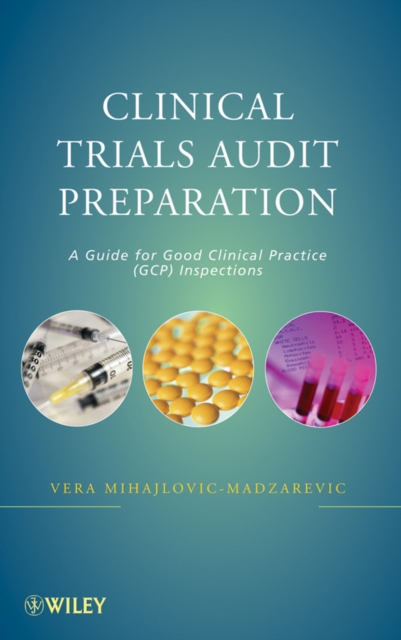
A must-have guide for any professional in the drug manufacturing industry The Good Clinical Practice (GCP) audit is a tedious but necessary exercise that assures that all parties do their job properly and in compliance with the applicable FDA code.
There has been substantial growth in the use of data monitoring committees in recent years, by both government agencies and the pharmaceutical industry.
The explanation and implementation of statistical methods for the medical researcher or statistician remains an integral part of modern medical research.
Thoroughly updated and revised, the new edition of this accessible guide aims to outline why there is a gap between research findings and what actually happens in clinical practice.
Updated companion volume to the ever popular Statistics at Square One (SS1) Statistics at Square Two, Second Edition, helps you evaluate the many statistical methods in current use.
Although clinical trials were virtually unheard of in psychiatry for many years, they are now the gold standard for judging whether drugs are safe and useful.
At last a new edition of the highly acclaimed book Clinical Trials in Psychiatry This book provides a concise but thorough overview of clinical trials in psychiatry, invaluable to those seeking solutions to numerous problems relating to design, methodology and analysis of such trials.
Reviewing research evidence for nursing practice: systematic reviews highlights the key issues involved in conducting different types of systematic reviews - encompassing qualitative studies, quantitative studies and combining quantitative and qualitative studies.
The first authoritative yet accessible guide to this controversial topic Stem Cell Research For Dummies offers a balanced, plain-English look at this politically charged topic, cutting away the hype and presenting the facts clearly for you, free from debate.
The first authoritative yet accessible guide to this controversial topic Stem Cell Research For Dummies offers a balanced, plain-English look at this politically charged topic, cutting away the hype and presenting the facts clearly for you, free from debate.
Apply adaptive research to improve results in drug development The pharmaceutical industry today faces a deepening crisis: inefficiency in its core business, the development of new drugs.
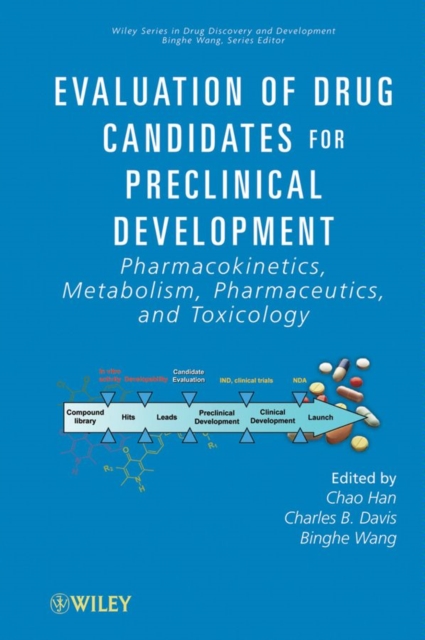
Emphasizes the integration of major areas of drug discovery and their importance in candidate evaluation It is believed that selecting the "e;right"e; drug candidate for development is the key to success.
An integrated overview of modern approaches to lead discovery Lead generation is increasingly seen as a distinct and success-determining phase of the drug discovery process.
A must-have guide for any professional in the drug manufacturing industry The Good Clinical Practice (GCP) audit is a tedious but necessary exercise that assures that all parties do their job properly and in compliance with the applicable FDA code.
The use of oligonucleotides as therapeutic agents rests upon their ability to interfere, in a sequence-specific manner, with the fundamental machinery of protein synthesis either by binding to the mRNAs transcribed from a gene or by binding directly to a target gene.
Experts in their respective fields present papers concerned with the range of human diseases caused by defective or abnormal functioning of cell adhesion molecules.
This international symposium focuses on the contributions that biomedical research is making to the provision of proper health care for the increasing numbers of elderly people in all countries, developed and developing.
With this valuable practical guide, three members of the Harvard Stem Cell Institute have compiled and edited the definite handbook for the exciting new field of human embryonic stem cell research.
Missing Data in Clinical Studies provides a comprehensive account of the problems arising when data from clinical and related studies are incomplete, and presents the reader with approaches to effectively address them.
An essential introduction to conducting the various stages of medical device clinical trials Clinical research continues to be one of the most vital components of pharmaceutical, biostatistical, and medical studies.
ExpDesign Studio facilitates more efficient clinical trial design This book introduces pharmaceutical statisticians, scientists, researchers, and others to ExpDesign Studio software for classical and adaptive designs of clinical trials.