The combination of faster, more advanced computers and more quantitatively oriented biomedical researchers has recently yielded new and more precise methods for the analysis of biomedical data.
In the past several years, there has been an explosion in the ability of biologists, molecular biologists and biochemists to collect vast amounts of data on their systems.
As a truly translational area of biomedical investigation, epilepsy research spans an extraordinary breadth of subjects and involves virtually every tool that modern neuroscience has at its disposal.
Developed for academic researchers and for those who work in industry, Present and Future of High Pressure Processing: A Tool for Developing Innovative, Sustainable, Safe, and Healthy Foods outlines innovative applications derived from the use of high-pressure processing, beyond microbial inactivation.
Translational Medicine: Tools and Techniques provides a standardized path from basic research to the clinic and brings together various policy and practice issues to simplify the broad interdisciplinary field.
Clinical and Translational Science: Principles of Human Research, Second Edition, is the most authoritative and timely resource for the broad range of investigators taking on the challenge of clinical and translational science, a field that is devoted to investigating human health and disease, interventions, and outcomes for the purposes of developing new treatment approaches, devices, and modalities to improve health.
Neurostimulation for Epilepsy: Advances, Applications, and Opportunities comprehensively reviews the diverse array of neurostimulation technologies currently in use and in development for the treatment of epilepsy.
In recent years, the role of cilia in the study of health, development and disease has been increasingly clear, and new discoveries have made this an exciting and important field of research.
The combination of faster, more advanced computers and more quantitatively oriented biomedical researchers has recently yielded new and more precise methods for the analysis of biomedical data.
Acacias: The Genus Acacia (sensu lato) is an evidence-based treatment of this supergenus, through the eyes of a clinical pharmacognosist and integrative medicine specialist.
The understanding of chemokines, the proteins that control the migration of cells, and their receptors, is critical to the study of causes and therapies for a wide range of human diseases and infections, including certain types of cancer, inflammatory diseases, HIV, and malaria.
The understanding of chemokines, the proteins that control the migration of cells, and their receptors, is critical to the study of causes and therapies for a wide range of human diseases and infections, including certain types of cancer, inflammatory diseases, HIV, and malaria.
Morphological Mouse Phenotyping: Anatomy, Histology and Imaging is an atlas of explanatory diagrams and text that guides the reader through normal mouse anatomy, histology, and imaging.
Pulsed Electric Fields to Obtain Healthier and Sustainable Food for Tomorrow illustrates innovative applications derived from the use of pulsed electric fields beyond microbial inactivation.
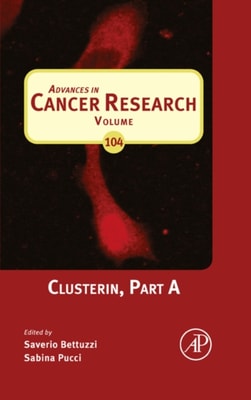
The biological function of clusterin (CLU, also known as ApoJ, SGP2, TRPM2, CLI) has been puzzling researchers since its discovery and characterization in the early 1980s.
Guide to Techniques in Mouse Development, Part A comprehensively covers new technologies and methodologies that have appeared for the study of mouse development.
Retinoids have received considerable attention in recent years and due cognizance has been given to their versatility as biological response modifiers, as evidenced by the virtually explosive growth of literature in this field in the past few years.
Annual Reports in Medicinal Chemistry provides timely and critical reviews of important topics in medicinal chemistry together with an emphasis on emerging topics in the biological sciences, which are expectedto provide the basis for entirely new future therapies.
Health care today is known to suffer from siloed and fragmented data, delayed clinical communications, and disparate workflow tools due to the lack of interoperability caused by vendor-locked health care systems, lack of trust among data holders, and security/privacy concerns regarding data sharing.
This book covers the wide set of well-regulated virulence factors and defense mechanisms of Pseudomonas aeruginosa focusing on stress responses and the evolution of this opportunistic human pathogen.
The newly revised edition of this work provides an up-to-date description of the mechanisms of infection and disease production in a clear and logical manner.
Readers will discover the relatively new and rapidly growing field of regenerative surgery and fat grafting, valuable for numerous plastic surgery, reconstructive, and aesthetic/cosmetic essentials.
Volume 76 of Advances in Cancer Research continues the series' goal of publishing timely and authoritative reviews in the broad field of cancer research.
Volume 71 of Advances in Cancer Research begins with Morgan and Kastan presenting data on the roles of p53 and ATM in cell cycle progression and cell death in response to DNA damage and how this information may lead to targets for improved cancer therapies.
This contributed volume emphasizes the potential of stem cells to be pertained in the urology field and attempts to disclose the history of the field up to the latest advances to date.
Written by dedicated and active professionals from different areas of the pharmaceutical, biomedical, and medtech sectors, this book provides information on job and career opportunities in various life sciences industries.
This book provides the most up-to-date review of the simian virus 40 (SV40) minichromosome as a model for the mammalian chromosome in studies of DNA replication.
Written by internationally recognized experts, The Genetics of Cancer provides up-to-date information and insight into the genetic basis of cancer and the mechanisms involved in cancer invasion and its secondary spread.
Novel Anticancer Agents offers pertinent basic science information on strategies used for the rational design and discovery of novel anticancer agents, and, in addition, translational studies involving clinical trial design and execution with these novel, mostly cytostatic agents.
Rosenberg's Molecular and Genetic Basis of Neurologic and Psychiatric Disease, Seventh Edition provides a comprehensive introduction and reference to the foundations and practical aspects relevant to the majority of neurologic and psychiatric disease.