Implementing Precision Medicine in Best Practices of Chronic Airway Diseases provides a comprehensive overview of the application of precision medicine in airway diseases with a goal of promoting optimal control of disease, higher patient satisfaction and disease prevention.
PID Control with Intelligent Compensation for Exoskeleton Robots explains how to use neural PD and PID controls to reduce integration gain, and provides explicit conditions on how to select linear PID gains using proof of semi-global asymptotic stability and local asymptotic stability with a velocity observer.
Human Genome Informatics: Translating Genes into Health examines the most commonly used electronic tools for translating genomic information into clinically meaningful formats.
Osseointegration of Orthopaedic Implants helps product developers at orthopedic implant manufacturers enhance the effectiveness of orthopedic implants and reduce complications, particularly in patients with osteoporotic bones.
Coronary Microvascular Obstruction in Acute Myocardial Infarction: From Mechanisms to Treatment provides a comprehensive understanding of the phenomenon of coronary microvascular obstruction (CMVO) that is the main limitation of reperfusion therapies in ST-elevation myocardial infarction.
Computational Intelligence for Multimedia Big Data on the Cloud with Engineering Applications covers timely topics, including the neural network (NN), particle swarm optimization (PSO), evolutionary algorithm (GA), fuzzy sets (FS) and rough sets (RS), etc.
Essential Concepts in Molecular Pathology, Second Edition, offers an introduction to molecular genetics and the "e;molecular"e; aspects of human disease.
Sex Differences in Cardiovascular Physiology and Pathophysiology is a comprehensive look into the often overlooked and underappreciated fundamental sex differences between men and women and how those differences affect the cardiovascular system.
Biomedical Signal Analysis for Connected Healthcare provides rigorous coverage on several generations of techniques, including time domain approaches for event detection, spectral analysis for interpretation of clinical events of interest, time-varying signal processing for understanding dynamical aspects of complex biomedical systems, the application of machine learning principles in enhanced clinical decision-making, the application of sparse techniques and compressive sensing in providing low-power applications that are essential for wearable designs, the emerging paradigms of the Internet of Things, and connected healthcare.
Digital Innovations in Healthcare Education and Training discusses and debates the contemporary knowledge on the evolution of digital education, learning and the web and its integration and role within modern healthcare education and training.
Secondary Fracture Prevention: An International Perspective presents practitioners and academic clinicians with a better understanding of secondary fracture prevention and models of care from a variety of settings and countries.
Modeling and Control of Infectious Diseases in the Host: With MATLAB and R provides a holistic understanding of health and disease by presenting topics on quantitative decision-making that influence the development of drugs.
Safety Risk Management for Medical Devices demystifies risk management, providing clarity of thought and confidence to the practitioners of risk management as they do their work.
Laboratory Assessment of Vitamin Status provides a comprehensive understanding of the limitations of commonly used approaches used for the evaluation of vitamin status, reducing harm in the general health setting.
Clinical and Basic Neurogastroenterology and Motility is a state-of-the-art, lucidly written, generously illustrated, landmark publication that comprehensively addresses the underlying mechanisms and management of common adult and pediatric motility disorders.
Assistive Technology Service Delivery: A Practical Guide for Disability and Employment Professionals provides professionals working in vocational rehabilitation with the guidelines and methodologies they need to carry out their daily work at a high standard.
Mechanobiology in Health and Disease brings together contributions from leading biologists, clinicians, physicists and engineers in one convenient volume, providing a unified source of information for researchers in this highly multidisciplinary area.
Smart Wheelchairs and Brain-Computer Interfaces: Mobile Assistive Technologies combines the fields of neuroscience, rehabilitation and robotics via contributions from experts in their field to help readers develop new mobile assistive technologies.
Metabolomics for Biomedical Research brings together recent progress on study design, analytics, biostatistics and bioinformatics for the success of metabolomics research.
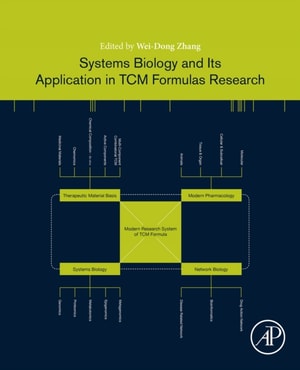
Systems Biology and Its Application in TCM Formulas Research presents a theoretical research system formed for Traditional Chinese Medicine (TCM) formulas, along with information on the study of Shexiang Baoxin Pill (SBP), a TCM formula that has shown significant clinical efficacy in the treatment of cardiovascular diseases.
Applied Biomechatronics Using Mathematical Models provides an appropriate methodology to detect and measure diseases and injuries relating to human kinematics and kinetics.
Designing Healthcare That Works: A Sociotechnical Approach takes up the pragmatic, messy problems of designing and implementing sociotechnical solutions which integrate organizational and technical systems for the benefit of human health.
Novel Designs of Early Phase Trials for Cancer Therapeutics provides a comprehensive review by leaders in the field of the process of drug development, the integration of molecular profiling, the changes in early phase trial designs, and endpoints to optimally develop a new generation of cancer therapeutics.
Oxidants, Antioxidants and Impact of the Oxidative Status in Male Reproduction is an essential reference for fertility practitioners and research and laboratory professionals interested in learning about the role of reactive oxygen species in sperm physiology and pathology.
Endothelium and Cardiovascular Diseases: Vascular Biology and Clinical Syndromes provides an in-depth examination of the role of endothelium and endothelial dysfunction in normal vascular function, and in a broad spectrum of clinical syndromes, from atherosclerosis, to cognitive disturbances and eclampsia.
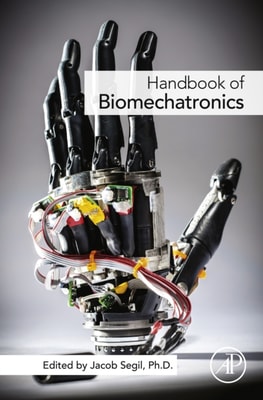
Handbook of Biomechatronics provides an introduction to biomechatronic design as well as in-depth explanations of some of the most exciting and ground-breaking biomechatronic devices in the world today.
Bioinformatics Algorithms: Design and Implementation in Python provides a comprehensive book on many of the most important bioinformatics problems, putting forward the best algorithms and showing how to implement them.
A Comprehensive Physically Based Approach to Modeling in Bioengineering and Life Sciences provides a systematic methodology to the formulation of problems in biomedical engineering and the life sciences through the adoption of mathematical models based on physical principles, such as the conservation of mass, electric charge, momentum, and energy.
Physiology of the Gastrointestinal Tract, Sixth Edition, a Two-Volume set, covers the study of the mechanical, physical and biochemical functions of the GI Tract by linking clinical disease and disorder, thus bridging the gap between clinical and laboratory medicine while also covering breakthroughs in gastroenterology, such as the brain-gut axis and microbiome.
Stem Cells and Cancer in Hepatology: From the Essentials to Application offers basic scientists and clinicians in the fields of stem cells, hepatology and oncology an overview of the interaction between liver biology, stem cells and cancer.
Stem Cells and Biomaterials for Regenerative Medicine addresses the urgent need for a compact source of information on both the cellular and biomaterial aspects of regenerative medicine.
Comparative Kinesiology of the Human Body: Normal and Pathological Conditions covers changes in musculoskeletal, neurological and cardiopulmonary systems that, when combined, are the three pillars of human movement.
Perinatal Stem Cells provides researchers and clinicians with a comprehensive description of the current clinical and pre-clinical applications of stem cells derived from perinatal sources, such as amniotic fluid, placenta and placental membranes, the umbilical cord and Wharton's jelly.
Second Generation Cell and Gene-Based Therapies: Biological Advances, Clinical Outcomes, and Strategies for Capitalisation serves as the only volume to the market to bridge basic science, clinical therapy, technology development, and business in the field of cellular therapy/cytotherapy.
Medical Device Technologies: A Systems Based Overview Using Engineering Standards, Second Edition, is a comprehensive overview of medical device technology, with a unified approach to each device area covering technical operation, clinical need, regulatory issues and standards and historical devices.
Coronary Artery Disease: From Biology to Clinical Practice links the most important basic concepts of atherosclerosis pathophysiology to treatment management of coronary artery disease.
A Roadmap to Non-hematopoietic Stem Cell-Based Therapeutics: From the Bench to the Clinic is a resource that provides an overview of the principles of stem cell therapy, the promises and challenges of using stem cells for treating various clinical conditions, and future perspectives.
Non-Exhaust Emissions: An Urban Air Quality Problem for Public Health comprehensively summarizes the most recent research in the field, also giving guidance on research gaps and future needs to evaluate the health impact and possible remediation of non-exhaust particle emissions.
Realizing the Promise of Precision Medicine: The Role of Patient Data, Mobile Technology, and Consumer Engagement explains the potential of personalized medicine and the value of those approaches in making that potential a reality.
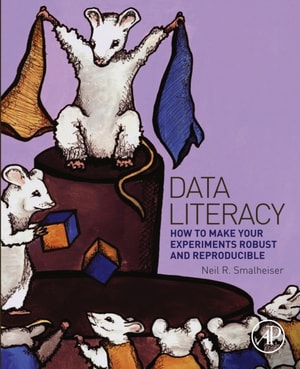
Data Literacy: How to Make Your Experiments Robust and Reproducible provides an overview of basic concepts and skills in handling data, which are common to diverse areas of science.
Engineering Neural Tissue from Stem Cells covers the basic knowledge needed to understand the nervous system and how existing cells can be used to create neural tissue.