The present book addresses the multi-disciplinary nature of Translational Outcomes Research, which is a watershed for nearly all the disciplines of Life and Health Sciences, along with the Materials Sciences including but not limited to Zoology, Botany, Microbiology, Biochemistry, Physiology, Nanotechnology, the Medical Sciences, Bioengineering, Biophysics, Medicinal Chemistry, Structural Biology, Biostatistics and Bioinformatics.
En su vertiginoso avance, la biotecnología suscita constantemente retos morales que cada quien debe enfrentar por sí mismo, tarea nada fácil en un sistema que privilegia la uniformidad acrítica sobre la individualidad crítica.
En su vertiginoso avance, la biotecnología suscita constantemente retos morales que cada quien debe enfrentar por sí mismo, tarea nada fácil en un sistema que privilegia la uniformidad acrítica sobre la individualidad crítica.
The integrin family is composed of 24 members and approximately ten years ago (2003) we published a book devoted to the nine I domain integrin subunits.
This is the second edition of a widely used textbook that consolidates the basic concepts of the cancer gene theory and provides a framework for understanding the genetic basis of cancer.
This book provides a comprehensive review of the properties of various stem cell types, the mechanisms of their behaviors and their potential clinical application.
OY (])PONEOYLI TOIA YTA IIOAAOI OKOEOJII Many fail to grasp what they have seen, and cannot judge what they have learned, ErKYPEOYLI OYL1E MA(R)ONTEE ITINOEKOYIT although they tell themselves they know.
Plant breeding aims at the genetic enhancement of crops through the application of principles of Mendelian Genetics and modern tools and techniques of cell and molecular biology.
Molecular farming has been hailed as the "e;third wave"e; of genetically-modified organisms produced through biotechnology for the bio-based economy of the future.
Our current knowledge of marine organisms and the factors affecting their ecology, distribution and evolution has been revolutionised by the use, in the last 20 years, of molecular population genetics tools.
This proceedings volume includes selected papers presented at the international symposium `Live Food Organisms in Marine Larviculture' held in Nagasaki, Japan, September 1-4 1996.
Chromosomes Today volume 14 records the plenary proceedings of the 14th International Chromosome Conference, presenting an overview of the current concerns in plant, animal and human cytogenetics.
During the last 40 years, the study of the biological basis of aging has progressed tremendously, and it has now become an independent and respectable field of study and research.
During the last 40 years, the study of the biological basis of aging has progressed tremendously, and it has now become an independent and respectable field of study and research.
Flow cytometry has rapidly evolved into a technique for rapid analysis of DNA content, cellular marker expression and electronic sorting of cells of interest for further investigations.
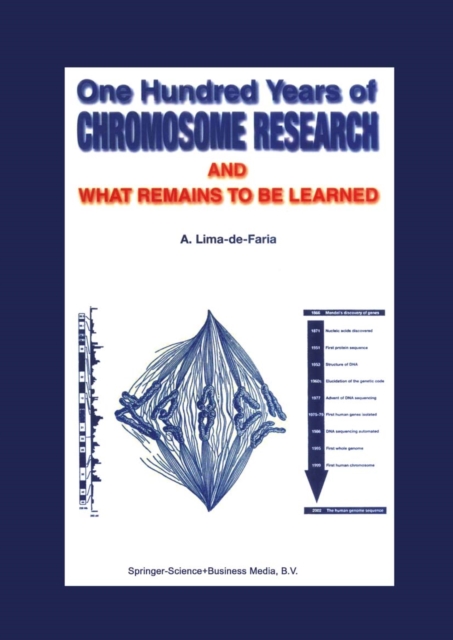
One Hundred Years of Chromosome Research: What Remains to be Learned, offers the reader a critical analysis of the observations and experiments that shaped the last 100 years of chromosome research, as well as the ideas which prevailed during this period.
The book aims to review knowledge on the disorders of eating behaviour and body composition in some of the non-primate higher animals and to relate these to similar conditions in humans.
This collection of essays represents the work produced in the course of a three-year project funded by the Commission of the European Communities under the Biomed I programme, on the ethics of genetic screening, entitled 'Genetic screening: ethical and philosophical perspectives, with special reference to multifactorial diseases'.
Many changes that occur during the embryonic development of an individual animal can be seen as a parallel to changes that have occurred in species or groups of species during evolutionary time.
In most breeding programs of plant and animal species, genetic data (such as data from field progeny tests) are used to rank parents and help choose candidates for selection.
Herpesviruses, classified in the family Herpesviridae, are important human and animal pathogens that can cause primary, latent or recurrent infections and even cancer.
Latest figures suggest that approximately 20% of the world's population of six billion is malnourished because of food shortages and inadequate distrib- ution systems.
In contemporary ethical discussion widespread concern about the potential risks of genetic engineering is raising new and fundamental questions about our responsibilities towards unborn generations.
Members of the family Littorinidae are among the most widely studied gastropod molluscs and the more questions we answer about this group, the more questions are inevitably posed.
Genetic Resources of Mediterranean Pasture and Forage Legumes is a comprehensive review of grassland improvement in Mediterranean areas using legume species.