This book describes a wide range of interventional procedures currently employed in the treatment of cardiac diseases in women with the aim of enabling not only interventional cardiologists but also cardiologists and cardiac surgeons to refine their approach to female patients and thus improve outcomes.
This book describes the risks facing patients with congenital heart disease who wish to become pregnant and the ways in which these patients can best be followed and treated during pregnancy.
This book is intended as a comprehensive, practically oriented reference on pulmonary hypertension within the context of adult congenital heart disease (ACHD).
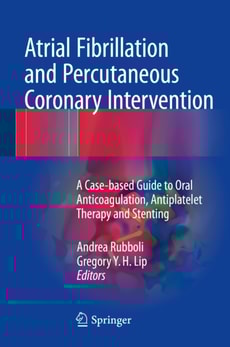
This book considers paradigmatic clinical cases in order to cast light on key issues relating to elective or emergency stent implantation and the use of oral anticoagulation (OAC) in patients with atrial fibrillation.
After the success of the first two editions, this expanded and extensively revised edition provides the interventional cardiologist with detailed, state of the art information on key techniques and approaches to percutaneous treatment of left side cardiac valve disease, keeping pace with the rapid and dynamic evolution in the discipline.
This concise practical guide is designed to facilitate the clinical decision-making process in the management of LAA occlusion procedures by reviewing a number of cases and defining the various diagnostic and management decisions open to clinicians.
This book examines various aspects of the aorta, both healthy and diseased states, in 40 chapters of in-depth research by experts in cardiovascular disease.
This book discusses the clinical indications for chronic total occlusion (CTO) recanalization using percutaneous coronary intervention (PCI) and illustrates the recent academic findings on this constantly developing field of study.
Lung Epithelial Biology in the Pathogenesis of Pulmonary Disease provides a one-stop resource capturing developments in lung epithelial biology related to basic physiology, pathophysiology, and links to human disease.
This atlas depicts and describes catheter-based interventions across the entire pediatric age range, from fetal life through to early adulthood, with the aim of providing an illustrated step-by-step guide that will help the reader to master these techniques and apply them in everyday practice.
This extensively revised new edition comprehensively reviews the medical and surgical management of the acutely-ill child with congenital and acquired cardiac disease.
Representing the first book to offer complete coverage of all related topics, this title provides up-to-date guidance on exactly why, when, and how to perform transcatheter paravalvular leak closure.
This book describes the most popular topics concerning adult congenital heart disease (ACHD), especially focusing on indications and re-intervention procedures for some major ACHDs.
This book provides a focused resource on how cardiac surgery capacity can be developed and how it assists in the sustainable development and strengthening of associated health systems.
The second edition of this critical text features heavily revised chapters detailing how to approach the anesthetic and perioperative management of adult and pediatric patients with congenital heart disease.
This book offers a historical account of the development of the On-X carbon mechanical heart valve, discussing the steps involved in developing the materials, and describes how the design of the valve has evolved over the years.
This book describes the different aspects of ischemic heart disease, one of the leading causes of death in industrialized countries, and whose growing prevalence represents a major challenge in terms of short- and long-term management and surveillance.
A must-have guide for anesthesiologists new to the cardiac operating roomDVD with 90+ narrated TEE clips"e;Overall this book is a nice guide and the quickest way to review cardiac anesthesia.
The Pocket Guide to Diagnostic Cardiac Catheterization provides general cardiology fellows, nurses, and technicians entering the cardiac catheterization laboratory a practical guide addressing key aspects of left and right heart catheterization, selective coronary angiography, and the utilization of other invasive cardiology procedures for diagnostic purposes.
Transradial Access: Techniques for Diagnostic Angiography and Percutaneous Intervention offers a single source for both novice and experienced interventional cardiologists for safely and effectively performing transradial catheterization procedures.
A significantly expanded third edition, this book provides a comprehensive and concise overview of cardiac arrhythmias and their ECG/telemetry manifestations, including the principles of cardiac electrophysiology, current concepts of pharmacology, clinical features, diagnoses, and state-of-the-art treatments.
This atlas provides a detailed visual resource of how sophisticated non-invasive imaging relates to the anatomy observed in a variety of cardiovascular pathologies.
This book provides an easy-to-use guide, giving cardiologists and other physicians more confidence in training with and understanding cardiac magnetic resonance (CMR) in clinical daily practice.
While there are many outstanding resources providing in-depth review of electrophysiology topics, this extensively updated book is one of the few case-based books that comprehensively cover clinical electrophysiology, devices and ablation.
This book provides comprehensive information on transcatheter aortic valve implantation (TAVI), which was introduced for the treatment of aortic valve disease less than two decades ago.
This book explores the unique aspects involved in the management of ECMO patients such as physiopathology and indications, setting up the device, monitoring ECMO and the patient, troubleshooting, ethical aspects and rehabilitation.
This book presents the percutaneous techniques and technologies most frequently employed in structural interventional cardiology, focusing especially on how to optimize outcomes and minimize risk.
This book is a fully updated and revised second edition of a highly successful text in which a new concept of knowledge mining, based on explication and transfer of interventional knowledge of experts, has been implemented.