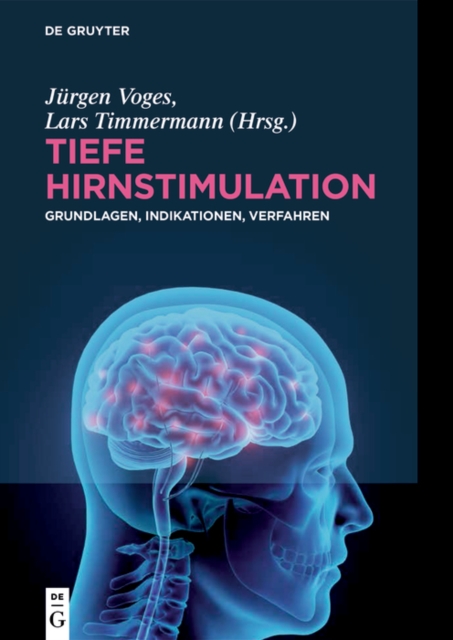
Neurorehabilitation together with functional neurosurgery are steadily growing fields, with new advances and technologies including: selective interruption of various neural circuits, stimulation of the cerebral cortex, deep brain structures, spinal cord and peripheral nerves with implantable stimulation systems, and cell transplantation as well as nerve grafting.
Erstmals wird in diesem Buch ein neues, minimal-invasives Behandlungsverfahren beschrieben, das bei osteoporotischen, traumatischen oder tumorösen Veränderungen der Wirbelsäule indiziert ist.
The XIII International Symposium on Brain Edema intracerebral hemorrhage, including the primary event and Tissue Injury was held June 1-3, 2005, in Ann Ar- and the secondary injury that follows, prompted a o- bor, Michigan, USA.
In July 2004 specialists in neurosurgery, neuroradiology, neurology and neurointensive care discussed recent trends at the 2nd Swiss Japanese Joint Conference on Cerebral Stroke Surgery, held in Zurich, Switzerland.
A practical and succinct guide to neurophysiological monitoring for safer brain tumor surgeryThe surgical treatment of infiltrating brain tumors is an extremely challenging and often highly rewarding facet of neurosurgery.
There are relationships that exist between neuroanesthesia, neurosurgical procedures, individual patient pathology and the positioning of a patient for said procedure.
This comprehensive, case-based resource provides the state-of-the-art knowledge that can help readers improve access and optimize delivery of stroke thrombectomy.
This text is designed to function as a comprehensive guide/companion that will not only facilitate the decision-making process for the surgeon, but also help young surgeons build a successful career in skull base surgery.
Management of carotid and vertebral artery disease has undergone tremendous strides since the introduction of thin section CT angiography and neurointerventions.
This book bridges the gap between data scientists and clinicians by introducing all relevant aspects of machine learning in an accessible way, and will certainly foster new and serendipitous applications of machine learning in the clinical neurosciences.
Trotz aller Fortschritte in Diagnostik und Therapie ist das Schädelhirntrauma noch immer die Haupttodesursache der unter 45-Jährigen und die Haupttodesursache von Kindern unter fünfzehn Jahren.
Trotz aller Fortschritte in Diagnostik und Therapie ist das Schädelhirntrauma noch immer die Haupttodesursache der unter 45-Jährigen und die Haupttodesursache von Kindern unter fünfzehn Jahren.
The neurosurgical, surgical and medical training and practice models have to keep up with the technological revolution in the 21st Century as our lives changed on a swift base.
The neurosurgical, surgical and medical training and practice models have to keep up with the technological revolution in the 21st Century as our lives changed on a swift base.
This book reviews the common clinical scenarios that might trigger emergent consultation for neurosurgical intervention, with attention to key components of the clinical interview and exam, optimal diagnostic evaluation, indications for and the goals of operative intervention, perioperative considerations, and strategies for complication mitigation.
This text is designed to function as a comprehensive guide/companion that will not only facilitate the decision-making process for the surgeon, but also help young surgeons build a successful career in skull base surgery.
In recent decades, the advances in and consolidation of Intraoperative Neurophysiological Monitoring (IOM) in several highly complex surgical areas have been undeniable.
This book will discuss and cover standard treatments and advances in some of the most controversial topics in cerebrovascular surgery traversing the whole arena, including open and interventional surgeries.
This book is a comprehensive guide to Targeted Drug Delivery (TDD), also known as Intrathecal Drug Delivery (IDD), and offers an overview to this unique form of treatment.
The objective of this 5th edition of the book, as with the prior editions, is to teach through images a practical approach to magnetic resonance (MR) physics and image quality.
This book bridges the gap between data scientists and clinicians by introducing all relevant aspects of machine learning in an accessible way, and will certainly foster new and serendipitous applications of machine learning in the clinical neurosciences.