Believing Philosophy introduces Christians to philosophy and the tools it provides believers, helping them understand, articulate, and defend their faith in an age of unbelief.
An esteemed scholar of Hinduism presents a groundbreaking interpretation of ancient Indian texts and their historic influence on subversive resistance Ancient Hindu texts speak of the three aims of human life: dharma,artha, and kama.
The concluding volume of Francis Oakley's authoritative trilogy moves on to engage the political thinkers of the later Middle Ages, Renaissance, Age of Reformation and religious wars, and the era that produced the Divine Right Theory of Kingship.
A positive assessment of secularism and the possibilities it offers for a genuinely meaningful life without religion Although there is no shortage of recent books arguing against religion, few offer a positive alternative—how anyone might live a fulfilling life without the support of religious beliefs.
Saint Thomas More’s Utopia is one of the most important works of European humanism and serves as a key text in survey courses on Western intellectual history, the Renaissance, political theory, and many other subjects.
Drawing from the works of Dante, Catherine of Siena, Boccaccio, Aquinas, and Cavalcanti and other literary, philosophic, and scientific texts, Heather Webb studies medieval notions of the heart to explore the “lost circulations” of an era when individual lives and bodies were defined by their extensions into the world rather than as self-perpetuating, self-limited entities.
Erasmus’ Adages—a vast collection of the proverbial wisdom of Greek and Roman antiquity—was published in 1508 and became one of the most influential works of the Renaissance.
This is the first complete English translation of On the Purity of the Art of Logic, a handbook of logic written in Latin by English philosopher Walter Burley (c.
This volume is the first annotated translation in any language of the entire text of the Summulae de dialectica, by the Parisian master of arts John Buridan (1300-1358).
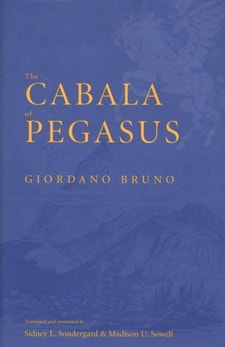
Giordano Bruno’s Cabala del cavallo pegaseo (The Cabala of Pegasus) grew out of the great Italian philosopher’s experiences lecturing and debating at Oxford in early 1584.
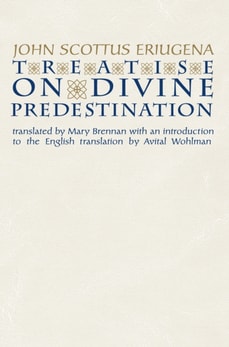
Treatise on Divine Predestination is one of the early writings of the author of the great philosophical work Periphyseon (On the Division of Nature), Johannes Scottus (the Irishman), known as Eriugena (died c.
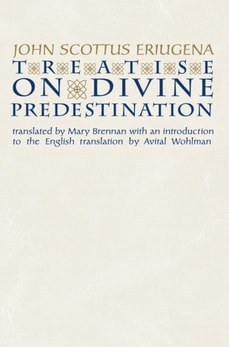
Treatise on Divine Predestination is one of the early writings of the author of the great philosophical work Periphyseon (On the Division of Nature), Johannes Scottus (the Irishman), known as Eriugena (died c.
Raising awareness of human indifference and cruelty toward animals, The Global Guide to Animal Protection includes more than 180 introductory articles that survey the extent of worldwide human exploitation of animals from a variety of perspectives.
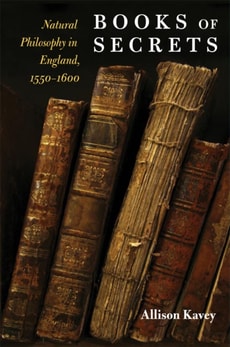
How cultural categories shaped--and were shaped by--new ideas about controlling nature Ranging from alchemy to necromancy, "e;books of secrets"e; offered medieval readers an affordable and accessible collection of knowledge about the natural world.
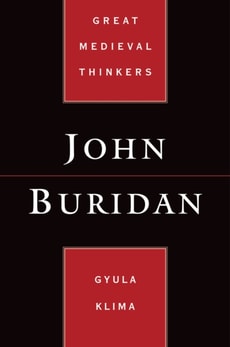
"e;More than any other living scholar of medieval philosophy, Gyula Klima has influenced the way we read and understand philosophical texts by showing how the questions they ask can be placed in a modern context without loss or distortion.
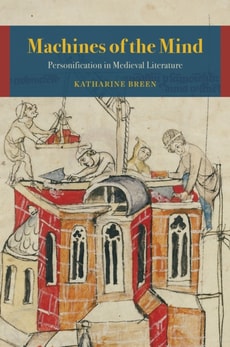
In Machines of the Mind, Katharine Breen proposes that medieval personifications should be understood neither as failed novelistic characters nor as instruments of heavy-handed didacticism.
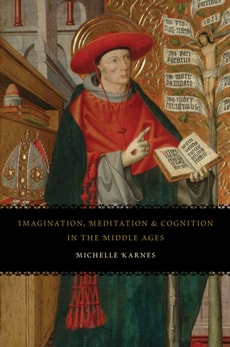
In Imagination, Meditation, and Cognition in the Middle Ages, Michelle Karnes revises the history of medieval imagination with a detailed analysis of its role in the period's meditations and theories of cognition.
"e;[An] important essay by a philosopher who more convincingly than any other I can think of demonstrates the continuing significance of his vocation in the life of our culture.
Thomas von Aquin ist 'der' Denker des Mittelalters, der die am längsten anhaltende Orientierung geboten, die intensivsten historischen Interessen auf sich gezogen und - neben seiner Bedeutung als Kirchenlehrer - für die vielfältigsten denkerischen Konzeptionen Pate gestanden hat und dessen Werk daher noch heute auf praktisch allen Feldern philosophischer Problemstellungen Anregungen zu geben vermag.
The present volume advances a recent historiographical turn towards the intersection of early modern philosophy and the life sciences by bringing together many of its leading scholars to present the contributions of important but often neglected figures, such as Ralph Cudworth, Nehemiah Grew, Francis Glisson, Hieronymus Fabricius ab Aquapendente, Georg Ernst Stahl, Juan Gallego de la Serna, Nicholas Hartsoeker, Henry More, as well as more familiar figures such as Descartes, Spinoza, Leibniz, Malebranche, and Kant.
This volume contains ten new essays focused on the exploration and articulation of a narrative that considers the notion of order within medieval and modern philosophy--its various kinds (natural, moral, divine, and human), the different ways in which each is conceived, and the diverse dependency relations that are thought to obtain among them.
Peter Lombard is best known as the author of a celebrated work entitled Book of Sentences, which for several centuries served as the standard theological textbook in the Christian West.
Brian Davies offers the first in-depth study of Saint Thomas Aquinas's thoughts on God and evil, revealing that Aquinas's thinking about God and evil can be traced through his metaphysical philosophy, his thoughts on God and creation, and his writings about Christian revelation and the doctrines of the Trinity and the Incarnation.
Brian Davies offers the first in-depth study of Saint Thomas Aquinas's thoughts on God and evil, revealing that Aquinas's thinking about God and evil can be traced through his metaphysical philosophy, his thoughts on God and creation, and his writings about Christian revelation and the doctrines of the Trinity and the Incarnation.
Born in Saxony in 1096, Hugh became an Augustinian monk and in 1115 moved to the monastery of Saint Victor, Paris, where he spent the remainder of his life, eventually becoming the head of the school there.