Philosophy, and in particular continental philosophy, has provided a conceptual underpinning for cinema since its beginnings, especially in the development of cinematic aesthetics.
Philosophy, and in particular continental philosophy, has provided a conceptual underpinning for cinema since its beginnings, especially in the development of cinematic aesthetics.
Most of us care about certain people and things, and some of these concerns become personal commitments, involving our values, our relationships, our work and our religious or political stances.
Most of us care about certain people and things, and some of these concerns become personal commitments, involving our values, our relationships, our work and our religious or political stances.
The Routledge Companion to Philosophy of Literature is an in-depth examination of literature through a philosophical lens, written by distinguished figures across the major divisions of philosophy.
The Routledge Companion to Philosophy of Literature is an in-depth examination of literature through a philosophical lens, written by distinguished figures across the major divisions of philosophy.
Ancient thought, particularly that of Plato and Aristotle, has played an important role in the development of the field of aesthetics, and the ideas of ancient thinkers are still influential and controversial today.
Ancient thought, particularly that of Plato and Aristotle, has played an important role in the development of the field of aesthetics, and the ideas of ancient thinkers are still influential and controversial today.
This book examines film as a multimodal text and an audiovisual synthesis, bringing together current work within the fields of narratology, philosophy, multimodal analysis, sound as well as cultural studies in order to cover a wide range of international academic interest.
This book examines film as a multimodal text and an audiovisual synthesis, bringing together current work within the fields of narratology, philosophy, multimodal analysis, sound as well as cultural studies in order to cover a wide range of international academic interest.
Media Criticism in a Digital Age introduces readers to a variety of critical approaches to audio and video discourse on radio, television and the Internet.
Media Criticism in a Digital Age introduces readers to a variety of critical approaches to audio and video discourse on radio, television and the Internet.
In On the Genealogy of Color, Zed Adams argues for a historicized approach to conceptual analysis, by exploring the relevance of the history of color science for contemporary philosophical debates about color realism.
In On the Genealogy of Color, Zed Adams argues for a historicized approach to conceptual analysis, by exploring the relevance of the history of color science for contemporary philosophical debates about color realism.
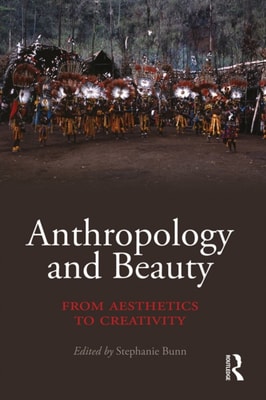
Organised around the theme of beauty, this innovative collection offers insight into the development of anthropological thinking on art, aesthetics and creativity in recent years.
There is a long tradition, in the history and philosophy of science, of studying Kant's philosophy of mathematics, but recently philosophers have begun to examine the way in which Kant's reflections on mathematics play a role in his philosophy more generally, and in its development.
There is a long tradition, in the history and philosophy of science, of studying Kant's philosophy of mathematics, but recently philosophers have begun to examine the way in which Kant's reflections on mathematics play a role in his philosophy more generally, and in its development.
Boredom Studies is an increasingly rich and vital area of contemporary research that examines the experience of boredom as an importan - even quintessential - condition of modern life.
In A Social Theory of Freedom, Mariam Thalos argues that the theory of human freedom should be a broadly social and political theory, rather than a theory that places itself in opposition to the issue of determinism.
In A Social Theory of Freedom, Mariam Thalos argues that the theory of human freedom should be a broadly social and political theory, rather than a theory that places itself in opposition to the issue of determinism.
Since the 1990s, artists and art writers around the world have increasingly undermined the essentialism associated with notions of "e;critical practice.
Since the 1990s, artists and art writers around the world have increasingly undermined the essentialism associated with notions of "e;critical practice.
Iago's 'I am not what I am' epitomises how Shakespeare's work is rich in philosophy, from issues of deception and moral deviance to those concerning the complex nature of the self, the notions of being and identity, and the possibility or impossibility of self-knowledge and knowledge of others.