Prepare a sus alumnos para que sean pensadores criticos con confianza en si mismos, capaces de asimilar y articular ideas complejas en el marco de contextos de la vida real.
The biological and social sciences often generalize causal conclusions from one context or location to others that may differ in some relevant respects, as is illustrated by inferences from animal models to humans or from a pilot study to a broader population.
In this short monograph, John Horty explores the difficulties presented for Gottlob Frege's semantic theory, as well as its modern descendents, by the treatment of defined expressions.
All contentious moral issues--from gay marriage to abortion and affirmative action--raise difficult questions about the justification of moral beliefs.
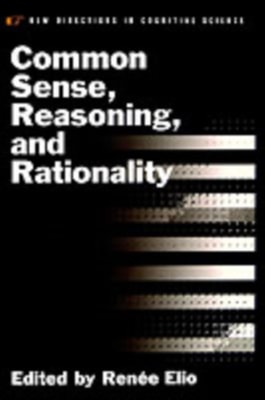
As the eleventh volume in the New Directions in Cognitive Science series (formerly the Vancouver Studies in Cognitive Science series), this work promises superb scholarship and interdisciplinary appeal.
Robert Batterman examines a form of scientific reasoning called asymptotic reasoning, arguing that it has important consequences for our understanding of the scientific process as a whole.
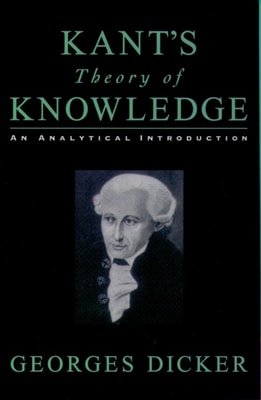
The Critique of Pure Reason is Kant's acknowledged masterpiece, in which he tackles the question of how we can possibly have knowledge that does not rest on experience (a priori knowledge).
This is the third volume in Alvin Plantinga's trilogy on the notion of warrant, which he defines as that which distinguishes knowledge from true belief.
Although it is widely recognized that David Hume's A Treatise of Human Nature (1729-40) belongs among the greatest works of philosophy, there is little aggreement about the correct way to interpret his fundamental intentions.
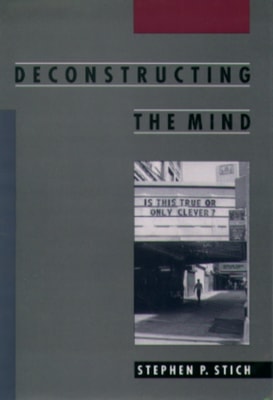
During the past two decades, debates over the viability of commonsense psychology have occupied center stage in both cognitive science and the philosophy of mind.
This collection presents some of the most vital and original recent writings on Descartes, Spinoza, and Leibniz, the three greatest rationalists of the early modern period.
Bold and pioneering, this book makes a detailed historical and systematic case that Descartes's theory of knowledge is an elegant and powerful combination of a priori, naturalistic, and dialectical elements meriting serious consideration by both contemporary analytic philosophers and postmodern thinkers.
In this book, Scott Soames illuminates the notion of truth and the role it plays in our ordinary thought, as well as in our logical, philosophical, and scientific theories.
In this book, Yaqub describes a simple conception of truth and shows that it yields a semantical theory that accommodates the whole range of our seemingly conflicting intuitions about truth.
In this companion volume to Warrant: The Current Debate, Alvin Plantinga develops an original approach to the question of epistemic warrant; that is what turns true belief into knowledge.
Known for distinguished work in the fields of metaphysics and philosophy of religion, Alvin Plantinga ventures further into epistemology in this book and its companion volume, Warrant and Proper Function.
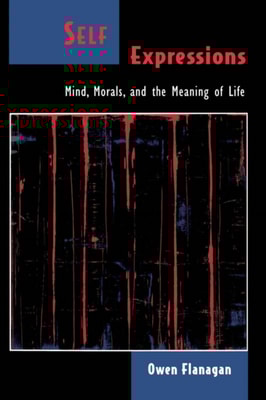
The Joy of Philosophy is a return to some of the perennial questions of philosophy--questions about the meaning of life; about death and tragedy; about the respective roles of rationality and passion in the good life; about love, compassion, and revenge; about honesty, deception, and betrayal; and about who we are and how we think about who we are.
Some combinations of attitudes--of beliefs, credences, intentions, preferences, hopes, fears, and so on--do not fit together right: they are incoherent.
Some combinations of attitudes--of beliefs, credences, intentions, preferences, hopes, fears, and so on--do not fit together right: they are incoherent.