Kevin Scharp proposes an original theory of the nature and logic of truth on which truth is an inconsistent concept that should be replaced for certain theoretical purposes.
The value of true belief has played a central role in history of philosophy--consider Socrates' slogan that the unexamined life is not worth living, and Aristotle's claim that everyone naturally wants knowledge--as well as in contemporary epistemology, where questions about the value of knowledge have recently taken center stage.
Hume's Enquiry concerning the Principles of Morals is one of the landmark works in the history of moral philosophy; this volume presents a section-by-section study of the work in the form of new interpretative essays by leading Hume scholars.
The Epistemology of Disagreement brings together essays from a dozen philosophers on the epistemic significance of disagreement; all but one of the essays are new.
Drawing together his work from four decades, Phillip Bricker provides a comprehensive account of modal reality - the realm of possible worlds - from a Humean perspective, with excursions into neighboring topics in metaphysics.
The analysis of the connections between truth, meaning, thought, and action poses a major philosophical challenge--one that Donald Davidson addressed by establishing a unified theory of language and mind.
Paul Katsafanas explores how we might justify normative claims as diverse as 'murder is wrong' and 'agents have reason to take the means to their ends.
Challenges to Moral and Religious Belief contains fourteen original essays by philosophers, theologians, and social scientists on challenges to moral and religious belief from disagreement and evolution.
Many different features of the world figure consciously in our perceptual experiences, in the sense that they make a subjective difference to those experiences.
This volume of newly written chapters on the history and interpretation of Wittgenstein's Tractatus represents a significant step beyond the polemical debate between broad interpretive approaches that has recently characterized the field.
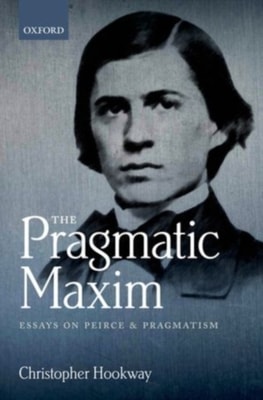
Christopher Hookway presents a series of essays on the philosophy of Charles Sanders Peirce (1839-1913), the 'founder of pragmatism' and one of the most important and original American philosophers.
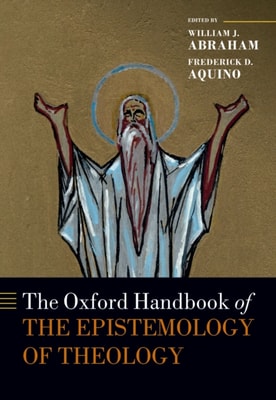
The Oxford Handbook of the Epistemology of Theology brings together leading scholars in the fields of theology and epistemology to examine and articulate what can be categorized as appropriate epistemic evaluation in theology.
The Oxford Handbook of the Epistemology of Theology brings together leading scholars in the fields of theology and epistemology to examine and articulate what can be categorized as appropriate epistemic evaluation in theology.
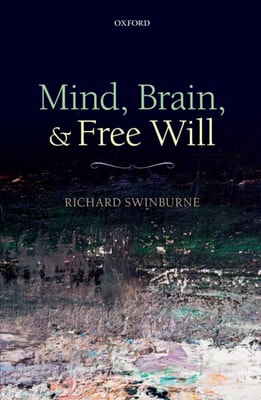
Mind, Brain, and Free Will presents a powerful new case for substance dualism (the theory that humans consist of two parts body and soul) and for libertarian free will (that humans have some freedom to choose between alternatives, independently of the causes which influence them).
Bounded Thinking offers a new account of the virtues of limitation management: intellectual virtues of adapting to the fact that we cannot solve many problems that we can easily describe.
Paul Horwich develops an interpretation of Ludwig Wittgenstein's later writings that differs in substantial respects from what can already be found in the literature.