In this collection of essays -- a follow up to My Way and Our Stories -- John Martin Fischer defends the contention that moral responsibility is associated with "e;deep control.
This volume collects the best and most influential essays that Stephen Stich has published in the last 40 years on topics in the philosophy of mind and the philosophy of language.
This volume is aimed at readers who wish to move beyond debates about the existence of free will and the efficacy of consciousness and closer to appreciating how free will and consciousness might operate.
The biological and social sciences often generalize causal conclusions from one context or location to others that may differ in some relevant respects, as is illustrated by inferences from animal models to humans or from a pilot study to a broader population.
Ignorance and Imagination advances a novel way to resolve the central philosophical problem about the mind: how it is that consciousness or experience fits into a larger naturalistic picture of the world.
The Critique of Pure Reason is Kant's acknowledged masterpiece, in which he tackles the question of how we can possibly have knowledge that does not rest on experience (a priori knowledge).
Virtue epistemology is an exciting, new movement receiving an enormous amount of attention from top epistemologists and ethicists; this pioneering volume reflects the best work in that vein.
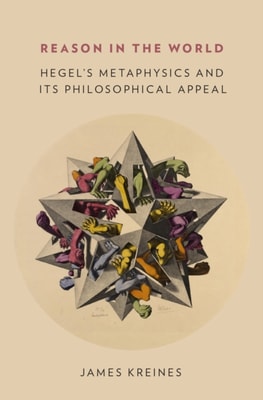
This book defends a new interpretation of Hegel's theoretical philosophy, according to which Hegel's project in his central Science of Logic has a single organizing focus, provided by taking metaphysics as fundamental to philosophy, rather than any epistemological problem about knowledge or intentionality.
Rational Belief provides conceptions of belief and knowledge, offers a theory of how they are grounded, and connects them with the will and thereby with action, moral responsibility, and intellectual virtue.
In May 2010, philosophers, family and friends gathered at the University of Notre Dame to celebrate the career and retirement of Alvin Plantinga, widely recognized as one of the world's leading figures in metaphysics, epistemology, and the philosophy of religion.
In Basic Structures of Reality, Colin McGinn deals with questions of metaphysics, epistemology, and philosophy of mind from the vantage point of physics.
This book defends a new interpretation of Hegel's theoretical philosophy, according to which Hegel's project in his central Science of Logic has a single organizing focus, provided by taking metaphysics as fundamental to philosophy, rather than any epistemological problem about knowledge or intentionality.