Relevant to, and drawing from, a range of disciplines, the chapters in this collection show the diversity, and applicability, of research in Bayesian argumentation.
This monograph addresses the question of the increasing irrelevance of philosophy, which has seen scientists as well as philosophers concluding that philosophy is dead and has dissolved into the sciences.
An invitation to readers from every walk of life to rediscover the impractical splendors of a life of learningIn an overloaded, superficial, technological world, in which almost everything and everybody is judged by its usefulness, where can we turn for escape, lasting pleasure, contemplation, or connection to others?
This book shows how participatory research can provide tools to overcome the current epistemic and ethical challenges faced by traditional scientific approaches.
While celebrating the centenary of the "e;annus mirabilis"e; of modernism, we now encounter modernism after postmodernist, poststructuralist, postcolonial, critical race, feminist, queer and trans writing and theory.
David Hume's philosophical work presents the reader with a perplexing mix of constructive accounts of empirically guided belief and destructive sceptical arguments against all belief.
David Hume's philosophical work presents the reader with a perplexing mix of constructive accounts of empirically guided belief and destructive sceptical arguments against all belief.
Feminist Epistemology and Philosophy of Science: An Introduction is structured around six questions and the answers to them that have been offered by feminist epistemologists and philosophers of science.
Feminist Epistemology and Philosophy of Science: An Introduction is structured around six questions and the answers to them that have been offered by feminist epistemologists and philosophers of science.
This book offers a historical explanation of important philosophical problems in logic and mathematics, which have been neglected by the official history of modern logic.
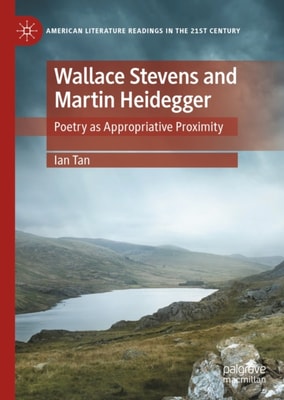
This book is a unique contribution to scholarship of the poetics of Wallace Stevens, offering an analysis of the entire oeuvre of Stevens's poetry using the philosophical framework of Martin Heidegger.
This book provides both an introduction to the philosophy of scientific modeling and a contribution to the discussion and clarification of two recent philosophical conceptions of models: artifactualism and fictionalism.
This highly interdisciplinary book, covering more than six fields, from philosophy and sciences all the way up to the humanities and with contributions from eminent authors, addresses the interplay between content and context, reductionism and holism and their meeting point: the notion of emergence.
This book suggests that to know how Wittgenstein's post-Tractarian philosophy could have developed from the work of Kant is to know how they relate to each other.
This book offers insights relevant to modern history and epistemology of physics,mathematics and, indeed, to all the sciences and engineering disciplines emergingof 19th century.
In recent decades, the historical social sciences have moved away from deterministic perspectives and increasingly embraced the interpretive analysis of historical process and social and political change.
Disagreement is one of the deepest and most pervasive topics in philosophy; arguably its very bedrock, and is an ever-increasing feature of politics, ethics, public policy, science and many other areas.
ACMES (Algorithms and Complexity in Mathematics, Epistemology, and Science) is a multidisciplinary conference series that focuses on epistemological and mathematical issues relating to computation in modern science.
This edited collection that celebrates the legacy of Suellen Shay, is located in Higher Education Studies and Development in South Africa, the country where she lived and worked.
Philosophic Classics: From Plato to Derrida includes essential writings of the most important philosophers from almost two millennia of Western philosophy.
This book aims to redress the balance in the field of Contemporary Philosophy, considered predominantly male, by highlighting the philosophical achievements of various female figures during the period 1870-1970.