In The Formation of Reason, philosophy professor David Bakhurst utilizes ideas from philosopher John McDowell to develop and defend a socio-historical account of the human mind.
In The Formation of Reason, philosophy professor David Bakhurst utilizes ideas from philosopher John McDowell to develop and defend a socio-historical account of the human mind.
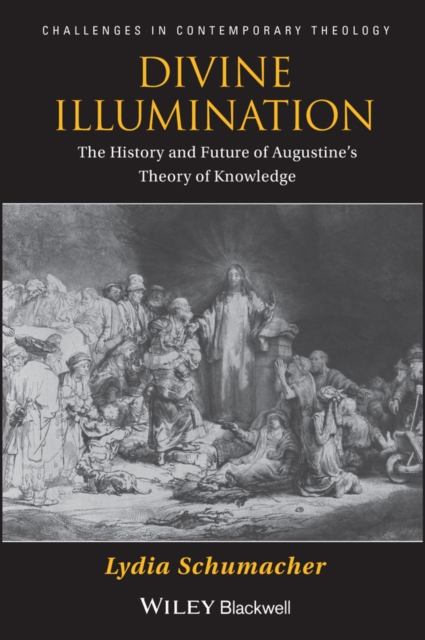
DIVINE ILLUMINATION An important and ground-breaking study which links growing interest in Augustine and medieval philosophy with cutting-edge questions in contemporary philosophy of religion, particularly concerning epistemology and the rationality of religion.
DIVINE ILLUMINATION An important and ground-breaking study which links growing interest in Augustine and medieval philosophy with cutting-edge questions in contemporary philosophy of religion, particularly concerning epistemology and the rationality of religion.
Reflecting a recent flourishing of creative thinking in the field, Agents and Their Actions presents seven newly commissioned essays by leading international philosophers that highlight the most recent debates in the philosophy of action Features seven internationally significant authors, including new work by two of philosophy's super stars , John McDowell and Joseph Raz Presents the first clear indication of how John McDowell is extending his path-breaking work on intentionality and perceptual experience towards an account of action and agency Covers all the major interconnections between action-agency and central areas of Philosophy: Metaphysics, Epistemology, History of Philosophy, Ethics, Logic, Philosophy of Language Provides a snapshot of current debate on the subject, which is fresh, enlightening, and fruitful
Reflecting a recent flourishing of creative thinking in the field, Agents and Their Actions presents seven newly commissioned essays by leading international philosophers that highlight the most recent debates in the philosophy of action Features seven internationally significant authors, including new work by two of philosophy's super stars , John McDowell and Joseph Raz Presents the first clear indication of how John McDowell is extending his path-breaking work on intentionality and perceptual experience towards an account of action and agency Covers all the major interconnections between action-agency and central areas of Philosophy: Metaphysics, Epistemology, History of Philosophy, Ethics, Logic, Philosophy of Language Provides a snapshot of current debate on the subject, which is fresh, enlightening, and fruitful
With nearly 300 entries on key concepts, review essays on central issues, and self-profiles by leading scholars, this companion is the most comprehensive and up-to-date single volume reference guide to epistemology.
La época moderna ha sido escenario de una puesta en tela de juicio e incluso "cancelación" del concepto de "sujeto", central para la tradición filosófica occidental.
Whatever benefits and rewards it may sometimes be possible to attain by bullshitting, by dissembling, or by sheer mendacity, societies cannot afford to tolerate anyone or anything that fosters a slovenly indifference to the distinction between true and false.
This fresh orientation to Kant's Critique of Pure Reason presents his central theme, the development of his Transcendental Idealism, as a ground-breaking response to perceived weaknesses in his predecessors' accounts of experiential knowledge.
Setting the stage with a selection of readings from important nineteenth century philosophers, this reader on truth puts in conversation some of the main philosophical figures from the twentieth century in the analytic, continental, and pragmatist traditions.
A groundbreaking study of one of the greatest encyclopedias of the medieval Islamic world-al-Nuwayri's The Ultimate Ambition in the Arts of EruditionShihab al-Din al-Nuwayri was a fourteenth-century Egyptian polymath and the author of one of the greatest encyclopedias of the medieval Islamic world-a thirty-one-volume work entitled The Ultimate Ambition in the Arts of Erudition.
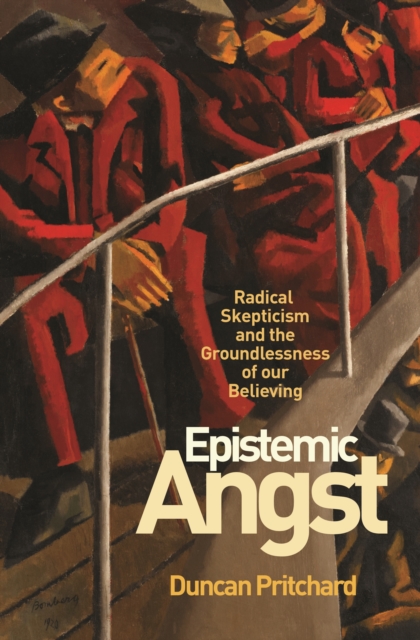
Epistemic Angst offers a completely new solution to the ancient philosophical problem of radical skepticism-the challenge of explaining how it is possible to have knowledge of a world external to us.
Leviathan and the Air-Pump examines the conflicts over the value and propriety of experimental methods between two major seventeenth-century thinkers: Thomas Hobbes, author of the political treatise Leviathan and vehement critic of systematic experimentation in natural philosophy, and Robert Boyle, mechanical philosopher and owner of the newly invented air-pump.
While taking a class on infinity at Stanford in the late 1980s, Ravi Kapoor discovers that he is confronting the same mathematical and philosophical dilemmas that his mathematician grandfather had faced many decades earlier--and that had landed him in jail.
In the most influential chapter of his most important philosophical work, the Phenomenology of Spirit, Hegel makes the central and disarming assertions that "e;self-consciousness is desire itself"e; and that it attains its "e;satisfaction"e; only in another self-consciousness.
The English philosopher Michael Oakeshott (1901-1990) is known as a conservative who rejected philosophically ambitious rationalism and the grand political ideologies of the twentieth century on the grounds that no human ideas have ultimately reliable foundations.
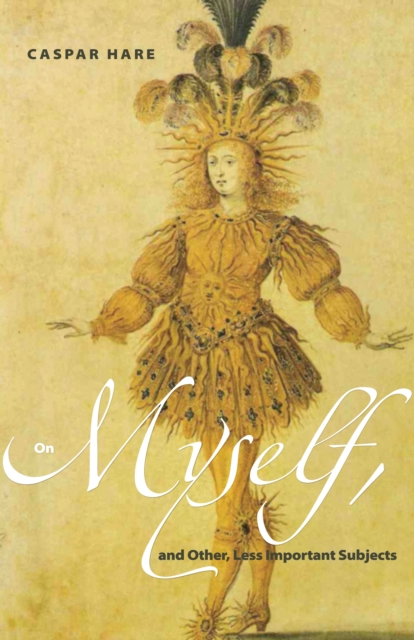
Caspar Hare makes an original and compelling case for "e;egocentric presentism,"e; a view about the nature of first-person experience, about what happens when we see things from our own particular point of view.
This book puts forward a much-needed reappraisal of Immanuel Kant's conception of and response to skepticism, as set forth principally in the Critique of Pure Reason.
Repeatedly and successfully, the celebrated Harvard philosopher Robert Nozick has reached out to a broad audience beyond the confines of his discipline, addressing ethical and social problems that matter to every thoughtful person.